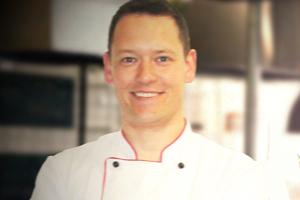
Colin Greensmith discusses his role as Development Chef at Pallas Foods, Ireland and his own inspirations with regards to pursuing a career as a Chef.
Name: Colin Greensmith
Place of work: Pallas Foods, Ireland
Role: Development Chef
Chef Skills
Colin Greensmith takes us through his personal experiences whilst being in the Culinary Industry. These key skills that young Chefs and industry professionals learn as part of their basic training.
How long have you been in this role?
Nine years.
Bio: Colin has been at Pallas Foods since 2006. Before that he worked at X-treme Chef Consulting as a Chef consultant form 2000-2001 and was head Chef at Dunraven Arms Hotel until September 2006 when he moved to Pallas Foods.
What made you decide to be a development Chef?
I was working in the industry for about 18 years and I wanted a change. I enjoyed what I was doing in the kitchen and I still wanted to work day to day with food, but I just felt like a change and Pallas are a very progressive company so when one of the Chefs jobs came up I applied. I knew it would suit me.
Is it a sector you would advise for Chefs just entering the industry?
I would, but I would advise all Chefs to go through the regular industry routes before becoming a development Chef. Unless you have the experience behind you then you won’t have the knowledge or the expertise built up in order to be a development Chef. It is certainly something to consider, it is definitely an option for someone who may not be suited for a conventional kitchen but still wants to work with food.
What experience and how many years would somebody need in order to progress to the top level of the industry?
It all depends on for students, some people are coming straight from college now, and in the last few years over here there have been courses
devefor students to be able to go straight into the development Chef role. Although I would say that really ten to 15 years in a conventional kitchen is advisable.
What are your ultimate top five tips for someone looking to start a career in hospitality sector?
A love of food and cooking techniques
Plenty of experience, a Chef should travel and explore lots of different food styles that they can bring back to their daily development work.
An understanding of your client or employers requirements.
The ability to work with budgets and food costings to deliver food with maximum flavour.
A hospitality “can do” attitude and a personality that makes clients feel at ease.
Who are the key Chefs and restaurants that someone should be speaking to and trying to gain experience with?
It al depends on the local area, I’ve always said for young Chefs to go to the top, it is very easy to get an average job but they should aim to get into the best restaurant that they can in that area. It is very easy to come down levels if they find it too hard, but it is more difficult to get to the top.
What would you be looking out for on a CV or in an interview if someone was applying for a job with you?
A lot of it would be experience driven. The university and college qualifications aren’t necessarily the be all and end all, though they would help. I think that if people can work with others and have a broad knowledge of various parts of the industry then that would be a big plus for me.