much land and can be done at home, which particularly benefits women with childcare responsibilities. Mushrooms also have a short production cycle so can generate profit in a short time, and they are not seasonally dependent so can be produced throughout the year.
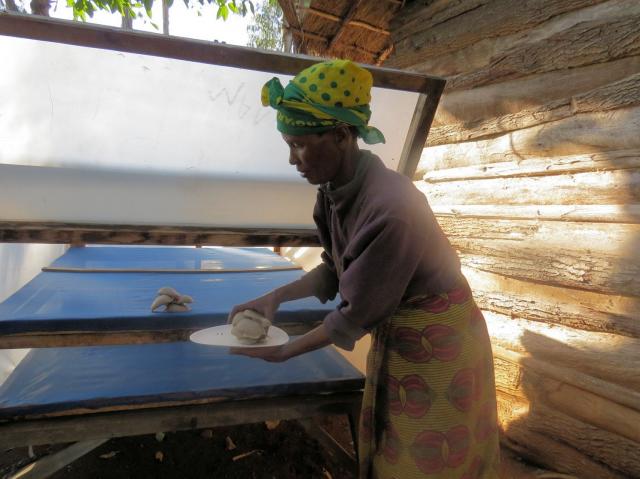
Magdalena says, “Now we have been trained on mushroom spores production, farming procedures, post-harvesting measures and packaging. We have also been supplied with a range of equipment including mushroom solar driers, spores, planting and packaging materials, and supported with certification of products and accessing markets for our products.”
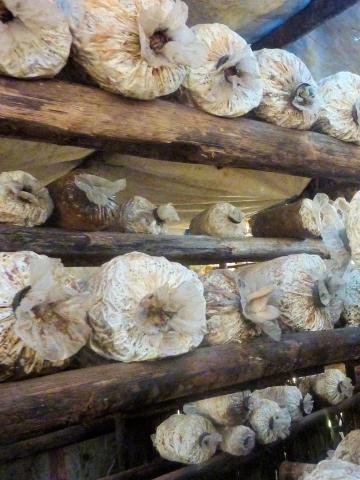
Thanks to funding from the EU, Farm Africa has been able to train over 700 farmers in mushroom production, including teaching them how and where to build their own mushroom houses. Forest ecosystems lend themselves well to mushroom production and agricultural experts work with farmers to select the optimum place to build their houses, which must be dark, warm and moist. The moisture generated from the surrounding environment means that mushrooms don’t require additional irrigation, which has the added bonus that farmers don’t have to spend time watering.
Farmers are trained in processing techniques so the mushrooms can be sold either fresh or dried. In addition, Farm Africa has established a processing and collection centre where farmers can come together to sell their mushrooms, thus giving them better access to markets and greater bargaining power. Mushrooms are sold in local markets and earn a good profit, selling for around 6000 Tanzanian shillings (around £2) per kilo fresh.
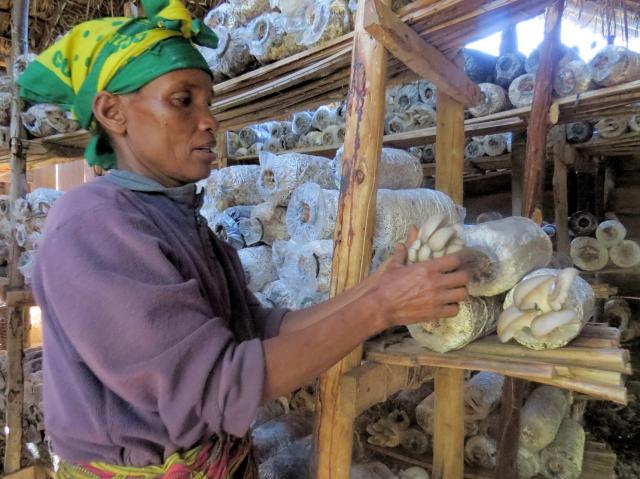 For Magdalena, taking up mushroom farming has made a huge difference to her and her family. She explains, “Farm Africa has opened our eyes and now we are good producers of mushrooms. We are generating an additional 480,000 TZS (£167) from mushroom farming per year and it is our biggest single source of income*. With the extra money we have been able to send all our children to school, improve our diets and afford medical costs. We have also been able to improve our home and invest in our business.”
“As a woman, mushroom farming has been important to me because today I am able to contribute to the household income whereas previously this was my husband’s responsibility. In the future I plan to increase our mushroom production and access more profitable markets so we can improve our income and our lives further.”
For more information please visit www.farmafrica.org or follow us on Twitter @FarmAfrica.


 Mushroom farming has a wide range of advantages. Cultivation only takes up a small amount of space so it doesn’t require