My route into hospitality: Pip Lacey


Pip Lacey tried snowboarding, design, sales and front-of-house roles before becoming a chef. since she has gone on to run Michelin-starred kitchens and take charge of her own restaurants.
In this three-part series, The Staff Canteen speaks to chefs who took an unconventional route into hospitality.
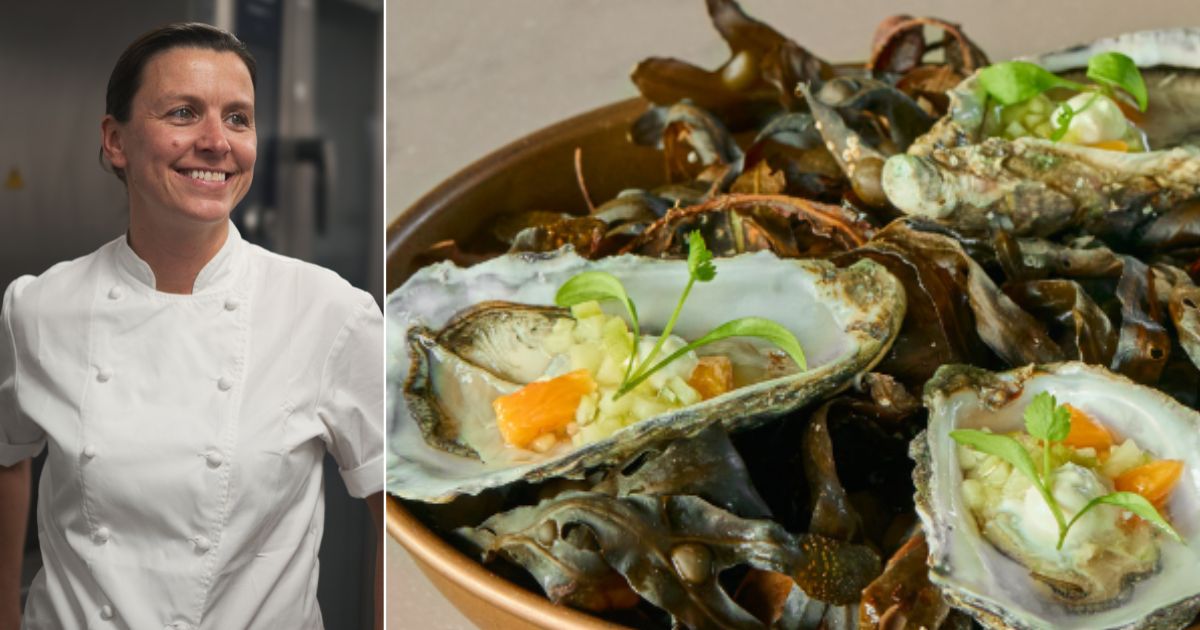
Pip Lacey remembers her first day in a professional kitchen clearly, working at Gordon Ramsay’s York & Albany.
It involved a block of butter, too much blood and the immediate realisation that starting later than most chefs was going to be tough.
“I cut myself really badly,” Pip said.
“It wasn’t the first time I’d cut myself cutting butter and wasn’t the last time either, in the same kitchen.
“I’d bought these terrible Black & Decker knives. People were picking them up going, what the fuck are these?
“Because they were new, they were sharp. I cut myself and then someone else cut themselves on it.
“Blood was just going all over this massive block of butter. I was like, oh my God, they’re going to tell me to get out. That’s it.”
It was not the most elegant start to a career in kitchens, but it was a memorable one.
“I remember being slow,” Pip added.
“I remember Colin Buchan, who was the head chef there, just saying, look, you’re slow, but your work ethic’s great. If you want it, it’s here. It’s going to be tough, getting into it this late.
“He was quite honest with me. He said, just don’t make the same mistake twice and listen and just get on. I was like, cool, and ran with that.”
That first day at York & Albany was the start of a career which has since included Angela Hartnett, Great British Menu, Hicce, Clarkson’s Farm and most recently Guinness Open Gate.
But Pip’s route into kitchens was anything but direct.
From hospitality to other careers
Pip had worked in hospitality from a young age, though not originally with the idea of becoming a chef.
“My first job at 15 was as a pot wash in my local pub,” she said.
“They attempted not to pay me.”
That early job did not sell her the romance of kitchens.
“I was grabbing the most disgusting pan you’ve ever seen in your life,” Pip recalled.
“These were no chefs to aspire to. That’s definitely not where I was like, oh I definitely want to be a chef.”
At 16, Pip worked at Café de Paris, where she began to understand the rhythm of service and the difference between front and back of house.
“I remember one great bit of advice from one of the chefs after a really tough night was: what happens in service, just let it stay in service. It’s time pressure,” she said.
Before becoming a chef, Pip tried plenty of other jobs. She helped her dad with dental nursing, very briefly sold fascias and windows, and had an unsuccessful spell selling expensive Hoovers.
“I loved to work,” she said. “That was the thing, I loved having my own money.”
But sales was not her strongest fit.
“I’m not even very good at selling my own food,” Pip said.
“I’ll give it to you and you taste it. If you like it, that’s fine. I’m not going to tell you to like it.”
Snowboarding, design and a late decision
Pip went on to study an art foundation at Loughborough before taking up an offer at Newcastle. But even at university, hospitality kept pulling her back.
“At uni, I ran a Zizzi’s and was assistant manager of a nightclub as well,” she explained.
“So I just spent the majority of my time working.
“I had a degree that was 9-5 every day, but I didn’t do one 9-5. I crammed it all in at the end and just passed.
“It was kind of screaming at me that I did love, and I do love, the industry.
“I loved being on my feet. I didn’t want to be in an office.”
After university, Pip came to London and ran Med Kitchen on Gloucester Road. But she also returned to another possible path: snowboarding.
“I did try going back to doing a ski season because I’d done one just before uni,” Pip said.
“I promised my dad I’d come back and do a degree and am slightly regretting that in some ways, because I was probably good enough to go ahead and at least try and turn pro.
“Then I tried to do that at 27, which was a bit too late for things like that.
“I thought it was too late to become a chef as well at some point.
“I went out, did a ski season, started doing competitions and broke my back. It wasn’t bad, but it was just kind of like, maybe that’s a bit of a sign.
“I was fearless when I was 19. Then only a few years later I didn’t want to and thought I might hurt myself if I jump off.”
After that, Pip set up her own business, freelancing in graphics, screen printing and starting a clothing brand. But sitting at a computer all day did not feel right either.
She said: “That’s when a friend was like, well, why don’t you become a chef?
“I was like, oh, I’d love
to, because I always cooked at uni, but then just never really thought of it as a career.
“At school, food tech was the worst lesson – the teachers were dreadful and it put you off cooking.
“Then I thought it through and thought, well, we’ll give it a go.”
That decision led Pip to apply to Gordon Ramsay Holdings.
Starting later and proving herself
Coming into kitchens later than many chefs brought challenges, but Pip believes it also helped her.
“It’s been a journey,” she said.
“I think if I became a chef at 18, I wouldn’t be doing it now.
“I think it’s probably wise that a lot of people maybe take a bit of time, maybe doing other things before they really go into it.
“Physically, it’s so demanding.
“I’m a bit better now with the hours and stuff, but if you want to get good, I think you have to put in the hours. That’s the thing.
“If I was doing the hours that people are doing now, back then, I wouldn’t be where I am.
“It never seemed like work to me, because I loved it.”
There were times when Pip felt she had to justify the speed of her rise.
“Some colleagues would give it the whole ‘you’ve hardly been a chef that long’ or the whole fast-track thing,” she said.
“People talk about imposter syndrome and things like that. I don’t think it’s that with me. I just felt like I always had to prove myself.”
Success on Great British Menu helped shift that feeling, Pip going on to cook at the banquet in season 10, whilst working as head chef at Angela Hartnett’s Michelin-starred Murano.
“It was when I did Great British Menu that I was like, okay, that put that to bed now a little bit, having to show my worth or whatever,” Pip said.
“I’ve gone against my peers and I did pretty well.”
Transferable skills
Looking back, Pip believes starting her chef career later brought both advantages and disadvantages.
“Sometimes it really worked in my favour coming in late,” she said.
“Temperament, for instance, and seeing things with an older head.
“Some things it didn’t help with at all. When you’re older, you want to explain yourself a bit more.
“For instance, if you fuck something up, you want to say why you’ve done it. And chefs are like, I don’t want a story, just do it again.
“I learned pretty fast not to explain. It’s like, right, okay, no one wants to hear.”
Her background in snowboarding, art, design and running her own business has continued to feed into her work as a chef.
“Risk taking, I think. Giving something a go,” she said of the crossover from snowboarding.
“Nimbleness and flow and being coordinated in the kitchen helps, especially when you’ve got a tight kitchen with some big lads in there.
“For me, cooking - and this is a personal thing - is 70% confidence, 30% skill, because you’ve got to have the confidence to perform your skill.
“Certain things have crossed over massively and helped. I think plating and things like that, on a design angle, and certain marketing stuff.”
Taking on Guinness Open Gate
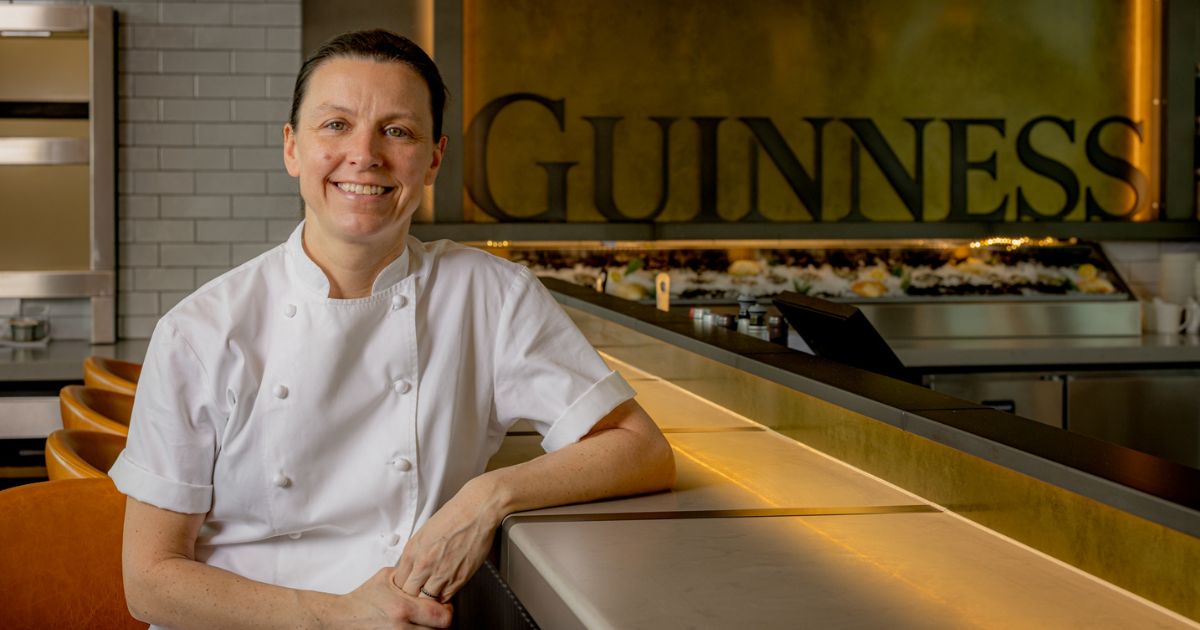
Pip then became involved in one of the biggest projects of her career at Guinness Open Gate in London.
“A big, massive project, huge brand, one of the best brands in the world,” she said.
“So that was pretty nerve-wracking to begin with.
“It was exciting. I’m like, oh my God, yeah, 100% want this job. And then when you get it, you’re like, oh, okay, that sort of realisation of who you’re working for.”
The food, she says, still had to carry proper restaurant values. That means making things in-house, creating opportunities to teach butchery, using whole lamb across the menu and minimising waste where possible.
“I know we were working for a big brand, but the restaurants are separate entities,” Pip said.
“It’s just trying to still have those values and qualities that any other restaurant would have. Hence the reason why I was excited to work with them.”
How Pip feels about her route into hospitality
“I do reflect,” Pip said.
“I think that’s what pushes you on to do the next thing.
“I’ve got amazing friends around me, family, partner, who help me reflect on how much it’s not been easy.
“It’s been a lot of hours and a lot of hard work.
“But it’s because I care. I’m proud of what I do, I love what I do. I never do things by half.
“It’s got to be the whole thing, unless it’s now doing a 360 on a snowboard. I might chicken out!”
Read more from this series -

For 18 years, The Staff Canteen has been the meeting place for chefs and hospitality professionals—your stories, your skills, your space.
Every recipe, every video, every news update exists because this community makes it possible.
We’ll never hide content behind a paywall, but we need your help to keep it free.
If The Staff Canteen has inspired you, informed you, or simply made you smile, chip in £3—less than a coffee—to keep this space thriving.
Together, we keep the industry connected. Together, we move forward.
Support Us
CONTRIBUTE
My route into hospitality: Pip Lacey


