The science of taste: Heston Blumenthal and Harold McGee


The Fat Duck did not emerge from the classical French kitchens or Michelin-starred institutions that shaped many of Europe’s most famous chefs.
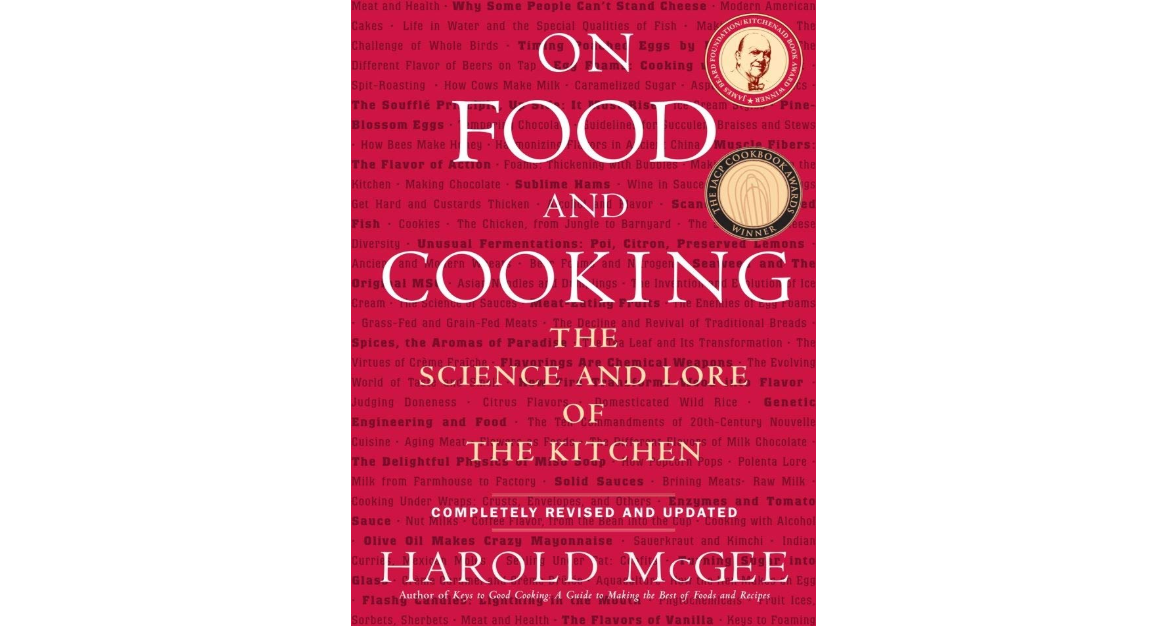
Instead, its roots are found in libraries, science labs and the pages of Harold McGee’s On Food and Cooking. The relationship between Heston Blumenthal and Harold - part mentorship, part intellectual partnership - shaped not only The Fat Duck, but the modern discipline of culinary science itself.
Their collaboration challenged tradition, dismantled long-held assumptions about cooking, and created an entirely new approach to flavour.
This chapter explores that relationship: how it developed, how it transformed Heston’s thinking, and how their shared curiosity still defines the restaurant today.
A Meeting of Minds
Heston discovered Harold McGee’s work in the late 1980s, long before The Fat Duck opened its doors. Harold’s writing was revolutionary: instead of recipes, he explored the physics and chemistry of food - why onions make us cry, why eggs coagulate, what flavour actually is.
For a young Heston - already obsessed with the multisensory experience of eating - Harold’s work was a revelation.
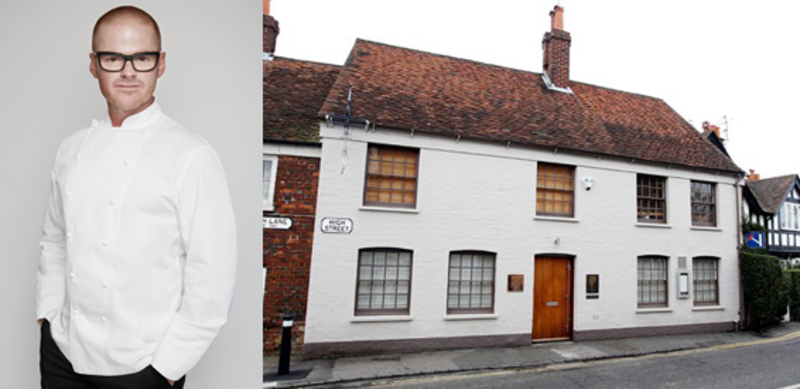
Years later, as The Fat Duck was finding its footing in Bray, Heston reached out to him directly, beginning what would become one of the most influential intellectual partnerships in modern gastronomy.
A Friendship Built on Curiosity
The two men bonded instantly over a shared fascination with the mechanics of taste.
Harold’s scientific clarity encouraged Heston to approach problems more methodically, using experimentation to challenge long-held assumptions.
At the same time, Heston’s interest in storytelling and sensory design illustrated to Harold how science could interact with emotion and imagination in a restaurant setting.
Breaking the Rules - Scientifically
Together, Harold and Heston questioned some of the oldest “rules” of cooking:
Searing meat “to seal in the juices”
Harold’s research showed this was a myth - searing creates flavour through the Maillard reaction, not moisture retention.
Stock must never boil
Harold demonstrated that boiling does not “cloud” stock because of impurities, but because of suspended particles - which can be clarified later.
Pasta requires large amounts of water
A controlled experiment proved this unnecessary; it cooks perfectly well with minimal water.
These discoveries were not mere academic exercises - they had direct consequences in the kitchen and expanded Heston’s creative freedom.
The Birth of Multisensory Cooking
While Harold provided scientific grounding, Heston translated those insights into dishes that combined precision with narrative and sensory play. This approach contributed to a new style of cooking that emerged internationally in the early 2000s.
Some of The
Fat Duck’s most recognised creations - such as The Sound of the Sea and nitro-scrambled egg and bacon ice cream - reflect the influence of this scientific-sensory philosophy, rather than being co-developed with Harold.
Developing a New Language of Taste
Working with Harold, Heston reframed The Fat Duck’s approach to flavour development:
1. Temperature and Aroma
70% of flavour is aroma — and aroma reacts dramatically to temperature. By controlling temperature with millimetre precision, Heston could manipulate perception.
2. Volatile Compounds
Harold’s research showed how ingredients share flavour compounds.
This science influenced pairings such as:
- Caviar and white chocolate
- Beef and anchovy
- Pork and vanilla
3. Memory and Expectation
The psychological aspect of eating became central to The Fat Duck, informing dishes designed to evoke nostalgia, surprise or storytelling, rather than relying solely on taste.
A Partnership That Defined a Generation
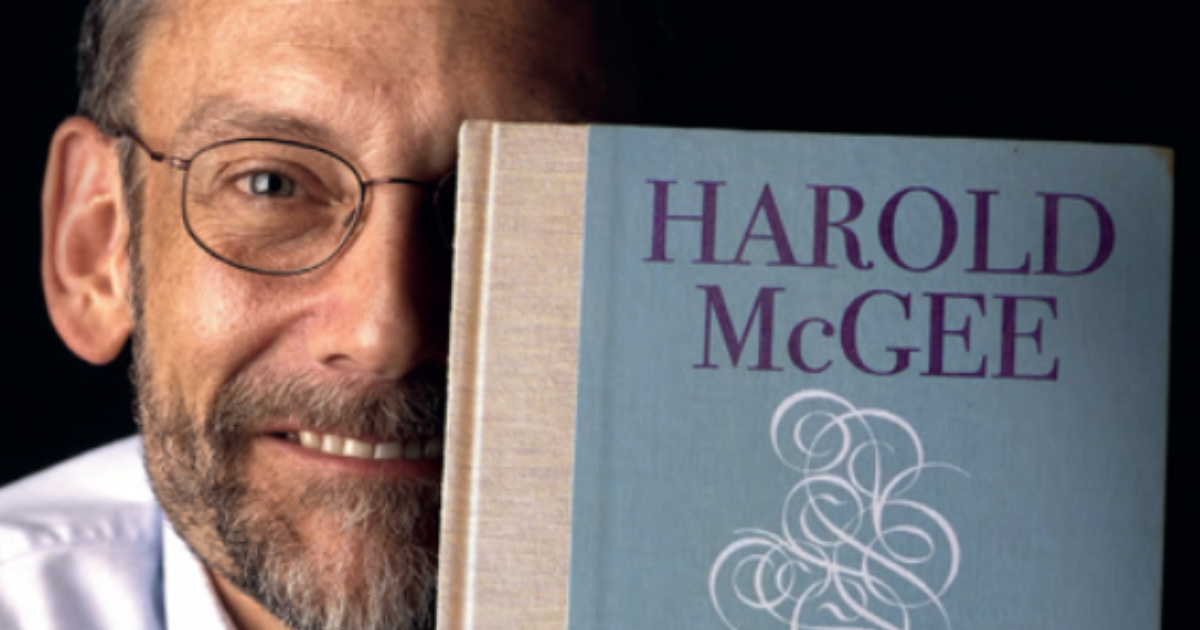
Harold McGee’s research has influenced chefs across the world, including Ferran Adrià, Grant Achatz and René Redzepi. Heston’s own interpretations of food science added another influential model, particularly in multisensory dining and R&D-led kitchens.
The Fat Duck Development Kitchen remains a space shaped by this philosophy, ensuring that curiosity, testing and continuous refinement remain at the heart of the restaurant.
Many chefs who have trained at The Fat Duck have spoken about the lasting impact of its analytical and imaginative approach, including figures such as Ashley Palmer-Watts, Jocky Petrie and Jonny Lake.
A Legacy of Wonder
Heston has frequently acknowledged that Harold's work helped give structure and language to ideas he had been exploring intuitively. Their relationship did not just introduce new techniques; it introduced a new way of thinking - one where science and storytelling coexist.
That meeting of minds continues to influence The Fat Duck today, underpinning a style of cooking that values curiosity over convention and treats flavour as both a sensory and emotional experience.
It is a partnership that helped redefine modern cuisine and established The Fat Duck as one of the most influential restaurants of its generation.
Conclusion: A Legacy of Wonder
Heston once said: “Harold didn’t just teach me about science - he taught me how to think.”
Their relationship continues to shape the way The Fat Duck creates, experiments and inspires.
It is a partnership that transcended the kitchen - a meeting of minds that redefined the meaning of flavour, and helped establish The Fat Duck as one of the most influential restaurants in the world.

For 18 years, The Staff Canteen has been the meeting place for chefs and hospitality professionals—your stories, your skills, your space.
Every recipe, every video, every news update exists because this community makes it possible.
We’ll never hide content behind a paywall, but we need your help to keep it free.
If The Staff Canteen has inspired you, informed you, or simply made you smile, chip in £3—less than a coffee—to keep this space thriving.
Together, we keep the industry connected. Together, we move forward.
Support Us
CONTRIBUTE
The science of taste: Heston Blumenthal and Harold McGee


