After working in some of Europe's leading kitchens, Jimmy Whitefield is getting the opportunity to do something he hasn't done before: create an entire menu of his own
The New Zealand-born chef is the first to take part in a new residency programme at L.P.O. Neighbourhood Wine Store in Brisbane's Tarragindi, where emerging chefs will be given six months to develop their own food and experience running a kitchen.
Launched in September, the programme gives each participating chef responsibility for developing menus, sourcing ingredients and managing kitchen operations within an established venue.
It's an opportunity that can be difficult to find in professional kitchens, where progressing through the ranks doesn't always come with the freedom to develop your own cooking style.
From Michelin-starred kitchens to creative control
Jimmy's career has taken him through kitchens in New Zealand, Scotland and England, including Fhior in Edinburgh and Michelin-starred Da Terra in London.
More recently, he worked at Venner in Brisbane's West End.
Those experiences have given him a strong foundation in high-end cooking, but the residency at L.P.O. represents a different challenge.
For the first time, he is responsible for building a menu around his own ideas, rather than working within an established restaurant's culinary direction.
Speaking to The Weekend Edition, Jimmy explained how difficult that transition can be.
"That jump from sous to head chef to doing your own food is quite a challenge."
He explained that progression in high-end restaurants often requires chefs to spend several years working their way through established teams before having the opportunity to influence the wider menu.
The residency offers him a chance to take that step earlier in his career.
L.P.O. owners Dan Wilson and Matt Okine introduced the programme to give emerging chefs an opportunity to explore their own cooking while learning the operational responsibilities of running a kitchen.
Dan spent a decade working in London's hospitality industry, including involvement with venues such as P. Franco and Dandy, before returning to Brisbane.
His experience helped shape the idea behind the residency, having seen how smaller venues could give emerging chefs opportunities to develop their own concepts.
Rather than recruiting a permanent head chef, the owners decided to open the kitchen to a rotating group of young chefs, each bringing their own approach to the food.
Making the most of a small kitchen
The kitchen at L.P.O. is a long way from the facilities Jimmy experienced in London's fine-dining restaurants.
Installed in a former storage area at the rear of the wine store, the compact space has a limited collection of equipment, including induction cooktops and a deep-fryer.
An adjoining room accommodates eight diners at a kitchen table, while the menu is also available throughout the main venue.
For Jimmy, the restrictions have become part of the creative process.
Having previously worked in kitchens equipped with specialist machinery, he has had to reconsider what can be achieved with a much simpler setup.
His menu takes inspiration from several cuisines, combining seasonal Queensland produce with techniques and flavours drawn from his international experience.
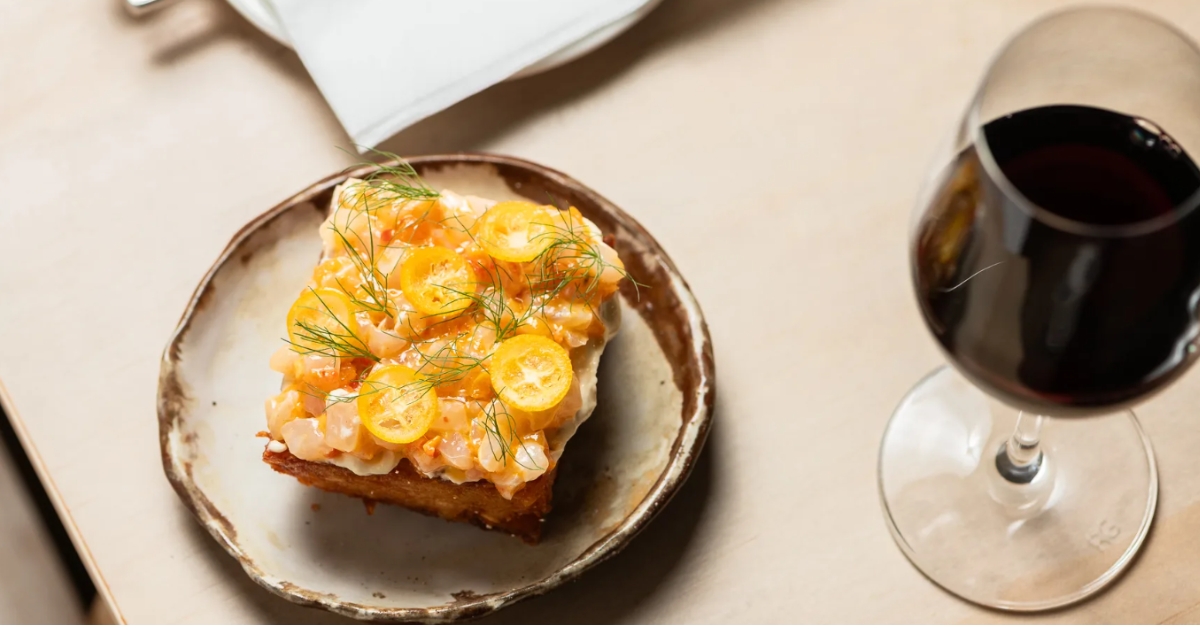
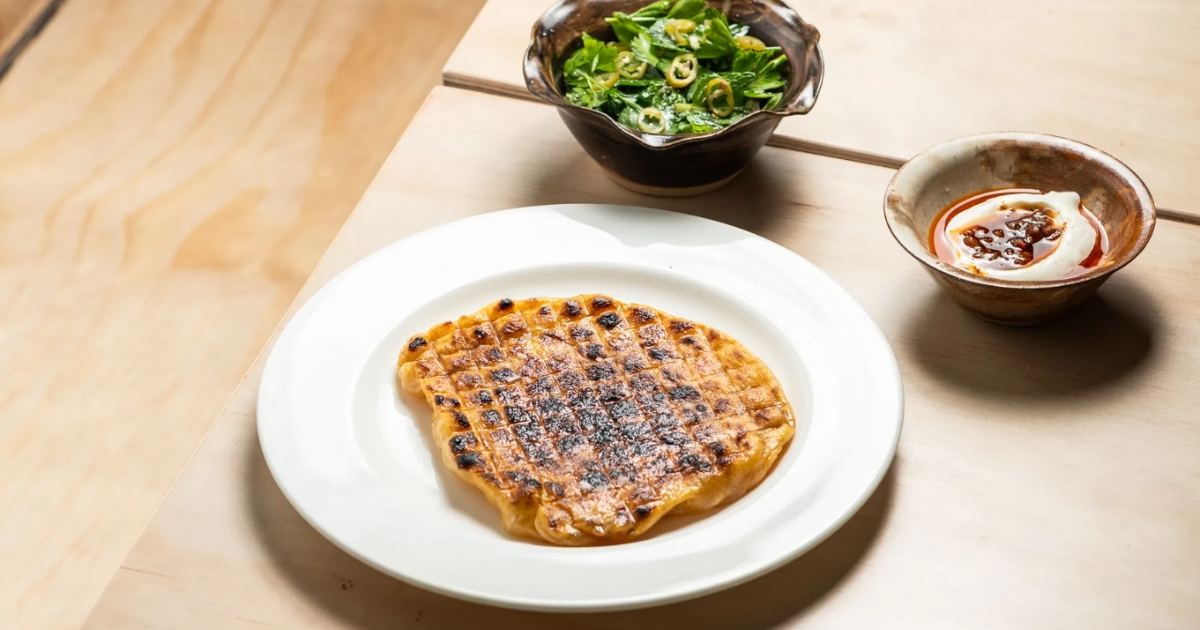
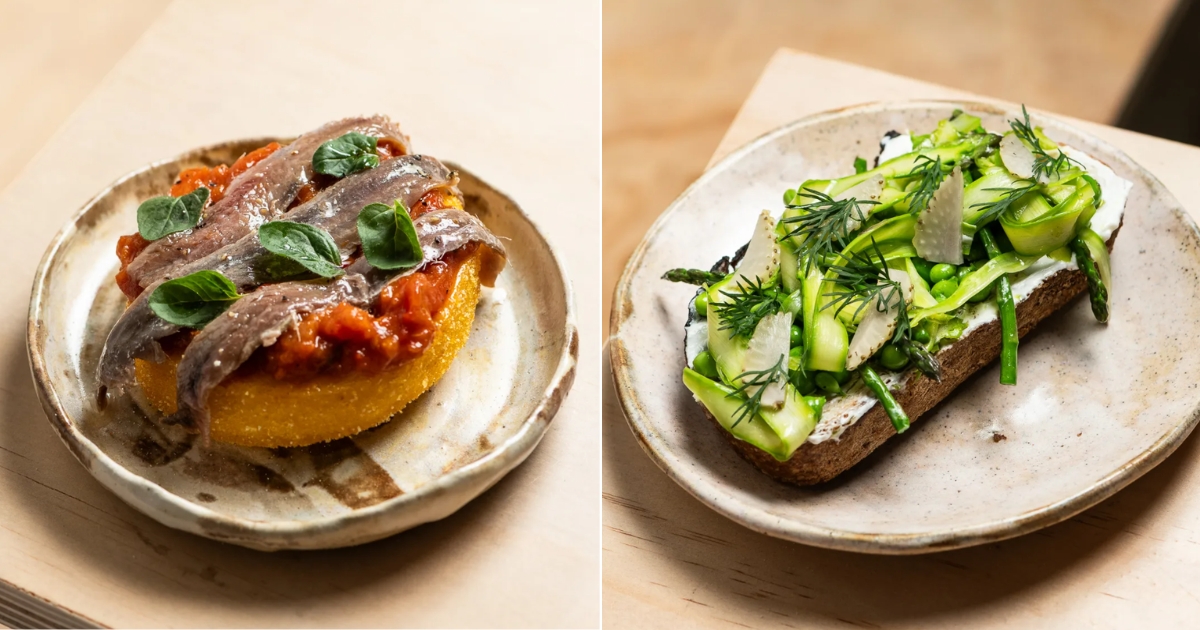
Dishes include sweet potato flatbread with labneh and shatta, beef tartare with pomegranate molasses and mint, and potato rösti topped with snapper crudo and kumquat kosho.
The menu changes regularly, allowing him to work with seasonal ingredients and develop new dishes throughout the residency.
In an interview with Broadsheet, Jimmy explained that he has been exploring Mexican and South Asian cooking because of the similarities he sees between those regions and Queensland's produce and climate.
It's a departure from the cooler climates and ingredients he encountered while working in Europe.
The food has also been developed to complement L.P.O.'s wine offering, with bold flavours and dishes suited to the venue's relaxed style of dining.
Jimmy's partner, Cass, is overseeing front of house during the residency. The pair are also planning degustation-style events under their own pop-up restaurant concept, Gosling.
Together, these experiences allow them to explore how their food, service and overall dining concept work in practice.
Learning what it takes to run a kitchen
While creating a personal menu is a significant part of the opportunity, Dan wants the residency to provide chefs with experience beyond cooking.
Developing dishes is only one part of running a successful kitchen. Chefs also need to understand purchasing, stock management, menu development and how to deliver consistent food within the practical limitations of a venue.
These responsibilities can be difficult to experience in larger kitchens, where decisions about menus, suppliers and the wider business are often made by senior management.
At L.P.O., participating chefs are given more direct involvement in those decisions.
The six-month format also gives them time to develop and refine their ideas through regular service, rather than the limited opportunity offered by a one-off pop-up.
For chefs hoping to eventually open their own restaurants, that experience could be particularly valuable.
Establishing a venue requires significant financial investment, often before an operator has had the chance to test whether their concept can attract a regular audience.
A residency within an existing business offers a different way to gain experience, using established premises and facilities while concentrating on developing the food and running the kitchen.
It doesn't remove every challenge associated with operating a restaurant, but it provides an opportunity to learn without having to launch an entirely new business.
A different pathway for emerging chefs
The approach also changes what diners can expect from L.P.O.
Rather than returning to a venue with a consistent menu and permanent head chef, customers will encounter a different style of cooking with each residency.
For the chefs involved, the opportunity is to build a body of work that reflects their own ideas and abilities.
That could help them take the next step in their careers, whether into a head chef position, a new restaurant venture or further opportunities to develop their cooking.
Dan has said he hopes the programme will help talented young chefs gain greater recognition within Brisbane's hospitality industry, giving them the experience and confidence to pursue their own ambitions.
The initiative is still in its early stages, and the chefs who will follow Jimmy have yet to be announced.
But for its first resident, the opportunity is already providing something that years of working in established kitchens had not.
After learning from some of the industry's leading chefs, Jimmy now has six months to put that experience into a menu that is entirely his own.





