For all the familiarity of Spanish food in Australia now, it is easy to forget how little of it was properly understood when MoVida first opened.
Frank Camorra did not just help put Spanish dishes on Australian menus. He helped show chefs and diners that the cuisine had the same depth, regionality and seriousness as any of the great European food traditions already respected here.
When MoVida opened in Melbourne in 2001, Frank says the starting point was low.
“They understood nothing about Spanish food, really,” he says. “There were so many misconceptions.”
The biggest one was that Spanish food was spicy, almost confused with Mexican and South American cooking. Beyond that, it was often reduced to a narrow run of familiar dishes, usually garlic prawns, bad paella and not much else.
For Frank, that version of Spanish food never matched the one he knew.
Born in Spain, with family roots in Barcelona and the south, he grew up with a stronger sense of the regional breadth of the cuisine, especially the food of Córdoba. Travel and time spent working in Spain only reinforced that.
“I realised, well, hang on, this food is so complicated, so much diversity, so many amazing ingredients,” he says.
That became the challenge at MoVida. Not to reject the classics, but to cook them properly, give them context and widen the conversation around what Spanish food could be in Australia.
“I just wanted to showcase my heritage,” Frank says. “I knew that the cuisine was fantastic. It’s one of the great cuisines of the world. And why was it so badly represented here?”
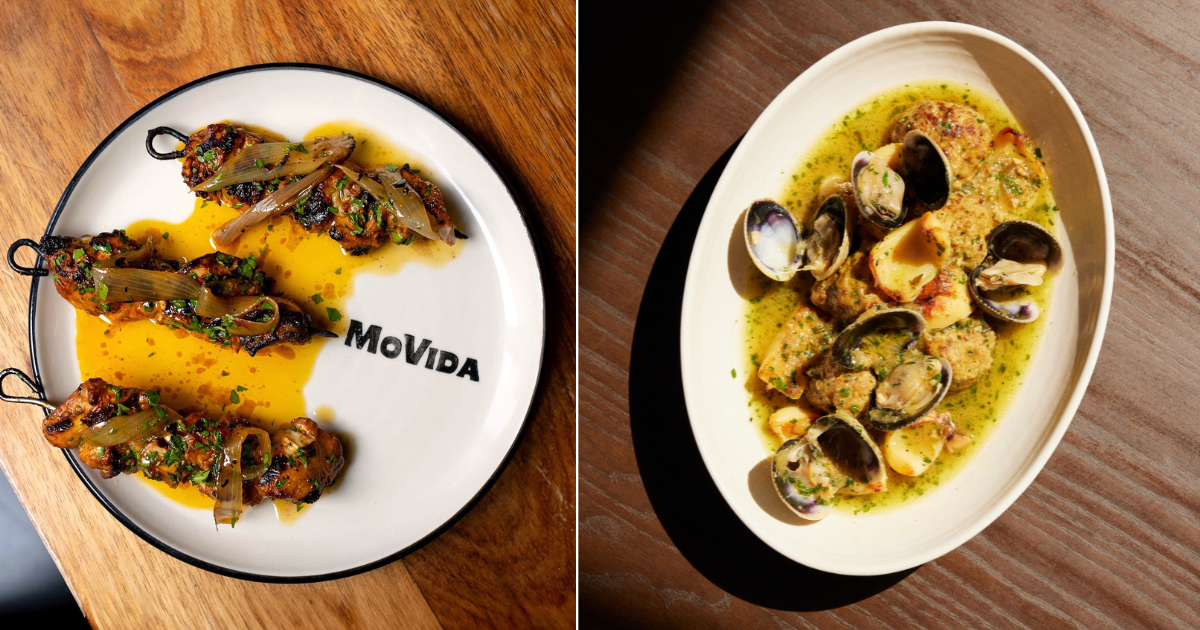
Respecting the food properly
One of the strongest things Frank makes clear is that his frustration was never with the classic dishes themselves. It was with how badly they were often represented.
There is nothing wrong with garlic prawns or paella, he says. The problem was that they had become shorthand for a cuisine that was far more complex than most Australians realised. What he wanted to show was the diversity behind them. The regional dishes. The ingredients. The sense that Spanish food could be both deeply traditional and open to refinement.
“There was also a movement of modern Spanish,” he says, “refining that food using some new techniques and updating some dishes and maybe just leaving some dishes exactly like my mum cooked them as well.”
That tension is still at the heart of his cooking. Some dishes are best left alone. Others can be sharpened or reworked. The point is understanding what the dish is before deciding what to do with it.
“That’s kind of what I do,” Frank says. “Take every dish at a time and see if there is something that I want to play around with or just showcase exactly how I would eat it at my parents’ place.”
That idea should resonate with chefs. It is not about chasing authenticity as theatre, or modernity for its own sake. It is about understanding the canon well enough to know when to leave it alone and when to move it forward.
Changing the way people ate it
Frank’s influence was never just about the plate.
For him, MoVida had to bring across a style of dining as much as a style of cooking. Spanish food was not meant to be trapped inside a stiff format. It needed energy, movement and informality. It needed the bar. It needed people coming in for a drink and a few dishes. It needed a room that felt social and alive.
“I think it all goes hand in hand,” he says.
That mattered because Australian dining at the time still leaned more formal, particularly at the serious end of the market. Frank remembers that clearly.
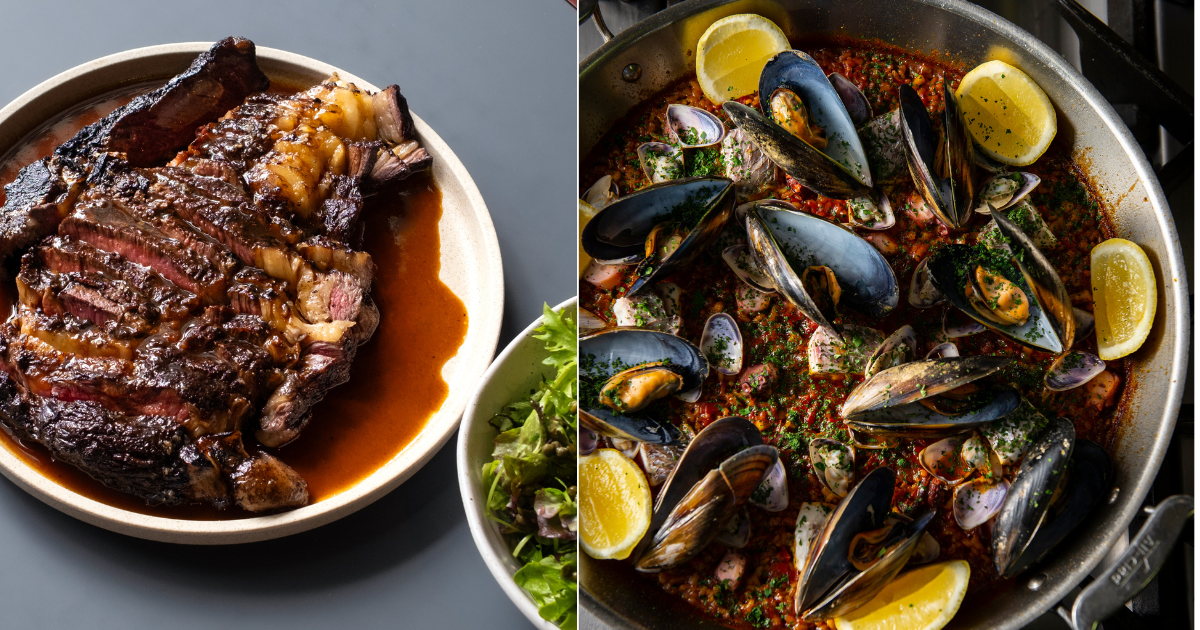
“When we first opened, the Good Food Guide wasn’t taking us seriously because we were that casual and more fun,” he says. “But we were using the same quality ingredients and the same care in the food. It was just more relaxed.”
That was part of the shift MoVida helped make. Frank did not lower standards. He helped prove that standards did not need to be tied to formality.
He still remembers how resistant diners were to bar seats in the early days.
“Nobody wanted to sit at the bar,” he says.
Then it changed.
“I remember almost overnight… seeing people sitting at the bar with people behind and passing food over, building that.”
That is a big part of the story. Frank was not just helping Australians understand Spanish food differently. He was helping them eat differently too.
Ingredients had to catch up
MoVida also opened into a market that simply did not have the Spanish pantry it has now.
Frank describes the early years as a period of making do. Chorizo was made in-house. Morcilla was made with his father. Hams were made locally. Anchovy choices were minimal. Spanish olives were scarce. Proper Spanish rice was hard to find. Conservas were limited. Cheese options were narrow.
“But absolutely, the number of ingredients and the quality of the ingredients has completely revolutionised,” he says.
That change has been one of the biggest shifts across the last two decades. Jamón ibérico, mojama, anchovies, conservas, rice and specialist ingredients that were once difficult to source are now much more accessible.
There are still restrictions, particularly around imports and biosecurity, and Frank is clear that Australia still does not have access to everything Spain can offer. But the difference between then and now is significant, and it has changed what is possible in Australian kitchens.
Australian produce, Spanish logic
At the same time, Frank has never tried to simply recreate Spain ingredient for ingredient. His cooking has always had to work through Australian produce.
That is especially true of seafood. Spanish food is deeply shaped by it, and Frank says the work here has been learning where Australia offers equivalents, where it does not, and where it opens up completely different possibilities.
“There’s differences, but there’s also opportunities,” he says. “We do have amazing crab. We do have amazing cold water fish as well as tropical fish.”
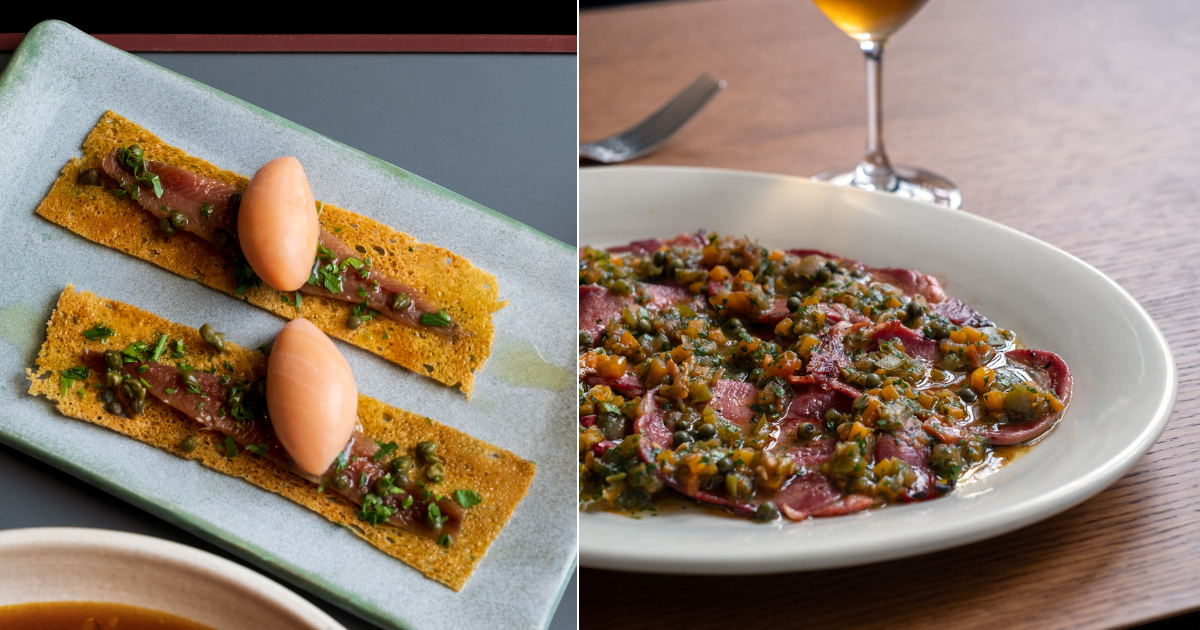
That ingredient-first thinking runs through the way he builds dishes. Start with the product. Then work out how it connects back to Spanish food.
It also explains the way his cooking has changed over time. Like many chefs of that period, Frank was exposed to the language of modern Spanish technique and some of the more experimental methods that were exciting kitchens in the early 2000s. But his own food has become more stripped back, not more elaborate.
“For me, it really is the quality of an ingredient represented really well,” he says. “Simplicity has been the key for us.”
He is just as clear on what he no longer wants.
“There’s no extra filigree. There’s nothing that doesn’t matter on that plate.”
That restraint feels important. It is probably one of the reasons MoVida has lasted. The food is not trying to impress through noise. It is trying to be true to itself.
The dishes that opened the door
Asked which dishes helped change perceptions, Frank points straight to MoVida’s anchovy with smoked tomato sorbet.
“I think that was a game changer in a way for how people saw the food,” he says.
It is a simple dish, but that is the point. Bread, tomato and anchovy is a familiar Mediterranean combination. Frank’s version sharpened it without losing its roots. In doing so, it helped show that anchovy could carry far more finesse and clarity than many Australian diners had previously associated with it.
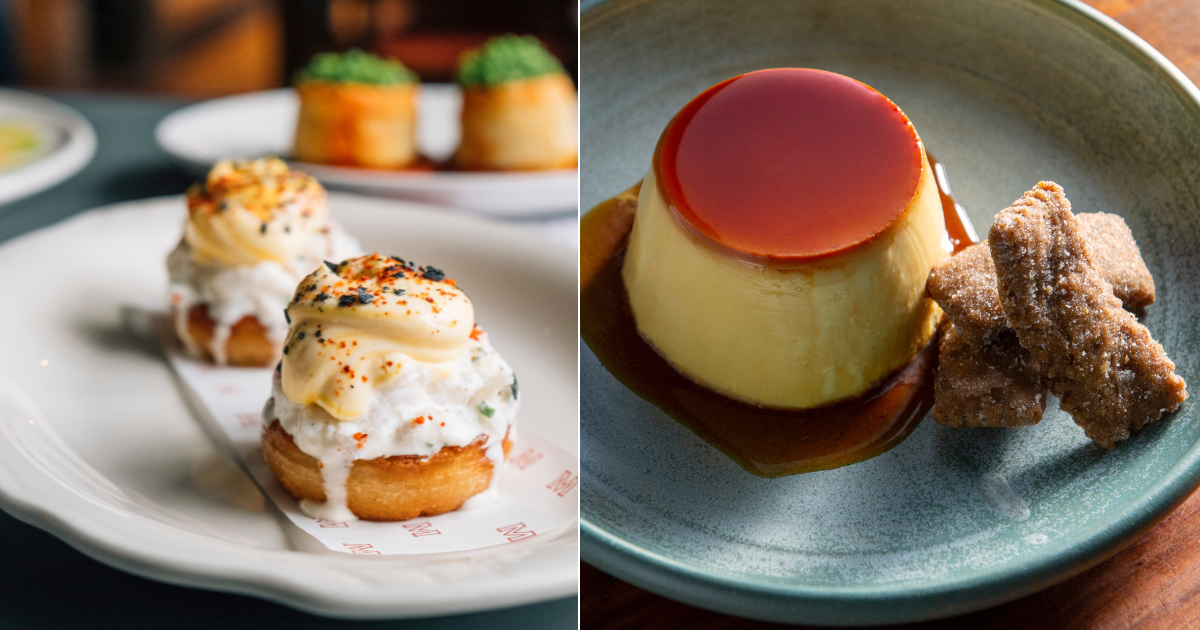
He says the same of croquettes.
“When I first started cooking them, everyone just thought it’s a potato croquette.”
Now they are everywhere. The same applies to the broader culture of small plates, shared dishes and casual seriousness that has since become standard across wine bars and restaurants.
Learn the tradition first
For younger chefs, Frank’s advice is simple.
“You gotta learn the tradition first.”
He talks about Spanish food the way any serious chef might talk about a cuisine worth respecting. Before you reinterpret it, refine it or modernise it, you need to understand the canon, the regionality and the dishes underneath it.
“It doesn’t mean you have to stick slavishly to it at all,” he says. “But I think that’s the cornerstone.”
That may be the clearest measure of his impact. Frank did not just introduce Spanish ingredients or popularise a handful of dishes. He helped shift the level of understanding around them. He gave Spanish food in Australia more context, more respect and more room to be taken seriously.
That is a legacy chefs will understand. Not just changing what ends up on the plate, but changing how a cuisine is read in the first place.





