to move with the seasons.
It is a useful way into Sam’s cooking. The technique is recognisable and grounded in classical foundations, but the final dish does not feel bound by them.
“The cooking definitely is based on traditional technique,” Sam has said.
At Bridges, that foundation is combined with the breadth of produce available in New York and the reference points Sam has gathered from different kitchens.
The grilled king crab is a good example. The shell is opened and the meat brushed with toasted chilli butter before the whole crab is cooked over coals, allowing the meat to warm and baste inside the shell. It is served with béarnaise sharpened with salted plum and pickled daikon, peppers and onion.
The duck takes a different route. After ageing and slow roasting, the breast is finished gradually over the grill to build smoke and crisp skin. The leg meat is turned into a sausage and wrapped in cabbage, bringing two treatments of the bird back together on the plate with potato purée and a sauce built around dried scallop and chilli.
There are French and Basque references throughout the menu, particularly in the sauces, preservation and handling of wine, but Sam has resisted putting Bridges into a single culinary category.
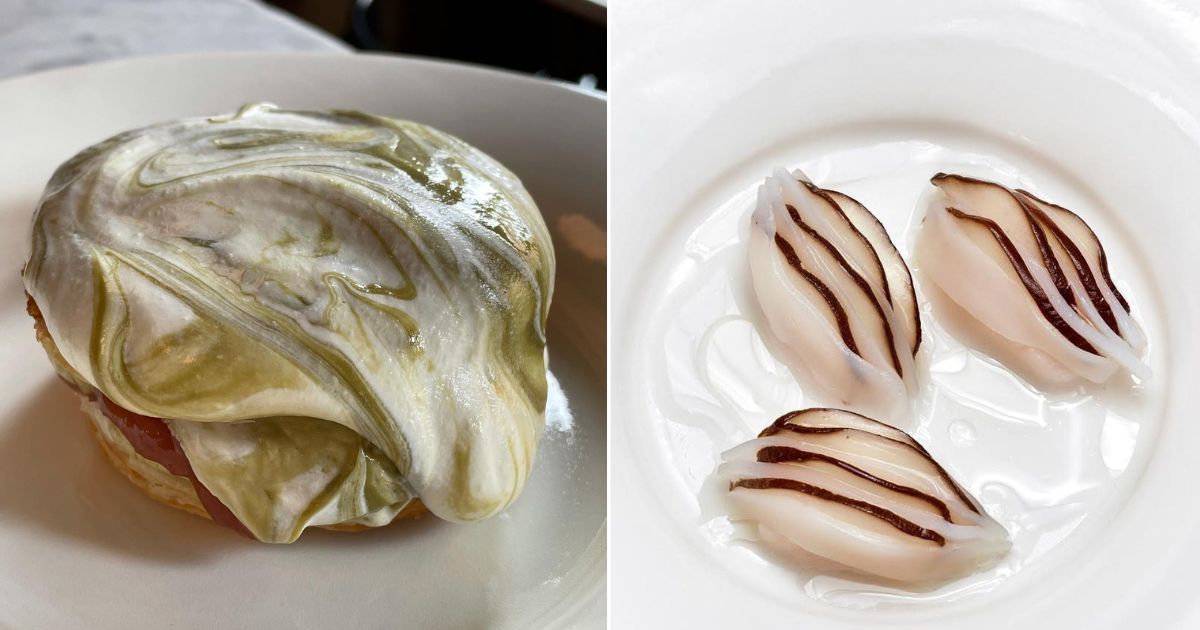
There are also smaller reminders of where he started. An early dessert of toasted meringue with coffee, lemon and fig-leaf oil drew directly on the Australian meringue desserts he grew up eating.
That combination of established technique and less predictable flavour is now central to Bridges. Michelin recognised the restaurant with one star in its 2025 New York selection, highlighting a menu that does not fit neatly within one cuisine.
For Sam, however, the more significant shift is having his own kitchen in which to develop it.
Years spent working for other chefs gave him a deep bank of references, but Bridges required him to decide which of those ideas belonged in his own restaurant and which did not. It is the difference between accumulating experience and turning that experience into a point of view.
Back in Melbourne
In March 2026, that journey came back to where much of it began.
Sam returned to Melbourne with the Bridges team for Melbourne Food & Wine Festival, cooking two nights at Cutler with former boss Andrew McConnell.
The menu was not simply a reproduction of what was being served in New York. Bridges’ cooking was worked around Melbourne’s early-autumn produce, with dishes including tomato broth with calamari and coriander seed, cured tuna with dates and leek, prawn toast with gooseberries and basil, and smoked eel with Tropea onions and cherry leaf.
The Comté tart travelled too, but arrived with tomatoes and elderberries. Later courses included coral trout with bisque, Swiss chard and Pernod, and grilled duck with boudin noir, beetroot and rhubarb.
A few days later, Sam cooked again at Gerald’s Bar, reconnecting with another part of his Melbourne years before returning to New York.
The Michelin star gives Sam Lawrence’s story an obvious headline, but Bridges is more interesting as the result of what came before it.
Melbourne, Paris, Hong Kong and New York all remain visible in the cooking, as do the chefs and restaurants Sam worked with along the way. What has changed is who makes the final decisions.
At Bridges, those years of reference points are no longer someone else’s menu or someone else’s restaurant. They have become Sam’s own.