'We try to tick both boxes' – Pierre Minotti's Michelin plan for Orrery


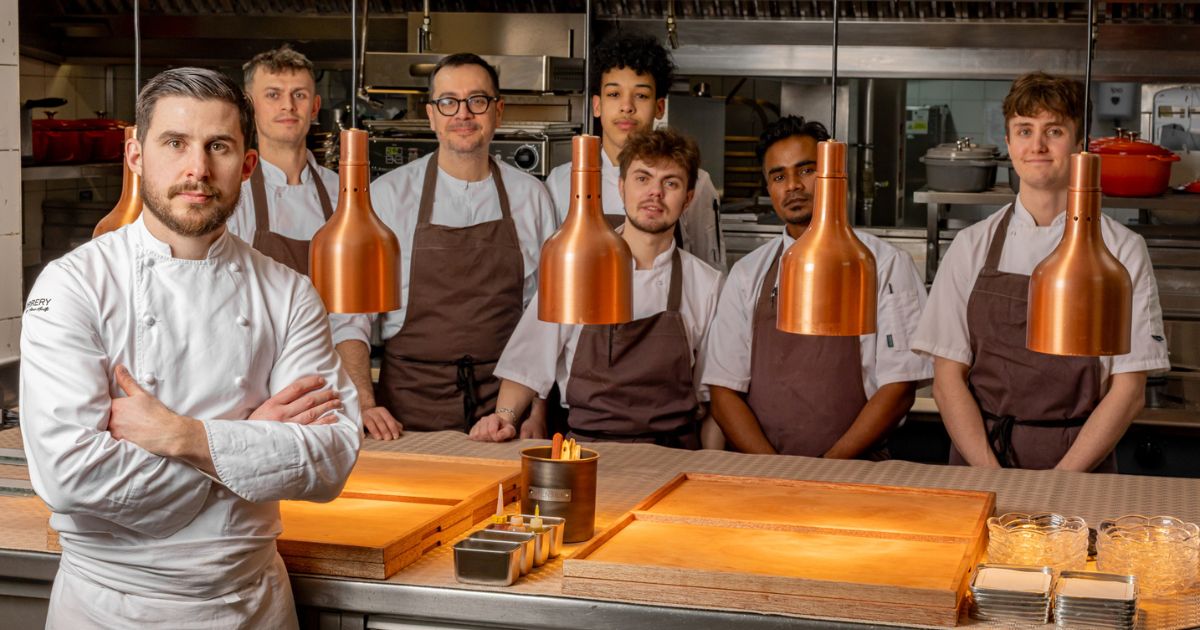
Pierre Minotti’s ambitions are clear – to win a Michelin star, while keeping his restaurant Orrery “very accessible”.
Pierre grew up in Jura, the wine region in eastern France, and started in kitchens at the age of 10.
Going on to train at the Hyacinthe Friant catering college in Poligny, Pierre has since spent most of his working career at the very pinnacle of fine dining.
He began as a commis at three-Michelin-starred Anne-Sophie Pic in Valence, came to London as a demi chef de partie at Alain Ducasse at The Dorchester, and then spent time as a junior sous chef at the two-star Hélène Darroze at The Connaught.
His last job before Orrery was the one that made his name. As executive chef at Alex Dilling at Hotel Café Royal, he helped take the restaurant to two Michelin stars within four months of it opening in 2022, one of the fastest ascents London has seen.
Pierre moved across to Marylebone in spring 2026 with an explicit brief to win Orrery a star back, and a stated ambition to do it without the formality that often comes with it.
"Orrery, firstly, is a beautiful restaurant located in Marylebone,” Pierre said.
“What I want it to be is a fine dining destination.
“We're aiming to become a Michelin star restaurant, but at the same time we want to be very accessible and flexible, and create this kind of neighbourhood restaurant. So we try to tick both boxes. This is the challenge we're having at Orrery."
Orrery’s Michelin-starred history
Orrery opened in 1997 as one of Sir Terence Conran’s restaurants.
It won a Michelin star under head chef Chris Galvin in 1999, holding it until 2008.
Following a rebrand, Orrery by Pierre Minotti opened in April 2026, with Pierre building his menus predominantly around English and French produce, with cooking shaped by Auguste Escoffier principles.
"The philosophy here is always using seasonal products, to make a lot of movement on the menu,” Pierre explained.
“Normally we try to change the menu every three months, once the seasons change.
"It's a French restaurant, so we're using the French reference dishes as a base and we try to put a little twist on them, to make it in a very modern way.
“I'm using British products as much as I can. Otherwise, it's French. I'm not using any product from Japan or anything. That doesn't mean I don't like them, it's just that we try to use the products we have around us.
"On flavour, I think we're quite classic.
“We're not too challenging on the combinations. We just try to make delicious food, make it look pretty, with a French reference obviously."
The trou normand tradition
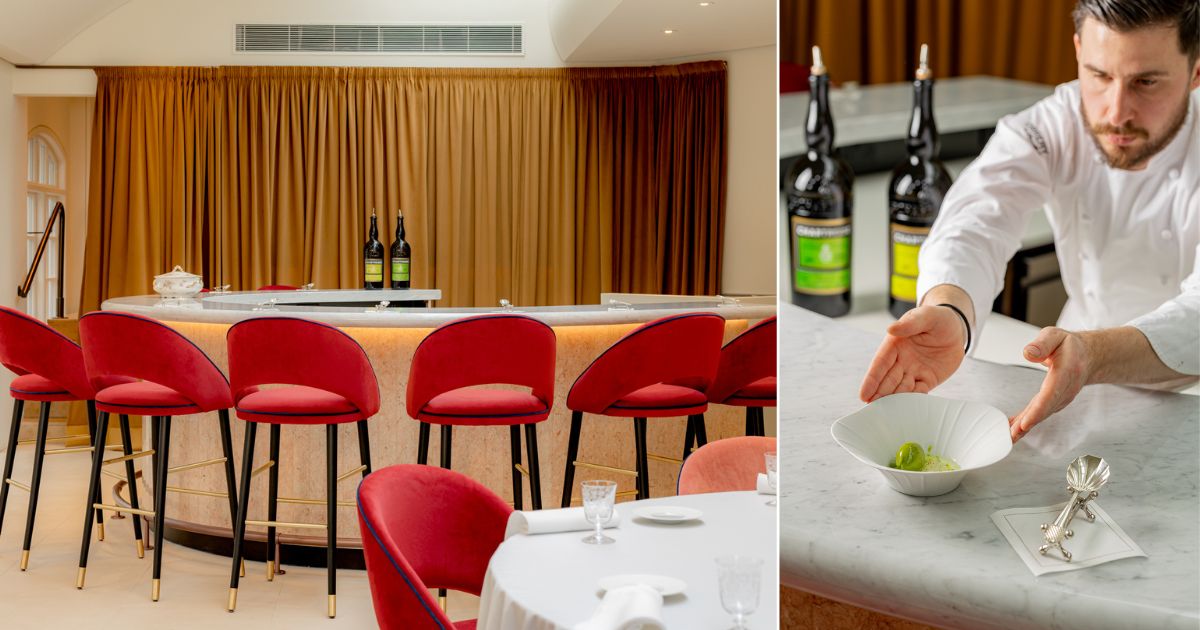
The ‘French reference’ is no more clearly seen than with the ‘trou normand’ tradition (which translates as ‘Norman hole’) during the meal.
Diners are taking from their seat to the bar, to have alcohol and sorbet as a palate cleanser, before returning to their tables for the meat course.
“The trou normand is a tradition in France,” Pierre explained.
“When we're offering a long tasting menu, we normally serve an apple sorbet with Calvados just before the meat course, to reopen the appetite. It's an old tradition in France.
“They also maybe used this tradition to get a little bit more drunk sometimes, I don't know!
"So we decided to use this tradition at Orrery by designing a bar just allocated for the trou normand. Every guest, before the meat course, is going to stand up and go to the bar to have this trou normand.
"However, we're not using Calvados and apple, because I don't like apple and I don't like Calvados. We're using Chartreuse, the French Alps liqueur, as the reference to work around the trou normand. It is a product I love, and which I think is more mineral, more interesting and fresher.
“One sorbet we use is lovage and the other is lemon balm.”
Asked why he decided to introduce the trou normand at Orrery, Pierre said: “It's a little bit more entertaining. It's good, when you have this long experience and you need to sit for two or three hours, that you stand up, you go to the bar, you have a palate cleanser just before the meat.
“It just makes the experience more fun.
When is Orrery open?
Orrery can serve 35 covers, with just one sitting per service, and seven chefs running things in the kitchen. They operate both lunch and dinner, opening from Tuesday through to Saturday.
“We offer a lunch menu, three courses with a choice,” Pierre said.
“People are a little bit more in a rush at lunch. It's a shorter experience, but it needs to be faster, because people just don't want to sit for a few hours.
“There are a few tables who are okay to have a long tasting menu. But lunch and dinner are very different.
“At dinner, most of the time people come for a longer experience, taking more time, drinking a little bit more. So it's a bit of a different pace.
“We're doing only one sitting at Orrery. We don't want to turn the tables, because you have your table for the night, or for lunch. We don't want to rush you.”
What is on the menu at Orrery?
Pierre gave a flavour of the type of dishes on the menu since he joined Orrery, less than six months ago.
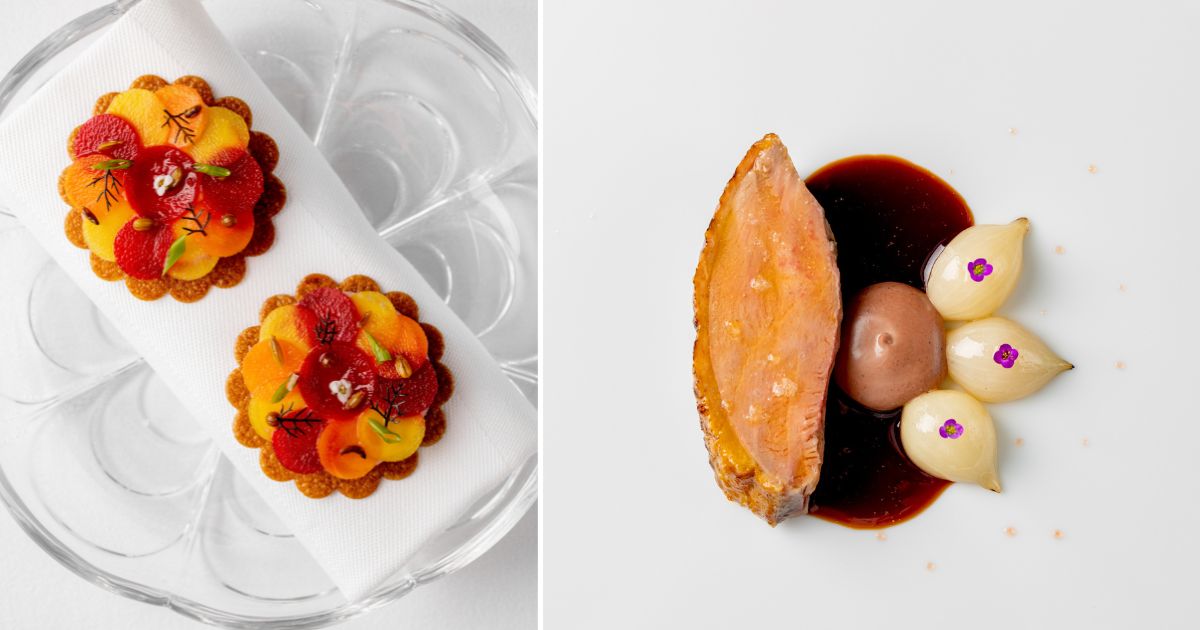
"Pissaladière is a well-known tart from the south of France,” he said.
“It's a puff pastry with onion jam, anchovies and black olive. So I decided to rework this idea of pissaladière.
"We're making a small version of it. I just removed the puff pastry at the bottom, because I believe it's a little bit too rich for this kind of restaurant, this kind of tasting format. So instead we do a panisse, which is a chickpea dough, gluten free, which we fry first, so it's really crispy, lighter. And then we add this nice onion jam and anchovies on top.
"On the side we're cooking some Scottish girolles and veal sweetbreads in an anchovy butter and Espelette pepper. And we finish with a sheep's milk sabayon on top, to bring this kind of Provençal taste into it."
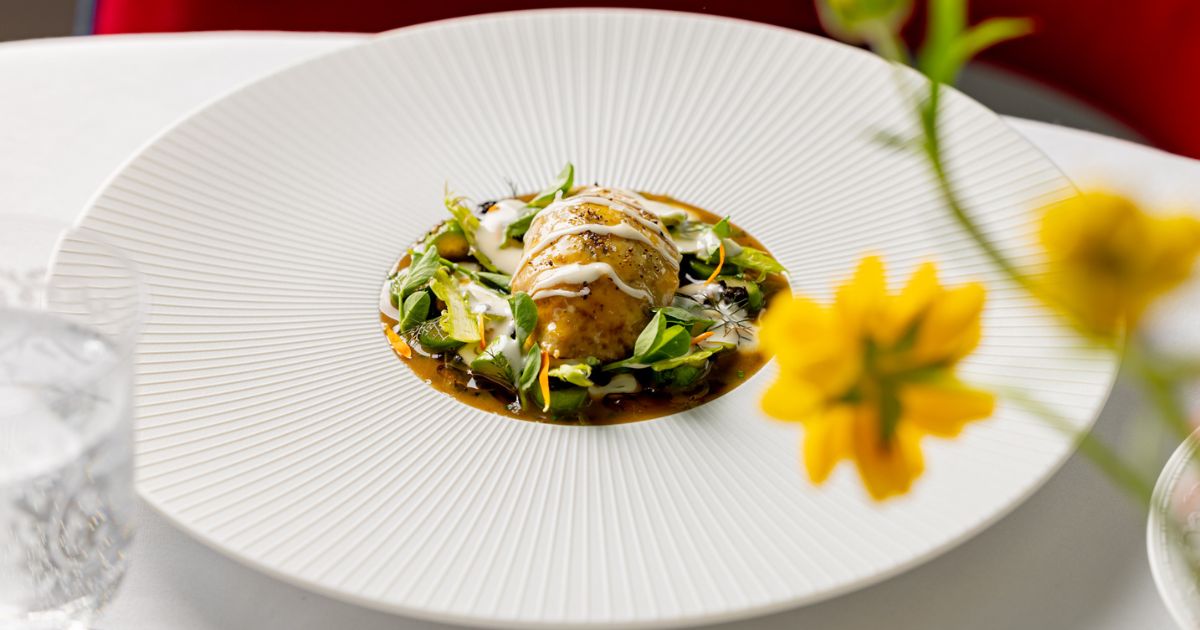
Pierre added: "For the quail, we basically stuff the quail under the skin with a farce of shiitake mushroom and foie gras.
“We smoke it in the oven and serve the breast on the plate, which is slightly pink, which is quite unusual for quail, but it's a nice poultry, a very nice, interesting product.
"We're serving it with a fresh English pea puree, English peas on the side. The legs have been confit and added to an English pea ragout, with vin jaune sauce.
“Vin jaune is a yellow wine coming from my hometown, Jura. It has this kind of nutty flavour, it's an oxidised wine, it goes very well in a sauce, and it brings something from my hometown into the dish."
What makes a successful day?
At the end of a long double-service day, how does Pierre know if things have gone well?
"You always have this feeling whether you've done a good service or not,” he said.
“When the service has been smooth, when you're proud of what you're sending or when there hasn't been any issue.
“The last thing is when you go into the dining room and the guests are smiling and saying thank you. That is a good feeling."

For 18 years, The Staff Canteen has been the meeting place for chefs and hospitality professionals—your stories, your skills, your space.
Every recipe, every video, every news update exists because this community makes it possible.
We’ll never hide content behind a paywall, but we need your help to keep it free.
If The Staff Canteen has inspired you, informed you, or simply made you smile, chip in £3—less than a coffee—to keep this space thriving.
Together, we keep the industry connected. Together, we move forward.
Support Us
CONTRIBUTE

'We try to tick both boxes' – Pierre Minotti's Michelin plan for Orrery


