out of it. Assholes in the kitchen aren’t cool anymore, and neither are power trips. Hell, the kitchen is stressful enough as is, who really needs more of it? The more controlled the environment and staff are, the greater your chances are for success. At the same time, don’t put up with a jackass who is that guy, the one who’s above everyone else, and treating people like shit. Parasites are some of the worst things that can happen to a kitchen, or a company in general, and they suck the life right out of you and don’t mind bringing the rest down with them. This is one type of behavior that absolutely can’t be tolerated, and that’s not coming from an HR perspective, that’s coming from a more real, human level. When you take control of this situation, and the staff sees you stand up for them, or a situation, they’ll respect you that much more for it.
Loyal employees are loyal, not because they have to be, but because they want to be. Chances are, you made them feel that way. Unfortunately, it’s just as true when it applies to unloyal employees.
There is also that one kitchen worker who just isn’t bringing enough to the table. Half the time they can’t recall the ingredients making up various dishes, and you can tell, if you look hard enough, that their heart isn’t really in it. They typically do minimal prep, and always have an excuse for why they can’t cover a sick coworker’s shift. The same guy, when the situation is reversed, bitches about how he works with a bunch of assholes, because no one will cover for him.
Show me the guy or gal willing to go out of his way for you and your company, and I’ll show you someone worth keeping around. To achieve this, though, you’ve got to give them more than just a job — give them something to buy into.
With everything, from menu, to on-the-clock behavior, it’s up to you to establish a scale of what’s acceptable, and communicate that, so that all are on the same page. Now, you, the chef, are ultimately responsible and accountable when food goes out wrong, or when that cook flirts just a little too much with the cleavage-baring hot new bartender. Own it, fix it, learn from it, and move on.
 “Mediocrity breeds mediocrity, while excellence breeds excellence. If you want to be excellent, commit to that, and hold yourself accountable every single day. How can you possibly hold anyone else accountable, when you can’t even, first, do the same for yourself?“
We aren’t all meant to be executive chefs and restaurant owners. Many are perfectly content working in the industry in order to make enough money to merely support a family. Others, need a part time job working through college, or can only work a few nights a week for whatever reason. And, some want the experience of working in your type of restaurant, or maybe even for you specifically, so they can put it on their resume and leverage that experience for something down the road. There is nothing wrong with any of these scenarios, but it’s important to have a conversation early on, so we know what to expect. A mutual understanding. When it’s all out on the table, there’s no surprises, no getting blindsided, and allows us to support them on the way out the door as they move on to something new.
When hiring it’s important to meet people where they are, and to know where they are heading. Otherwise we might be heading in two different directions from the outset and not even know it.
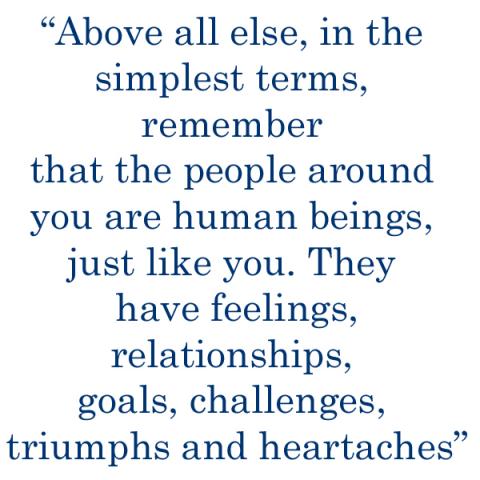
Above all else, in the simplest terms, remember that the people around you are human beings, just like you. They have feelings, relationships, goals, challenges, triumphs and heartaches — all things that make life exciting, but at the same time challenging, and often stressful. Cars break down, hell, happened to my sous this morning and it caused him to miss the rush, and we needed him today. People get sick, family members die, and more common, though less dramatic, is the strain that an intense work environment can have on us, both physically and mentally.
The more you realize this and live accordingly, your staff will notice that you’re not just looking out for yourself, but this takes connecting with those very same innate parts of ourselves, realizing that we are all in this together. So, if that’s the case, we might as well build meaningful relationships along the way, learn something from the craft, as well as each other, make some delicious food, and once it’s time to retire, you’ll be able to look around and smile at what you’ve built, and the impact you’ve created by being intentional with who you are. By being a chef.
All cooking aside, that’s what I think it truly means to be a chef.
 Chef Chris Hill left a job in the business world to follow his heart and passion into the world of cooking and the kitchen. Chris opened his first restaurant at 28 and grew into the role of executive chef.
Having taken his experiences in the corporate world, as well as those in the kitchen, Chris has built a large social media following centered around TV appearances all over the Southeast U.S., his writing, TEDx talks, and his mission of helping industry workers to lead fulfilling, successful careers.
Chris' first book comes out in the Summer of 2016 and is a dive into what makes for a successful career in the restaurant world, and includes exclusive interviews with some of the world's leading and most respected chefs.
You can follow Chris on Facebook, Twitter and Instagram, and read more of his work here.


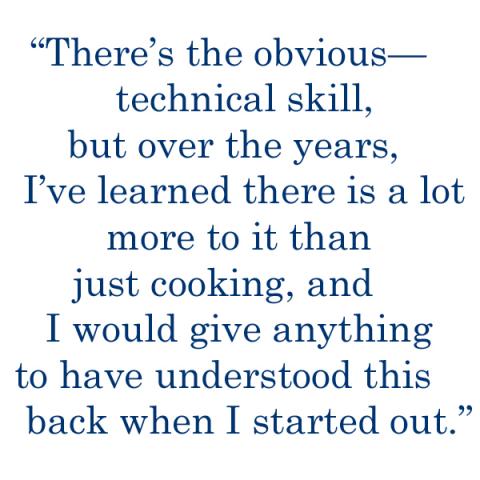 The kitchen is where our blood flows fastest and where minutes turn into seconds, and for a few hours we are lost in the zone. A waist high sandwich unit in front of us with our mise en place, a bunch of burners behind us and a stack of a dozen sauté pans are nearby, waiting to serve their purpose. The convection oven hums, the fryer simmers, and depending on the time of day, it’s either mind-numbingly quiet, or frantically loud.
 Soon you’ll be getting pretty good, hopefully soaking up the experience and talent around you. Somewhere along the way, if you are good enough, you’ll someone will hand you the keys, and people will start calling you Chef. I think we all now know that being a chef is something that’s earned through hard work, built on respect and has nothing to do with a diploma, nor the amount of time you’ve spent working over a stove. With that title comes responsibility, and it starts with your team , the people around you, who, let’s face it will be seeing a lot more of you than your spouse or anyone else. Treat them with respect. This includes inexperienced waiters who mis-ring tickets at the worst possible times and those bartenders who don’t know what the hell a compote is. Just remember, they are doing their best, just like you.
 Managing a team is challenging, stressful. With that said, please, please, please, don’t be a yeller. Sure, it happens, but don’t make a habit