Eugene Korolev: Changing perceptions of Ukraine with Sino


IN ASSOCIATION WITH


Eugene Korolev is keen to break the mould.
The talented chef has spent the past year running a restaurant in London, showcasing his Ukrainian heritage in a new way.
Sino, which now features in the Michelin Guide, offers unique take on Ukrainian cuisine, with Eugene looking to steer people away from the stereotypical Eastern European perception of what his country’s food should be.
Eugene is passionate about helping to push the boundaries and highlight what Ukraine has to offer.
powered by

Alongside his role as chef and co-owner at Sino in Notting Hill, Eugene is also the president of the Bocuse d’Or Ukraine team. Away from hospitality, his national pride was further enhanced when he spent time serving in the army during the war with Russia.
The Staff Canteen spoke with Eugene, to delve deeper into his background and culinary philosophy.
“My mission is I’m just trying to highlight Ukrainian cuisine and show it to the world,” he explained.
“I have a team and people around me, but even one person alone can do something.
“Ukrainian cuisine should be shown to the world.
“I know now a few chefs who are opening Ukrainian restaurants around the world.
“They’re trying to showcase that we have the cuisine and it’s beautiful and it’s tasty. This is one of the international cuisines, so we need to be among them.”
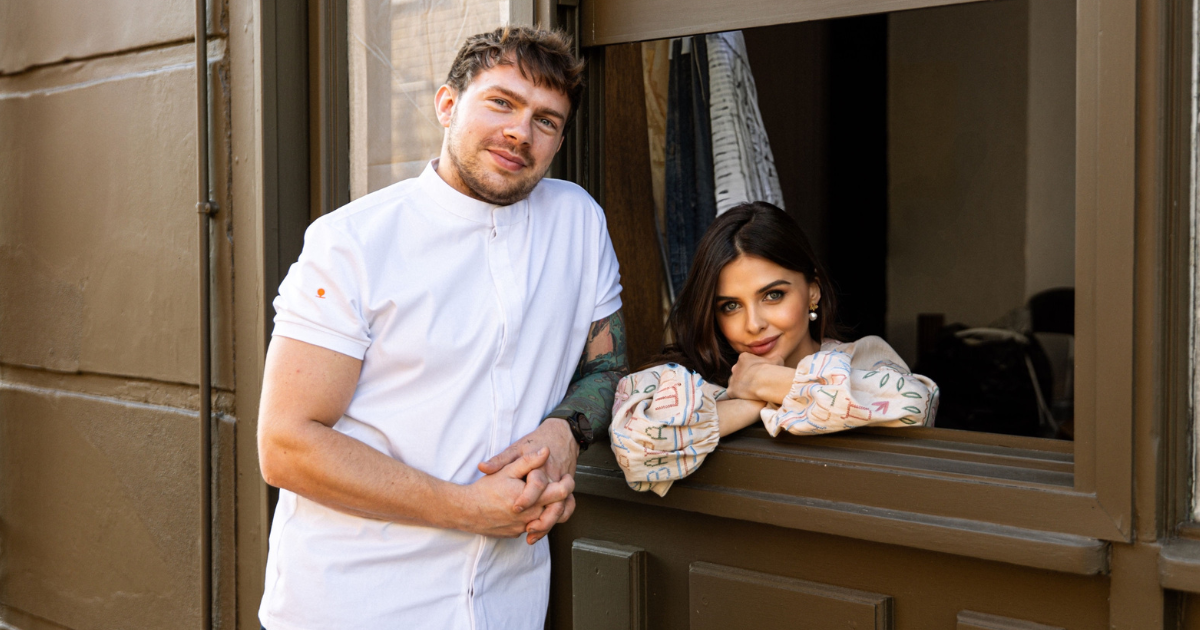
Eugene Korolev’s culinary background
Eugene’s culinary path saw him work in various countries, working at restaurants such as Benoit in Paris and Poland’s first Michelin-starred restaurant Atelier Amaro.
That led him to opening his own restaurant, Manufactura, in his hometown of Dnipro, in 2021.
“I had a chance to open my restaurant and we were open basically just for three months,” Eugene explained.
“We opened a restaurant using local ingredients and doing casual food. It was not straight Ukrainian, it was something different.
“When you go deeply into Ukrainian gastronomy and sectors with the restaurants, what they’re doing, that’s basically quite the same menu everywhere, which is more popular in the city.
“We were trying to be something different and do some different way of cooking, combinations and using more local ingredients.
“Then the war started and I joined the army.
“2021 was basically one of the years when Ukrainian cuisine and chefs and the industry itself were rising.
“Sadly, now with the war, we made a few steps back, but we’ll come back with that.”
Time in the army changed Eugene’s mindset
After around 18 months on the front line, Eugene left the army and returned to cooking.
“When we opened the restaurant in Dnipro, we were thinking with the team that someday we needed to open a restaurant somewhere else,” he said.
“We were thinking about Europe. We didn’t think about the UK because that was too difficult for us to get the visa and permissions and everything. That was far, far away from us.
“But then one day I met Polina (Sychova), my business partner. It was summer 2023. She said that she would like to open a Ukrainian restaurant in London.
“Then I realised, okay, this is the chance.
“London is the biggest food stand in the world where you can basically show and prove what you can do.
“It was going to be tough and very high pressure. But if you want to achieve something, you have to compete with the best.
“That was the moment when the challenge was accepted.”
He added: “The most important thing I learned, what changed me after my time in the war, was just to understand what is really important in your life and what is less important.
“I just started to treat people in a different way. I see a problem and ask myself, is it really a problem? Everything will pass, and this will pass.
“Something changed inside me. I began to filter people - if you want to spend time with them or not.
“My circle of friends became very small. I just understood how to say no to people and situations.
“I was thinking what is really important for me and for staying in this world, and just put all my energy there.”
Opening a restaurant in London
Finding a business partner to open a restaurant in London was just the first hurdle. Next was sourcing the location and then convincing people to come and try the food he was cooking.
“The biggest issue for opening a restaurant in London is finding the spot,” said Eugene.
“We spent one-and-a-half years just looking for the site, and then another few months dealing with all the legals. That was the toughest part.
“If you want to get a nice spot, you have to fight for it.
“That was probably more difficult for us because we’re a new operator in the market and new in the UK. Nobody knew us and this is a Ukrainian concept, which is quite risky.
“We’re not positioning ourselves as fine dining Ukrainian, it’s casual dining, but still, Ukrainian is an unknown concept, like terra incognita. Nobody knows what it means or how it will go.
“So lots of landlords were struggling with the concept, but finally we got it.
“It’s also much easier to find staff in Ukraine.
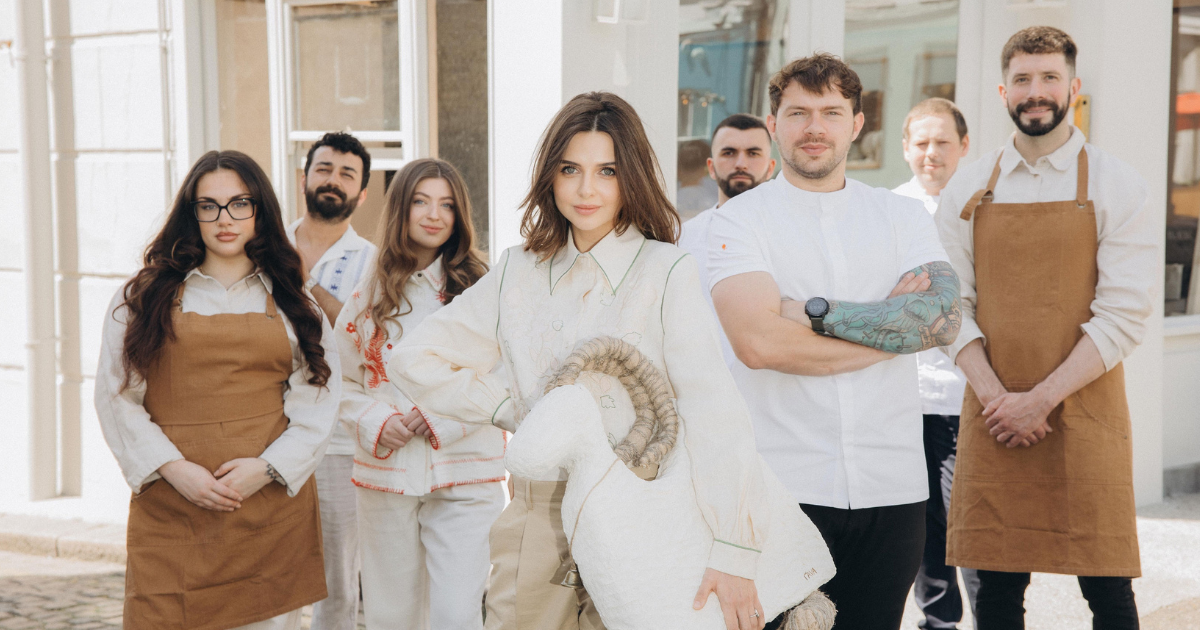
“I was lucky that I had 70% of the staff from my team coming from Ukraine. The rest had already been working in the UK for around 10 years.
“They were excited to join the Ukrainian project and to be part of it.
“There were some difficulties with the suppliers as well, as I’m new and nobody knows me. You want to work with the best suppliers, with the best produce, but then there are rules in the UK about how you should work with them.
“In Ukraine, it’s easy. If you want to work, they’re basically chasing you, and you’re just choosing which supplier you want to work with. Here it is the opposite. You have to chase suppliers and email them and ring them all the time and just ask them: can you please work with us?
“It basically took half a year to set up all the suppliers and some staff.
“We were lucky to have a clear vision of our concept and the food we’re doing, and how we are working with the guest experience. So that was the easiest part for us.
“But I think, as everyone knows, the first year in a restaurant is always tough because there is lots to do.
“We had lots of pressure in the media, in the industry. But in the end, we’re just enjoying it.”
Moving away from stereotypes
Further elaborating on the food on offer, Eugene said: “The first thing we wanted to avoid was people thinking that Ukraine is just about war, and that opening a Ukrainian restaurant, they would treat it as refugees opening the restaurant and they would feel obliged to come to our restaurant to support us and so on.
“We wanted to show that, no, we are not refugees. We’re just people who want to open a Ukrainian restaurant with Ukrainian cuisine.
“The second blocker was, and still what we have, is that we were really brave to tell everyone that, look, we are not traditional Ukrainian cuisine.
“If you ask people their knowledge about Ukrainian cuisine, even in the UK, everybody is talking about borscht, varenyky dumplings, and chicken Kyiv.
“We want to avoid all these stereotypes about the cuisine.
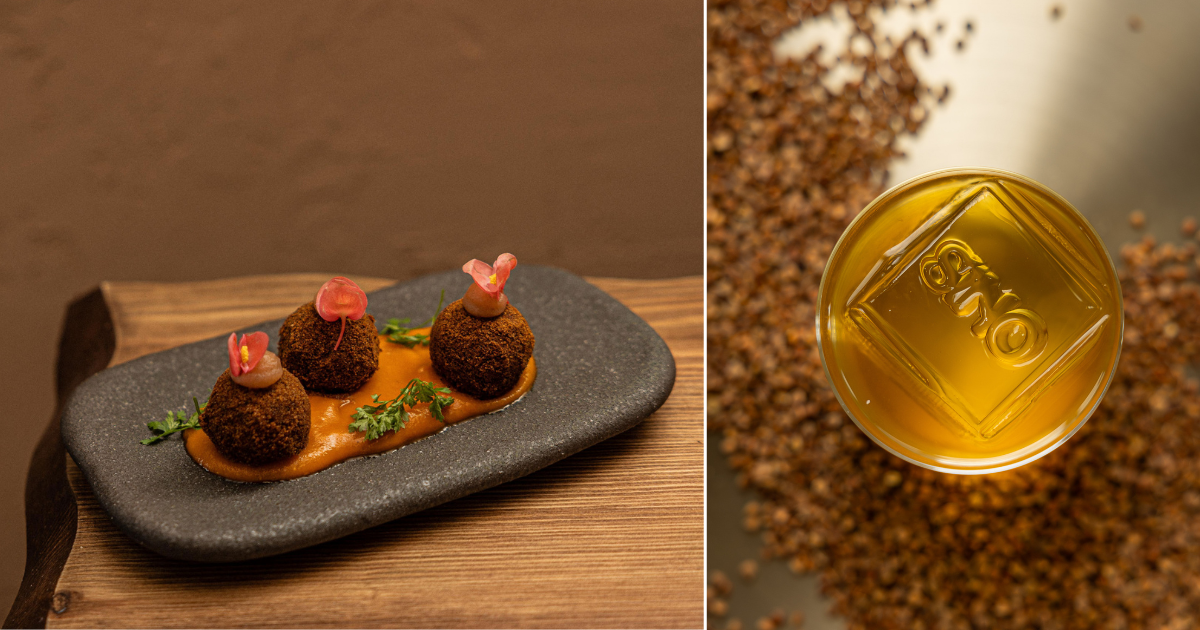
“We have Ukrainian ingredients, we have Ukrainian taste, we have the DNA of the flavours, and we want to build something new.
“I think the closest example to say is Kol restaurant. They’re doing Mexican cuisine, but they’re doing it with British produce, and they still keep the DNA of Mexican flavours and combinations.
“That’s what we are doing here.
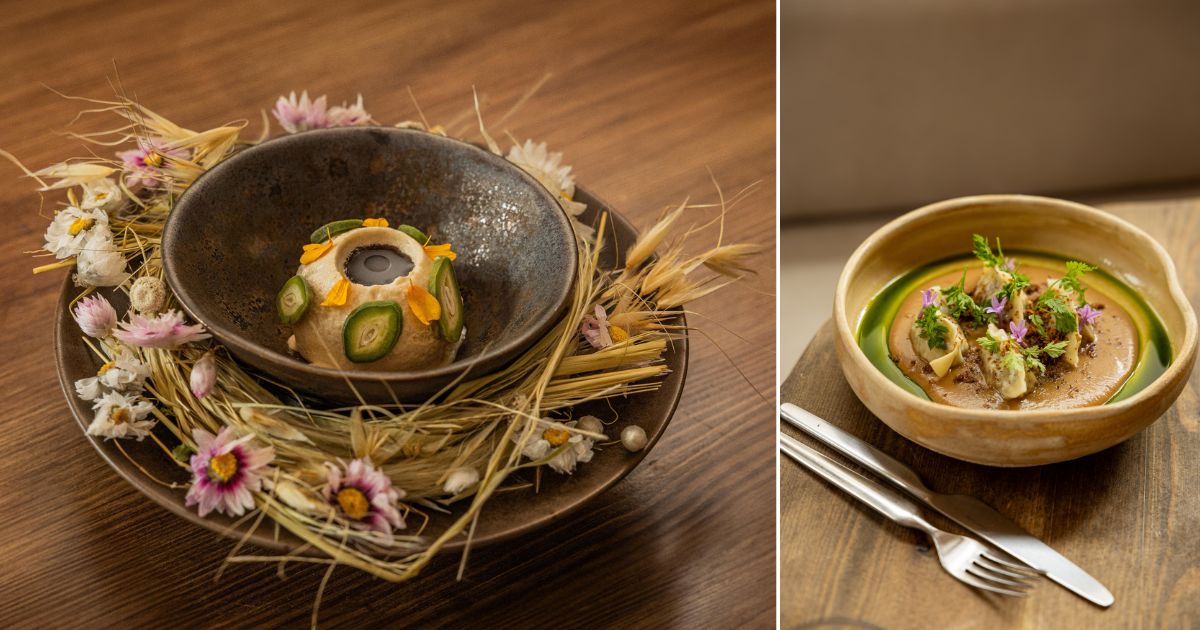
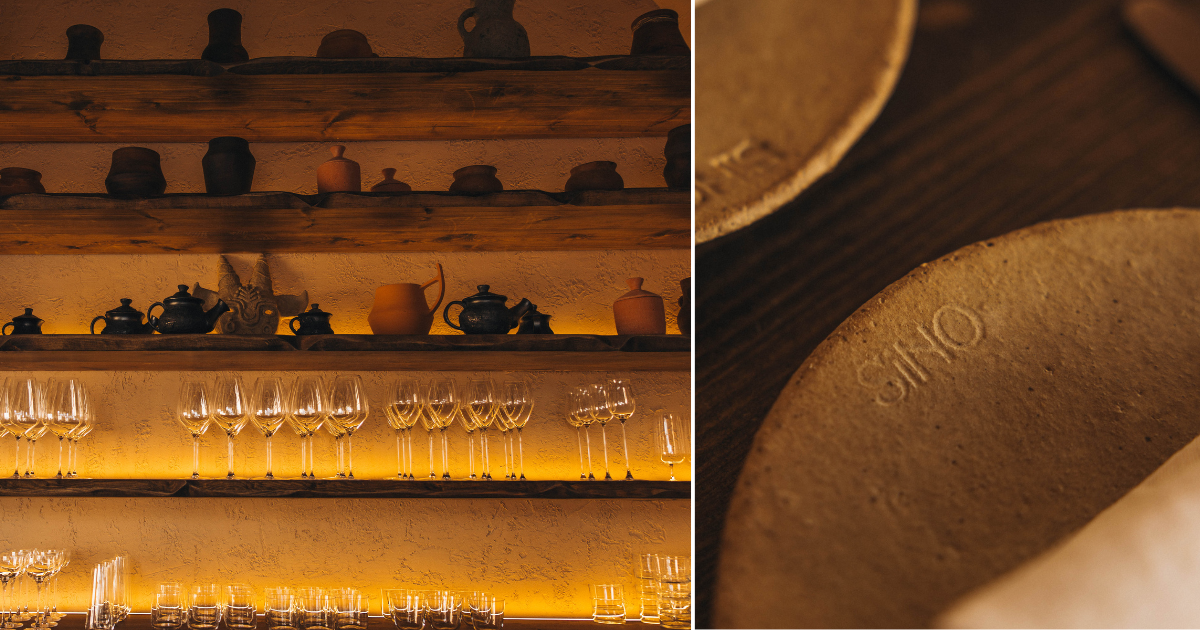
“From the moment the guest comes in, they see that it’s not a typical Ukrainian restaurant. We don’t have any identities like flags or colours of Ukraine. We are hiding all the identities in materials like clay, pots and hay.
“Then we start to talk with the guests and just explain to them, as especially some Ukrainians don’t understand it.
“We’re not struggling with that now because everybody knows Sino means.
“Ukrainian cuisine wasn’t developed for a long time and was only based on Soviet Union cuisine. Then we just discovered that we have ingredients, but the way of cooking was still the same.
“So saying that we are using modern techniques means we know how to release the flavour from the products just using these techniques, not the typical ones we have in Ukraine.”
President of Bocuse d’Or Ukraine
Eugene’s future goals centre around further celebrating what Ukraine has to offer.
“My strength is international competitions like Bocuse d’Or,” he said.
“I had the chance to lead Bocuse d’Or in Ukraine and we were supposed to go to the European final in 2022, but of course, because of the war, we weren’t there.
“I am looking at how we can join the competition in future. These kinds of international competitions have a massive influence on the world, where you can show your chefs, your cuisine and your culture.
“Obviously we’re not able to have a training camp in Ukraine.
“We’re now on the way to finalise the hybrid form and how we can keep the Ukrainian team outside Ukraine and make a training camp somewhere in Europe or even in the UK. It depends on the candidates who can be interested to participate.
“So it’s going to be in 2028, I hope.”
Eugene’s Michelin ambitions
As for Sino, which translates as ‘hay’, Eugene said: “The recognition in the Michelin Guide was really a surprise for us.
“We were dreaming about that. But when you open a Ukrainian restaurant, which is unknown cuisine for anyone, the chances were going to be zero.
“But Michelin is just treating everyone the same. So that was quite professional and I really appreciate that they recognised us.
“That was big appreciation, because they saw what we are doing, how we’re doing it, what products we’re working with and how we want to present it.
“It just motivated us and pushed us to improve more and to become better.
“In March another Ukrainian restaurant (Tatar Bunar) was recognised in the Michelin Guide. That’s amazing for Ukrainian cuisine and I’m really very happy for them.
“It’s a good moment when you understand you’re not alone and everyone is around and doing the same hard job.
“Regarding the goals for Sino, I think we just keep doing what we’re doing and try to be on the move all the time.
“Of course, we want to achieve the Michelin star, not because we want it, but because we deserve it.
“Then we and they can tell the world: look, here is a Ukrainian restaurant, they’ve got a star or are mentioned in 50 Best or somewhere else.
“For me, just people understanding what we’re doing, they appreciate our quality and service and they’ve given us awards and some prizes.
“We just want to keep moving, improving everything and working on the brand of Ukrainian cuisine and reputation of Ukrainian cuisine in the world.”

For 18 years, The Staff Canteen has been the meeting place for chefs and hospitality professionals—your stories, your skills, your space.
Every recipe, every video, every news update exists because this community makes it possible.
We’ll never hide content behind a paywall, but we need your help to keep it free.
If The Staff Canteen has inspired you, informed you, or simply made you smile, chip in £3—less than a coffee—to keep this space thriving.
Together, we keep the industry connected. Together, we move forward.
Support Us
CONTRIBUTE
Eugene Korolev: Changing perceptions of Ukraine with Sino
IN ASSOCIATION WITH


