Rich Cullen: ‘I never had a hospitality job until I owned a restaurant’


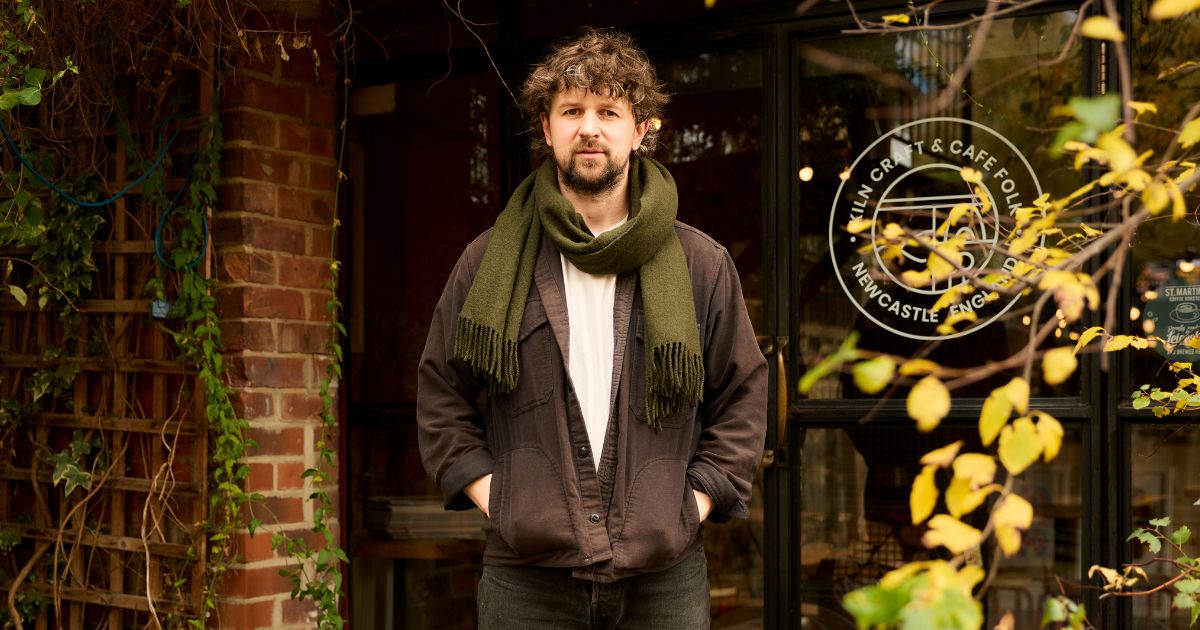
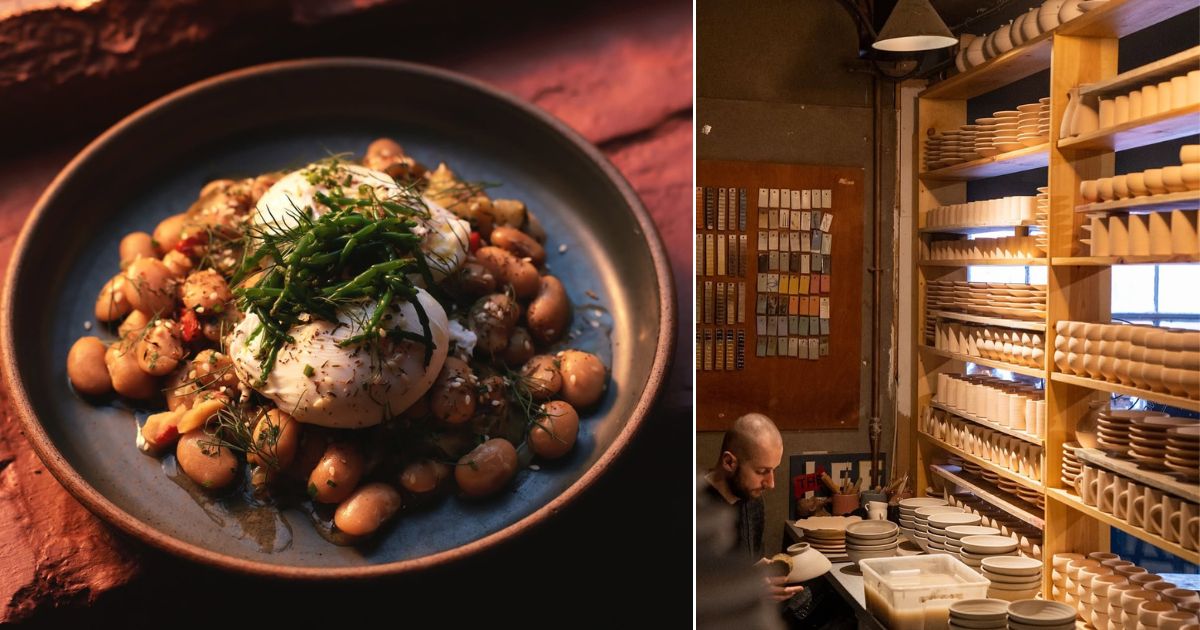
Rich Cullen started out making ceramics for restaurants before opening Kiln in Newcastle as a live gallery for his pottery. Almost 10 years later, Kiln has become a successful business, despite Rich never having worked in hospitality before owning it.
In this three-part series, The Staff Canteen speaks to chefs and restaurateurs who took unconventional routes into hospitality, including Matty Grove of Caper & Cure and Great British Menu winner Pip Lacey.
From ceramics to kitchens
Rich Cullen did not come into hospitality through kitchens or front of house. His route started with an art degree in Devon, renowned for its ceramics alumni, and a return to Newcastle.
“I started doing ceramics because I wanted to do something practical, to be honest,” Rich said.
“My parents were both builders when I was growing up. I always like to do things practical.
“Being an artist was very much about making things to go into gallery spaces, and it was not particularly tangible or hands-on all the time.
“It was very research-based and philosophical and ideological.
“I wanted to make things that people could use and people could enjoy.”
That instinct became the bridge between pottery and restaurants. In 2010, Rich got in touch with fellow North East chef Dave Coulson, who had recently opened a restaurant after reaching the semi-finals of MasterChef: The Professionals.
“I just said, look, I want to make some plates for your restaurant for free,” Rich explained.
Paul Brown, then managing director of Continental Chef Supplies, later saw Rich’s ceramics and placed an order worth £120,000.
Soon, Rich was producing ceramics for restaurants, hotels and high-level kitchens across the country, working for the likes Sat Bains, Tom Sellers, Claude Bosi and the Bocuse d’Or. That put him in Michelin-starred kitchens not as a chef, but as a supplier watching how different operations worked.
Seeing what restaurants could support
Being around restaurants gave Rich a different view of hospitality.
He began to notice that the best restaurants did not only support the people inside their own four walls. Around them were networks of suppliers, makers, foragers and other small producers.
“What I noticed about these restaurants were that around these restaurants became these microclimates, these small economies of foragers and people who dive for seaweed and scallops and all sorts of different things,” Rich said.
“These restaurants supported a wider community and, in many respects, had this hyper locality to them.
“I liked that these restaurants supported the local community.”
At the same time, Rich had a problem with his own ceramics business. The work was growing, but his shop had no real footfall.
“It suddenly dawned on me, if I open a little restaurant myself or a little cafe, then I can use that space as a live demonstration of my ceramics,” he said.
“I can use it as a live gallery space as a way of testing the work out before I give the work to restaurants.”
Kiln was not originally designed as a restaurant empire. It was a way to make pottery useful, visible and tested in the real world.
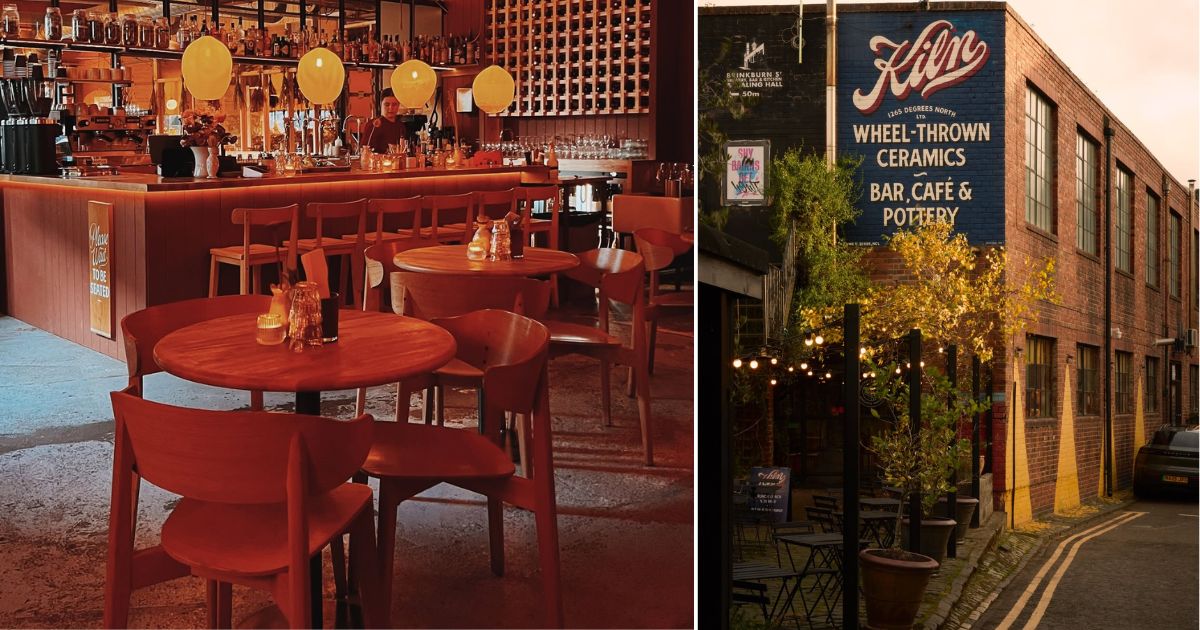
“I set up this place called Kiln as a response to basically thinking galleries were a bit naff,” Rich said.
“I wanted to have my ceramics workshop situated within a café, because all of the great opportunities I’d ever managed to get in life were pretty much as a result of sitting down and meeting a stranger in a cafe.”
The humble beginnings of Kiln in Newcastle
Kiln’s early food offer when it opened in 2017 was deliberately simple.
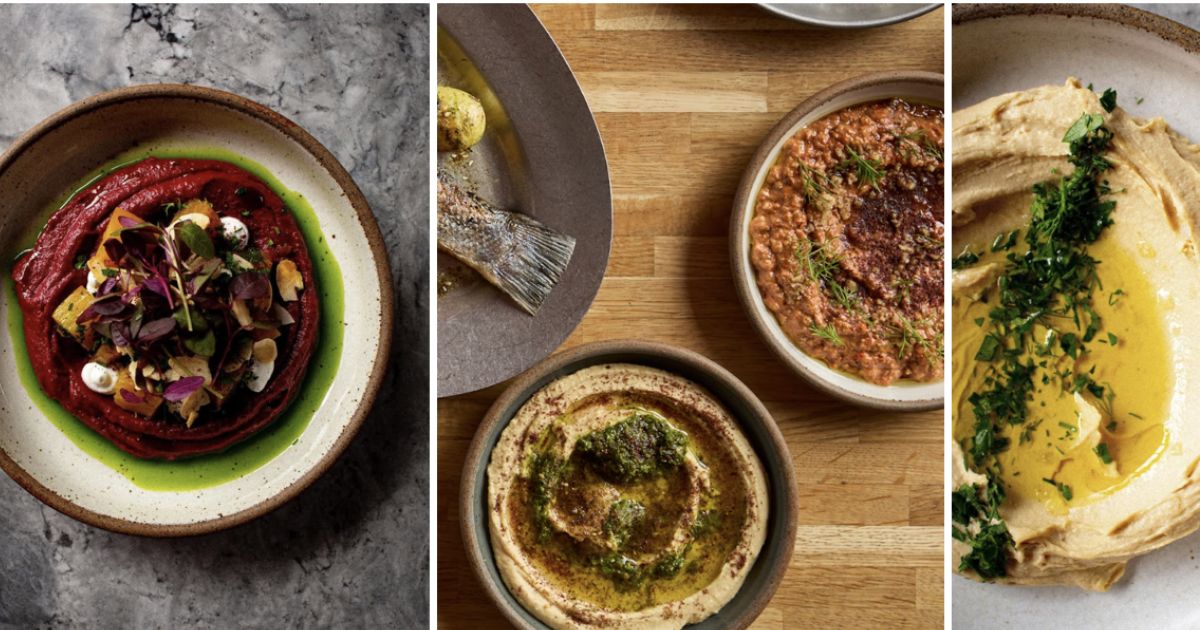
Rich, who opened alongside business partner Geffen Yoeli-Rimmer, says the team started with “Ottolenghi-esque big salads and hummus”, partly because they were unsure about running a proper kitchen.
“We were scared of the EHO,” he said.
“We didn’t really know how to store or cook meat properly, so we started off as a vegetarian cafe because it was the easiest route in.”
The set-up was far from hi-tech.
“We bought a six burner off Gumtree for £150 and we stuck that behind the bar with some ventilation I knocked up and it was just rough,” Rich said.
The timing worked. Kiln, unintentionally, opened around a busy period of bank holidays, bringing immediate cash into the business.
“We had cash flow and we were like ‘shit, this is kind of working’.
“Then the restaurant grew from £300,000 a year to £700,000 a year to £1million a year,” Rich said.
“We’d just put £20,000 in to set it up.
“It was like, oops. I never actually had a hospitality job until I owned a restaurant.
“I’d never worked behind a bar until I owned a restaurant.
“I’d also, at the age of 26 when I opened it, never had 25 full-time staff before either.
“So every single element of the thing was totally new.”
Learning without the rulebook
Not coming from hospitality had advantages.
“I didn’t come with any preconceptions of how a hospitality business should run,” Rich said.
He wanted Kiln not to fall into the pattern of long hours, low pay and the idea that difficulty was simply part of the trade. But he is honest about how hard that was to change.
“When I went on a mission of trying to make Kiln not like that, I actually made it much more difficult, much more idiosyncratic, much more challenging,” he said.
“It was really, really difficult to break out of the mould of just doing it in the way that everybody else does it, because all the staff that I was employing were already coming with a preconception that hospitality was going to be a certain way here.
“It was impossible to change that culture quickly.”
Rich’s outside perspective helped him build something different, but it did not remove the pressures of hospitality.
“I came into hospitality in a very roundabout way,” he said.
“I didn’t mean to open a restaurant.
“I certainly didn’t mean to open a successful restaurant.”
How Kiln grew from accident to success
Kiln is now a long way from the rough vegetarian cafe built around a £150 cooker.
Rich says the business now does several million pounds a year and around 1,600 covers a week from a 15-table restaurant. What began as a ceramics-led cafe has grown into two restaurants and a bakery.
“In some respects, I’m really happy about what we’ve achieved,” he said.
“In other respects, I kind of feel like I sat on the rollercoaster and it just kept on going.
“There’s been no opportunity to really assess that I’m a potter and I want to make ceramics and I’m now a restaurateur and I have two restaurants and a bakery.”
The food at Kiln has also developed from its early salads and hummus into something more defined, inspired by shared eating cultures from the Middle East (inspired by Geffen’s family heritage), Mediterranean and Northumberland.
“I noticed that this style of eating in the Middle East and in the Mediterranean and in Northumberland were all akin to each other, putting food down on the table and sharing it,” he said.
“So we took a British larder of ingredients and then exchanged the spice cabinet for a Middle Eastern spice cabinet.”

Why Rich Cullen stays optimistic about hospitality
Despite the pressure on hospitality, Rich remains upbeat about the industry.
“I’m incredibly optimistic about hospitality in general,” he said.
“There’s a lot of doom and gloom out there and I don’t think that it’s unwarranted.
“But I do think that the gloomier you are about things, the gloomier it becomes.”
For Rich, part of running a hospitality business is understanding what guests need from it.
“You go to the pub for escapism, you go to a nice restaurant for experiential quality and escapism,” he said.
“You don’t go for the owner to be like, ‘I’m having a terrible day’.
“Something I learned early on is you have to have the emotional intelligence enough to know when a customer wants to hear about your day and when a customer doesn’t.
“You’re here for them, they’re not here for you, they’re not your therapists.”
That belief feeds into how Kiln operates. Rich describes it as a universal place, where people are welcome as long as they are not actively demeaning anyone else.
He sees hospitality not just as food and drink, but as a place where communities can form.
“I’m incredibly optimistic about hospitality and how hospitality is a force for good and how it is central to all forms of community,” Rich said.
“It is a point of departure for wider creative communities to disperse from people meeting in cafes and restaurants and talking.”
Keeping the doors open
Consistency is part of that philosophy.
“I feel like what I have created here at Kiln has done a lot of good for other people,” Rich said.
“We try and stay a place that is consistently open.
“We’re open 10am till 11pm, seven days a week. That’s never changed.
“I can count on one hand how many times in 10 years we’ve closed.
“The idea of Kiln is that it is a universal place. Everybody is welcome.”
For Rich, that matters because hospitality venues can become places people rely on.
“Hubs and hospitality venues are those little harbours for people to come to you in a storm and feel safe and surrounded and welcomed.”
Kiln has not been built as a finished, polished concept. Rich says it opened as “mark one” and is now on “iteration 40”, shaped by customers as much as by him.
That may be the clearest expression of his unusual route into hospitality. He did not arrive with the industry rulebook. He arrived with clay, curiosity, a rough cooker and the belief that useful things should be used by people.
There is no single way into hospitality. Rich’s route just happened to begin at the pottery wheel.
FAQs
Who is Rich Cullen?
Rich Cullen is the founder of Kiln in Ouseburn, Newcastle. Before opening Kiln, he worked in ceramics and made plates for restaurants, hotels and high-level kitchens.
What is Kiln in Newcastle?
Kiln is a Newcastle hospitality business which began as a cafe and live gallery for Rich Cullen’s ceramics. It has since grown into a wider business including restaurants and a bakery.
How did Rich Cullen get into hospitality?
Rich Cullen got into hospitality through ceramics. After making plates for restaurants, he opened Kiln as a way for people to use and experience his pottery in a live cafe setting.
Did Rich Cullen work in hospitality before opening Kiln?
No. Rich said: “I never actually had a hospitality job until I owned a restaurant.”
Read more in the series

For 18 years, The Staff Canteen has been the meeting place for chefs and hospitality professionals—your stories, your skills, your space.
Every recipe, every video, every news update exists because this community makes it possible.
We’ll never hide content behind a paywall, but we need your help to keep it free.
If The Staff Canteen has inspired you, informed you, or simply made you smile, chip in £3—less than a coffee—to keep this space thriving.
Together, we keep the industry connected. Together, we move forward.
Support Us
CONTRIBUTE

Rich Cullen: ‘I never had a hospitality job until I owned a restaurant’


