After five years in Surry Hills, Dylan Cashman has reopened The Blue Door in Bellingen. The 24-seat restaurant is now closer to the growers and farmers that dictate its weekly menu, putting provenance ahead of asking suppliers to fit a predetermined dish
Dylan Cashman has reopened The Blue Door in Bellingen, moving the restaurant closer to the farmers and growers that shape the way he cooks.
The new 24-seat restaurant began service on 18 September inside a heritage-listed former bank on the corner of Church and Hyde streets. Dylan runs it with co-owner and wine director Angelica Nohra.
The format carries over much of what defined The Blue Door in Surry Hills: a seven-plus-course tasting menu that changes constantly, whole-animal buying and close relationships with producers.
What has changed is the distance between the restaurant and the source.
After five years in Sydney, Dylan and Angelica decided to move The Blue Door to the Mid-North Coast, where the restaurant could sit much closer to the type of farms underpinning its food.
For a chef, that changes more than the postcode.
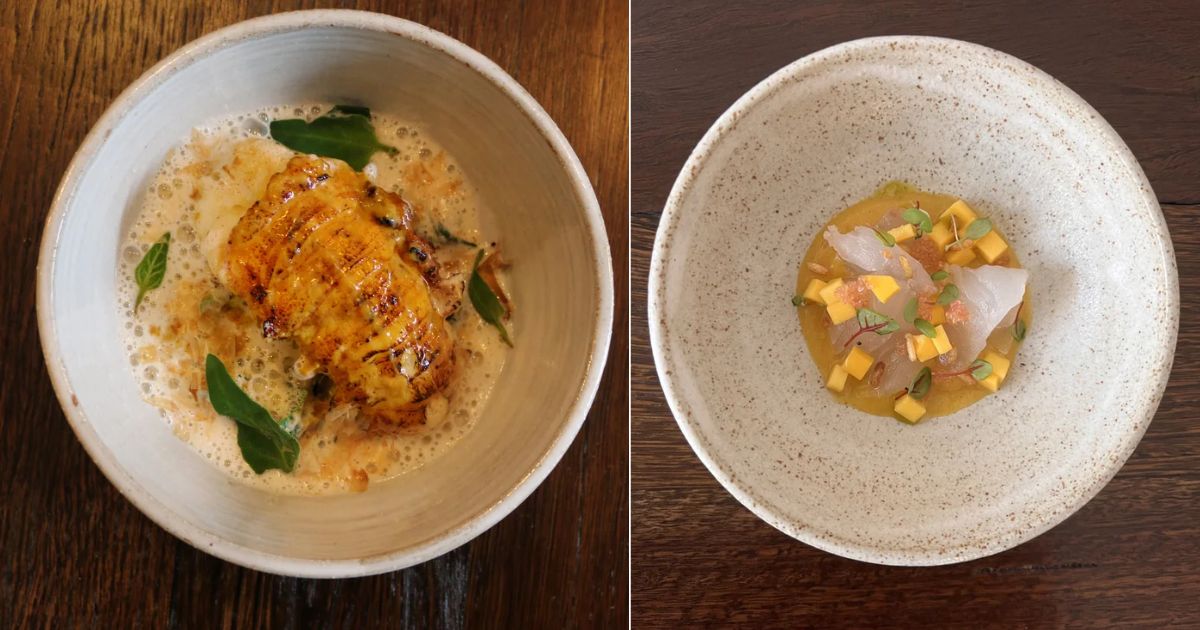
Letting the farmer shape the menu
The Blue Door does not begin each week with a fixed set of dishes and ask suppliers to fulfil the order.
It works the other way around.
Dylan and his team only buy animal protein from local farmers they have personally visited, purchase whole animals and work with no-till and regenerative vegetable growers across the Mid-North Coast.
The menu is then built around what those producers have available.
That sounds simple until it becomes a kitchen system.
A tasting menu still needs structure, progression and consistency, but the raw materials may change from one week to the next. A successful dish cannot simply remain on the menu because the kitchen wants it there.
For Dylan, that constraint is part of the point.
Before returning to Australia, he spent two-and-a-half years working in Michelin-starred European kitchens. He has said the experience left him frustrated by kitchens trying to force ingredients into dishes outside their natural season rather than changing the menu.
The Blue Door was built around the opposite approach.
Moving closer to the source
Bellingen also brings Dylan back towards where his career began.
He grew up in Crescent Head and completed his apprenticeship in Bangalow in 2012 before working in Australian kitchens including Sean's Panorama, Cottage Point Inn, Paper Daisy and Fins.
The restaurant aims to source as much as possible from the Mid-North Coast, turning to wider NSW suppliers when necessary.
That proximity changes the meaning of seasonality.
Rather than working around four broad seasons, the kitchen can respond to what an individual grower has ready that week.
The producer effectively becomes part of menu development.
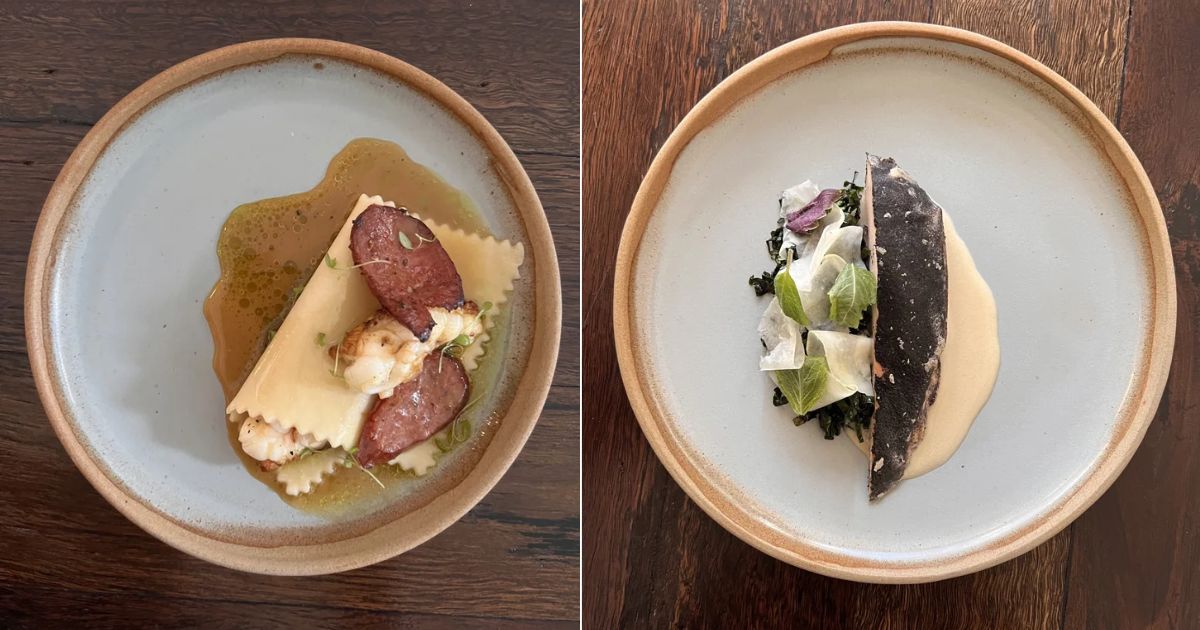
What whole-animal buying changes
The commitment to whole animals creates another challenge.
Instead of ordering only the cuts needed for predetermined dishes, the kitchen has to create value from the animal it receives.
The team butchers whole carcasses in-house, and the weekly-changing format gives Dylan somewhere to move different parts of the animal as they become available.
That approach already defined the Sydney restaurant, where whole and half animals were used across changing dishes rather than limiting purchasing to premium cuts.
For a professional kitchen, this requires more than creativity.
Purchasing, butchery, prep and menu development all have to work together. The restaurant cannot treat the carcass and the menu as separate problems.
That is arguably where The Blue Door's model becomes most interesting.
It does not really have a permanent signature dish.
The system is the signature.
Consistency without cooking the same food
The other challenge is maintaining consistency when the dishes themselves keep changing.
At The Blue Door, that means the standard has to sit somewhere other than reproducing exactly the same plate every service.
The restaurant tells diners which producers will feature during the week of their booking, while dietary requirements need to be supplied at least 48 hours ahead. Because the menu follows current supply, changes cannot simply be made at the table.
For the brigade, that puts more weight on communication between purchasing, prep, menu development and service.
The food may change each week. The experience still has to feel like the same restaurant.
Building the restaurant around supply
Plenty of restaurants talk about cooking with the seasons and supporting local producers.
The Blue Door has taken that idea far enough to change where the restaurant itself operates.
That is what makes the Bellingen move interesting for chefs.
Instead of designing a menu first and expecting farmers to supply it, Dylan is allowing the supply chain to dictate what the kitchen cooks.
It means accepting that ingredients will disappear, dishes will change and some of the best decisions may begin outside the restaurant altogether.
For a chef trying to cook closely with producers, that loss of control may actually be the point. The Blue Door Bellingen is now open at Shops 3-4, 58-60 Hyde Street, Bellingen, NSW.





