How Gareth Baty overcame imposter syndrome to win MasterChef: The Professionals



Gareth Baty revealed how a timely email from The Staff Canteen, as well as overcoming “imposter syndrome”, led to him being crowned champion of masterchef: the professionals 2026.
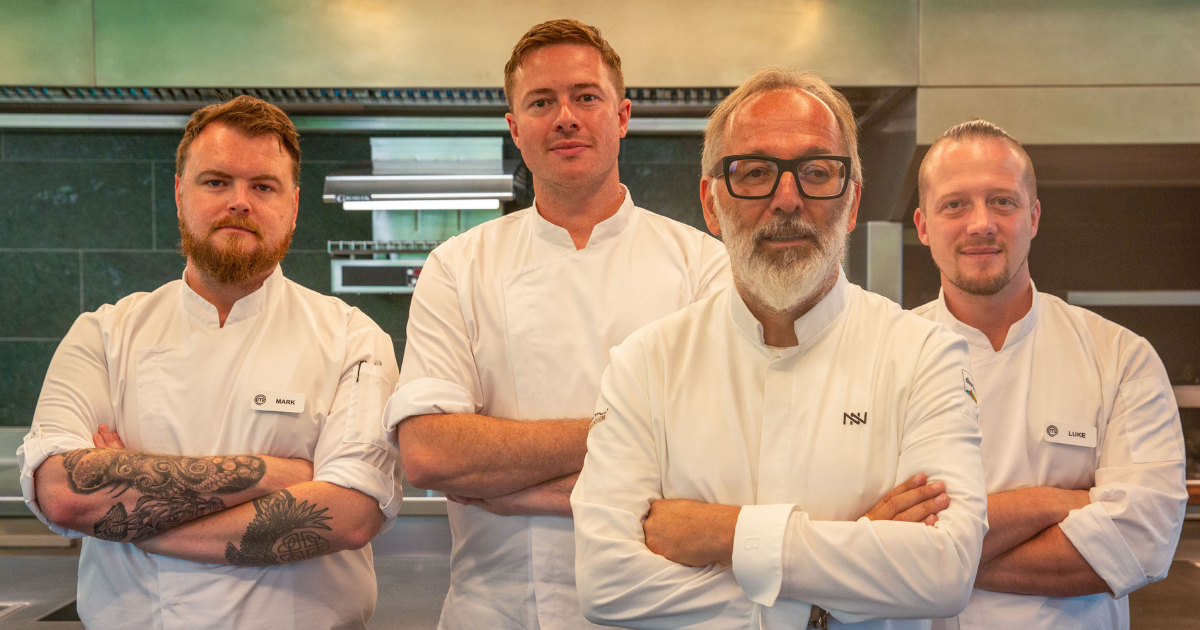
Gareth became the 19th chef to lift the coveted trophy, overcoming competition from Luke Emmess and Mark O'Brien in the final, which was aired on BBC One on Thursday night.
Cumbria-born Gareth, 40, lives in Greater Manchester, where he works as a private chef.
He became a fan favourite during the latest series of MasterChef: The Professionals, with his meaningful cookery inspired by his family resonating with the audience.
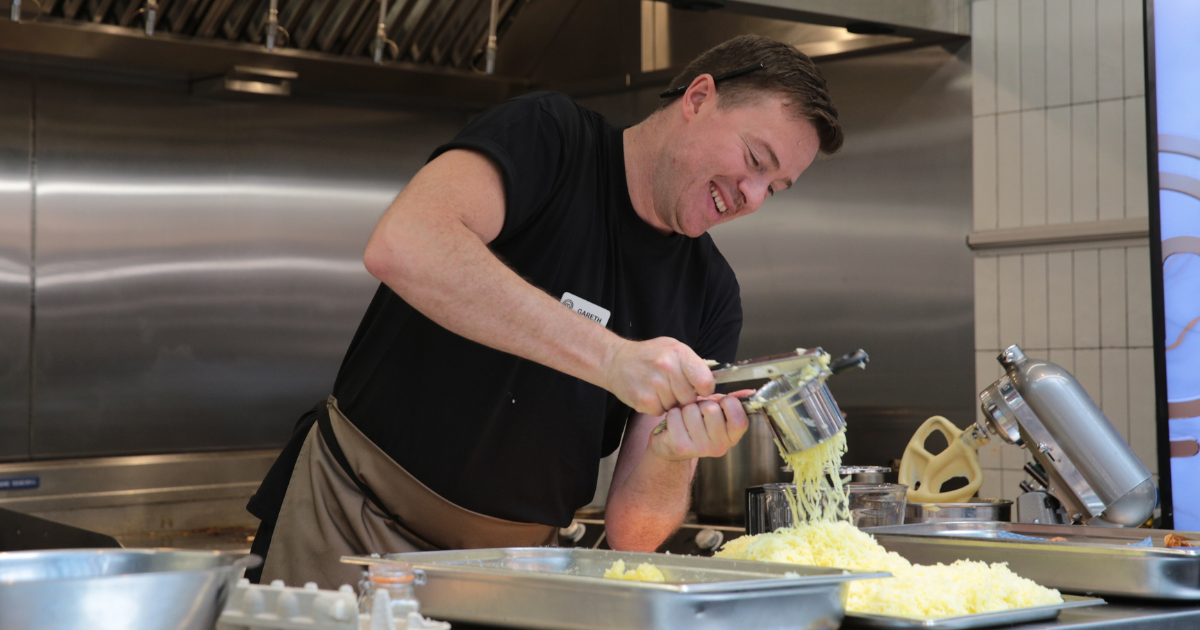
In an exclusive interview with The Staff Canteen, Gareth said: “It’s a strange feeling because obviously we filmed it last year, and then it becomes this huge secret that you have to keep.
“You go through this really intense process with all the emotions, the highs and lows, and then when it ends, you can’t really talk about it.
“So there’s a huge relief that it’s now out and I can talk about it. It’s a weight off my shoulders. But it’s also quite sad that it’s all over all of a sudden.
“It was such an intense time that a lot of it went by in a blur, so to be able to see it all back and relive those moments has been great. I’ve really enjoyed it.”
From supper clubs to MasterChef champion
Self-taught chef Gareth did not have a linear path into the industry, hosting supper clubs before working in restaurants such as Berners Tavern in London and Harlem Food Bar in New York City.
Upon returning to England, Gareth worked on a farm in the Lake District, before taking a break from the hospitality industry, taking over his late father’s factory in Stockport.
Then, in his 30s, Gareth returned to cooking.
Discussing his decision to embark on the challenge of MasterChef, Gareth said: “It’s a massive thing, and something I never really thought I would do.
“I never imagined I would go on MasterChef: The Professionals. But I’ve got my son, who’s six and a half, and my daughter, who’s three and a half, and I’m always telling them to stand up for themselves, be proud of what they do, take risks and put themselves out there.
“I thought I should be following my own advice. Also, I’m self-employed, and it’s hard being self-employed, especially in the industry at the moment, trying to keep the diary filled up. So anything that helps give you a platform to promote your business is important.
“It’s funny, because I don’t really believe in all this sort of stuff, but I had a dream that I was on MasterChef. When I woke up, I had an email in my inbox from The Staff Canteen (newsletter) saying applications for MasterChef were open.
“It was the first thing I saw on my phone. I told my wife and she said, ‘apply immediately’.”
Battling imposter syndrome in the competition
Among the 31 competitors alongside Gareth were chefs with a host of different backgrounds, from working in pubs to fellow private chefs and those in Michelin-starred kitchens.
And Gareth said his expectations of success were not particularly high.
“I never imagined I would get as far as I did in the competition,” he insisted.
“I wanted to get the first round - the skills test and the signature dish - without making a complete idiot of myself. Everything after that would have been a bonus.
“As I progressed through the competition, I became more and more confident in myself.
“I really wanted to see how I stood up against other chefs.
“I’ve come through the industry in a very different way to most people. I got into it much later in life. I’ve done a lot of things off my own back - set up my own supper clubs, my own events, run my own kitchens.
“I haven’t risen up through the ranks like a lot of chefs do, and not having that almost made me feel like I didn’t quite deserve to be standing alongside these other chefs. Imposter syndrome, I suppose you could call it.”
He continued: “Nothing can prepare you for that first day, that skills test. There’s no smoke and mirrors to it. When you walk into that room for the first time, it’s the first time you’re on camera, the first time you see Marcus Wareing and Monica Galetti, the first time you see your ingredients.
“When they say ‘your time starts now’, you’ve got 20 minutes, and the timer starts. It is one of the most stressful things I’ve ever done.
“They’re also asking you about your background and your cooking while you’re trying to work. It’s wild and your brain just goes.
“As I went through the competition, I started getting more confident.
“The zero waste challenge, when there were 13 of us and we did an invention test, I made a frangipane tart and thought, oh, actually, I might stand a chance here.
“I’ve learned through the whole process that when you cook dishes with meaning and dishes come from your heart and you really believe in them, that’s when the best food comes out.”
A turning point at The Glenturret Lalique
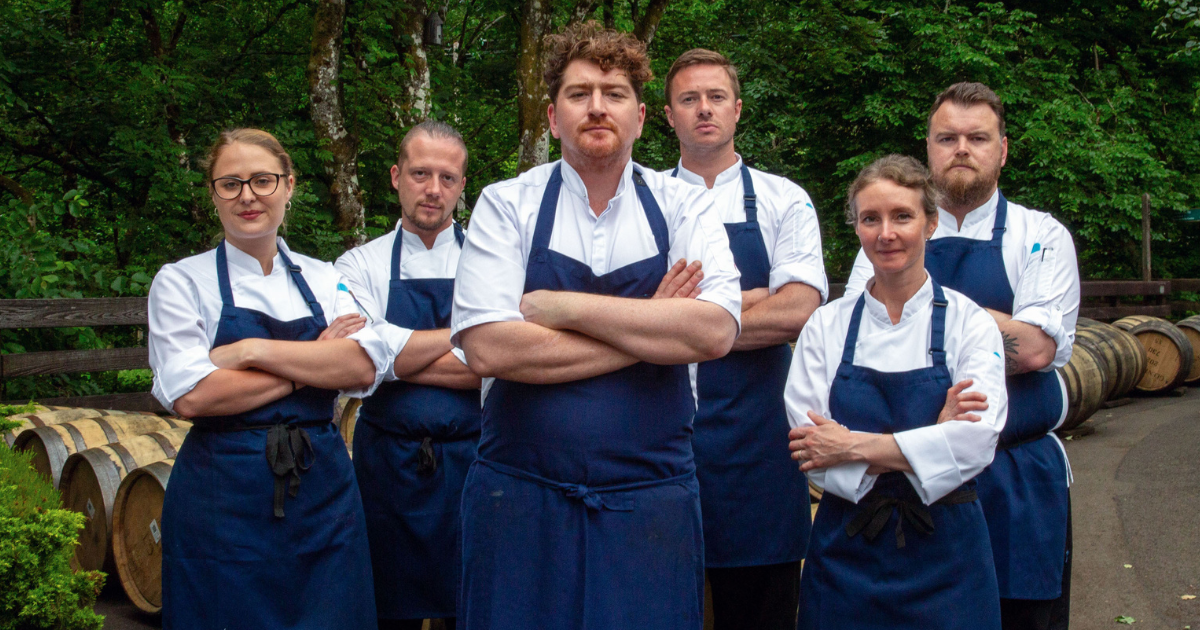
It was not a smooth path all the way through the competition for Gareth, finding things particularly tough in the semi-final stage when cooking at two-Michelin-starred restaurant The Glenturret Lalique in Scotland with Mark Donald.
“That time at Glenturret was a big turning point for me in the competition,” said Gareth.
“I’d never had that much experience in restaurants. It’s never really been my world. That feeling of imposter syndrome, everything I’d been feeling before about not really belonging there or deserving to be there all came flooding back.
“I really struggled. When I finished the challenge and got through it all, in hindsight, it was illuminating. It was like someone flicked a switch and all the lights came on.
“Seeing that level of detail in a kitchen of that standard, where everything was done with intention and reason, everything on the plate was there for a reason.
“Literally every knife stroke was done with purpose and reason.
“Understanding that changed the way I thought about my dishes. I wasn’t just chucking on some micro herbs because it looked pretty and needed a bit of green - it was there for flavour and for impact on the dish.”
What comes next after MasterChef victory
Winning MasterChef: The Professionals can be a huge springboard for success, with former winners including the likes of Steve Groves, Stu Deeley, Nikita Pathakji, Gary Maclean and 2025 Roux Scholarship winner Craig Johnston.
Asked how he hopes winning the competition could propel his career, Gareth said: “When I entered the competition, it was very much to try and boost my company and get my diary filled up.
“The further I progressed in the competition, the more I started to understand that opportunities are going to arise and doors are going to open.
“I’d never even considered what some of those might be, but I’m here for it all. I’m welcoming it with open arms.
“I’m already setting up events and getting the diary filled up with private dining, but I’m also keeping a lot of spaces open for anything else that comes into play.
“When I tell you I’m ready for it, I really am. I can’t wait for what’s going to happen.”
In one of the episodes of the series, Gareth revealed how after a busy day he will try and find a quiet moment at home for a glass of whisky and delving into his secret chocolate stash.
Asked if he will turn to that combo now the final has been aired, Gareth said: “There’ll definitely be a small whisky and a peanut butter cup in celebration!”

For 18 years, The Staff Canteen has been the meeting place for chefs and hospitality professionals—your stories, your skills, your space.
Every recipe, every video, every news update exists because this community makes it possible.
We’ll never hide content behind a paywall, but we need your help to keep it free.
If The Staff Canteen has inspired you, informed you, or simply made you smile, chip in £3—less than a coffee—to keep this space thriving.
Together, we keep the industry connected. Together, we move forward.
Support Us
CONTRIBUTE
How Gareth Baty overcame imposter syndrome to win MasterChef: The Professionals


