His cooking is built on discipline, flavour and generosity, shaped by Japanese technique, Greek hospitality and a practical design mindset. The aim is food that feels resolved, honest and made for service.
Early foundations
Oscar came to kitchens through work, not romance. He was in hospitality and retail from thirteen, learning how rooms move and how guests behave before he ever held responsibility.
After school, he studied fine art, then shifted into a design degree. It was there he learned how to think through problems properly. How to strip things back. How to build systems that last under pressure.
In his mid-twenties, he chose to start a full apprenticeship. There were quicker routes available, including recipe development work, but he wanted the craft from the ground up.
That decision still underpins how he works. He wanted to know how food behaves in volume. How it changes over time. How technique holds when a service goes bad.
The design training stayed with him. Not as theory, but as habit.
Instead of patching problems, he looks for fixes that survive a busy Friday and the week after.
“I’m not into the fluff,” he says.
“It’s about doing simple really well.”
That thinking shows up in fundamentals. Stock work matters. Rice matters. Seasoning matters. The difference between good and finished is often small.
On the Japanese side, dashi, rice and broth anchor the food. On the Greek side, a clean, precise chicken stock underpins soups and lamb dishes.
A spring onion added late. Fennel instead of acid. Quiet decisions that shift balance without calling attention to themselves.
Technique and practice
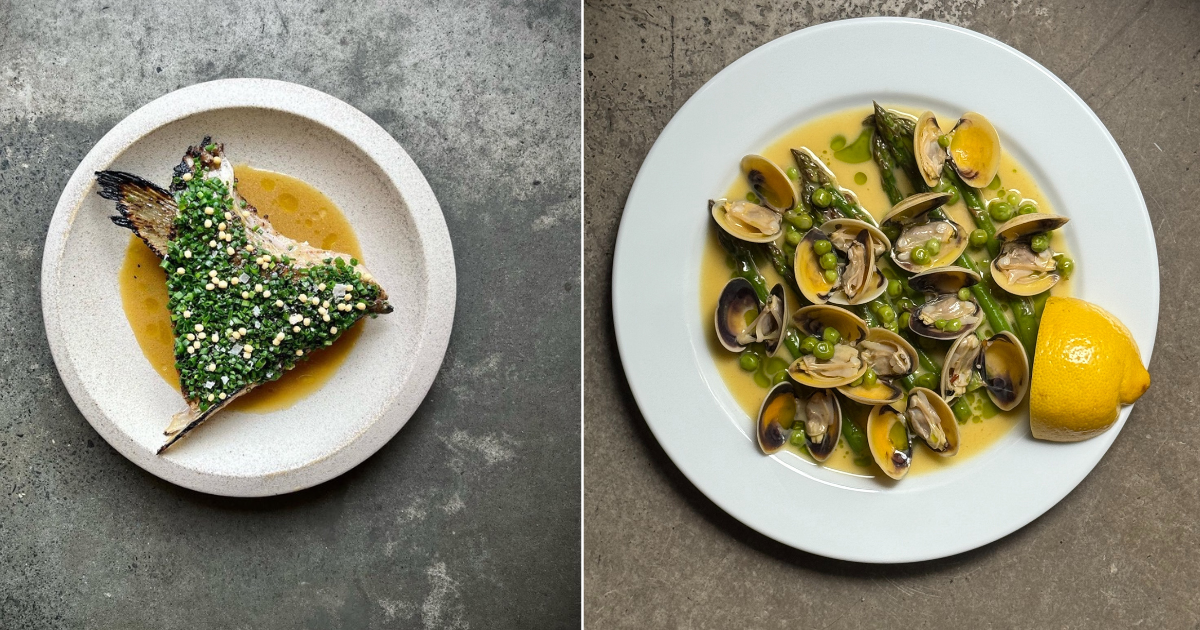
Oscar presents food with restraint. Neutral plates. Honest materials. Stainless steel, concrete, simple ceramics.
The idea is clarity. Let the food do the work.
Plates avoid decoration for decoration’s sake. There is no heavy branding. Consistency across venues creates trust rather than sameness.
He thinks beyond the plate to the room. Aroma is part of service.
The team has long used a boiling pot in the dining room. Not for theatre, but to cue hunger. Charcoal and wood are chosen for the way they smell as much as the way they cook.
As he puts it, they are guest obsessed. That means pacing. Portioning. Knowing when generosity matters more than precision.
Service should feel familiar without being tired. The sort of place you want to walk into, not just talk about.
Greek, Japanese and a modern Australian voice
Greek food entered Oscar’s life through proximity. His partner is Cypriot, and what began as exposure turned into responsibility.
Greek food looks simple. That simplicity is deceptive.
To cook it well enough to satisfy Greek guests and still engage non-Greek diners takes discipline. Respect sits inside the method.
The aim is to show care without noise.
Japanese discipline arrived earlier, through front-of-house work alongside a traditional team. Watching chefs move, season and taste taught him reverence for ingredients.
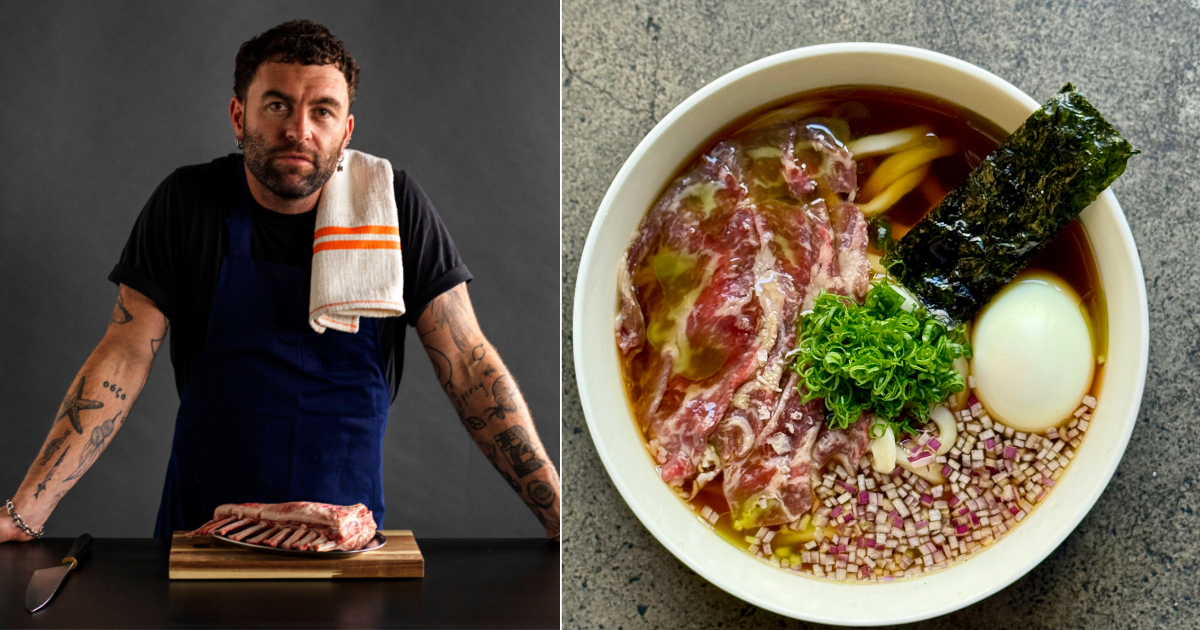
He still watches long videos of ramen shops setting up for service. The tempo. The repetition. The restraint.
“I learn by watching,” he says.
“I emulate those movements when I cook.”
Once a year, he runs a ramen month. Research is constant. Stock work is exacting. The satisfaction comes from control rather than excess.
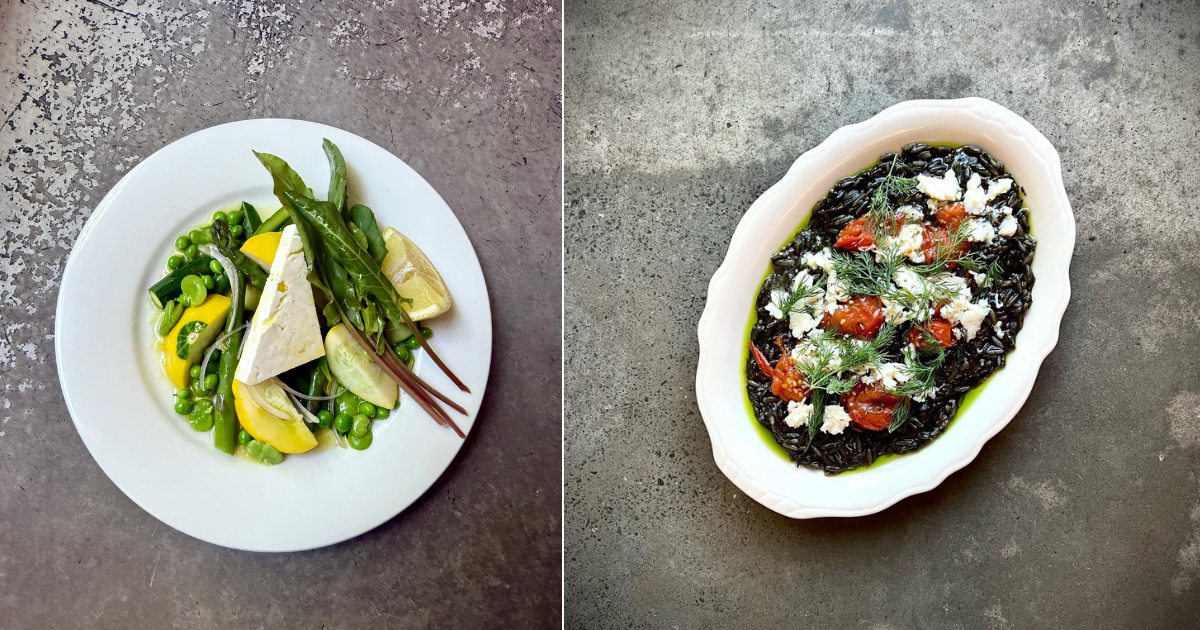
On the Greek side, the team recently removed vinegar from their greek salad. The goal was better seasoning and balance, not sharpness.
Lift comes from elsewhere. Lacto-fermented hot sauces. Fruits. Vinegars used selectively, not automatically.
Modern Australian cooking, for Oscar, is about obligation to place.
He is building relationships with small Aboriginal-owned producers. Paying full price for limited native fruits and spices. Learning through tasting raw, cooking, fermenting and failing.
Warrigal greens became an entry point.
He describes the warrigal greens spanakopita at The Apollo as personal.
“It’s a real matrimony for me,” he says.
The dough was refined by a chef at Olympus. The filling connects wild greens in Greece with coastal spinach in Australia. The goal is coherence, not novelty.
Leading a modern kitchen
The hardest shift in Oscar’s career was moving from head chef to an executive role across venues.
It began in Brisbane, where he ran a Japanese kitchen while supporting the Greek one next door. The remit grew from service into direction.
Now, his role is to protect identity while enabling consistency.
“The creative footprint is equilateral between our director, me and the head chefs,” he says.
Creativity is proactive when it can be. Reactive when it must be.
Experimentation matters, but labour, flow and clarity always win. Scaling recipes is straightforward. Scaling judgement is not.
The aim is simple. Five head chefs who would respond to a guest the same way he would.
Culture, for Oscar, is practical.
“No one is motivated by negativity,” he says.
“You have to give people space to learn and to fail, then support them.”
When something goes wrong, act generously. Send food. Comp the meal. Remember what the guest loved last time and make them feel seen.
That authority belongs on the floor, not only in the office.
Olympus Dining brought many of these ideas together. The brief was clear. A taverna you want to walk into. Communal. Loud. Alive.
Greek hospitality only works when it feels slightly chaotic.
Dishes follow that mood. Fried lamb’s brains arrive with muscatel hot sauce, borrowing the logic of fried chicken to make a confronting ingredient feel welcoming.
The spanakopita is large but thin and crisp. The base was perfected through one small overnight tweak that unlocked the texture they wanted.
Deciding when to change tradition starts with mastering it. If the classic is perfect, it stays. If context asks for lift, it is added carefully.
“Understand the traditional dish,” Oscar says.
“Do it really well, then consider how to take it in a new direction.”
When asked where chefs should learn, he chooses steadiness over fashion. Sean’s Panorama, he says, is top to bottom the best restaurant he knows.
The next generation looks different. Movement is freer. Boundaries are clearer. Long careers may be rarer. He welcomes it. Connection to hospitality matters more than the shape of a resume.
Dining at an Apollo Group restaurant, he says, should feel like family. Not as sentiment, but as standard.
Clean stocks. Vegetables seasoned properly. Research done before it is needed. Native ingredients respected and paid for. Generosity applied when it counts.
His advice is quiet because it is confident. Keep the craft honest. Build culture deliberately. Put flavour first.
And when the choice is between more and better, choose better.





