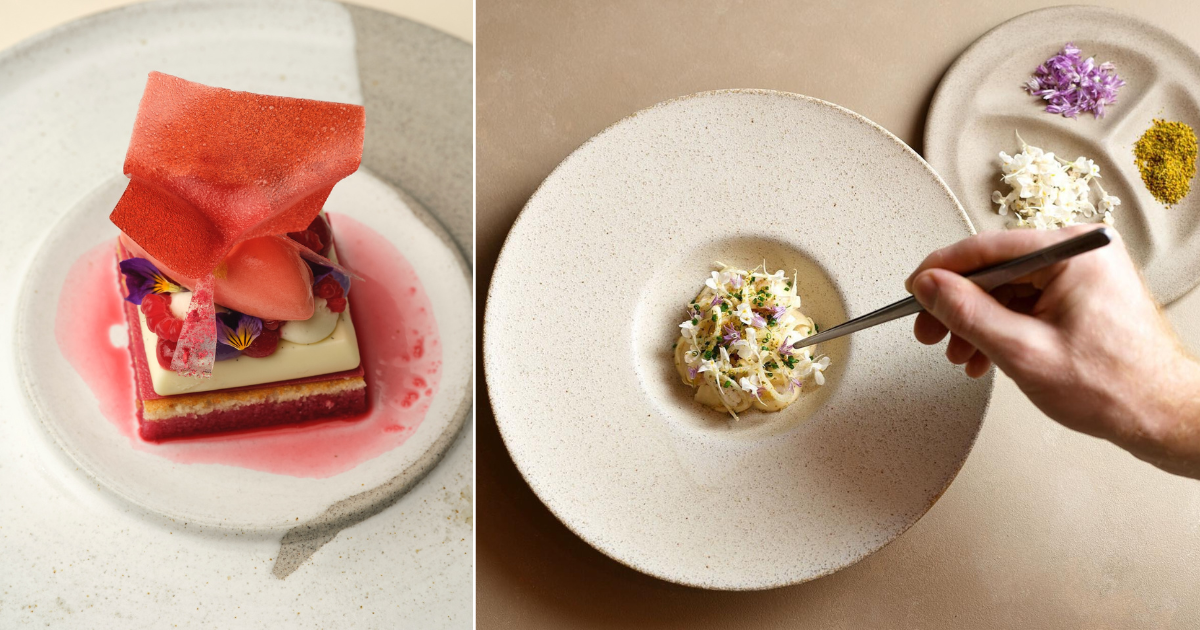
Tom Gorringe, executive chef at ARIA Sydney, has quietly refined one of Australia’s most recognisable fine-dining institutions. His cooking philosophy, rooted in simplicity, respect for produce and technical precision, reflects a career built on patience and purpose rather than speed or showmanship.
“Classic techniques, simply executed and really beautiful,” Tom says. “That’s what I want people to taste.”
Precision and restraint
Ask Tom about flavour and you’ll get a short answer first, then a longer one. The short answer is produce. The longer one is produce handled with intent. That philosophy begins long before service starts.
“I love it. I do the fish almost every day at ARIA,” he says. “You do some butchery, clean, portion, then move on to managerial jobs. It’s a nice rhythm.”
He learned patience from fish. Flathead remains his benchmark of skill; halibut, which he encountered during his time at Bearfoot Bistro in Canada, taught him humility. “We got enormous halibuts, the size of a boogie board,” he recalls. “The fillets were inches thick. You had to cut them in half to get a proper portion.”
Working with live lobsters added another layer of precision. “Killing lobsters for the first time is daunting,” he says. “When you’ve just taken a life, you treat it differently. You make sure nothing goes to waste.” Shells become bisque, roe becomes pasta dough that turns from green to bright orange in the pan.
Restraint is the other foundation. “I was definitely overthinking things,” he admits. “It’s easy to think more is better. Often it’s the opposite. Simple is better. Beautiful produce treated really well.”
He points to Margaret by Neil Perry as a restaurant that embodies that clarity. “Simple, beautiful, delicious, there’s a lot to be said for that.”
His appreciation for produce grew at Eschalot, where he and the team would pick herbs and lettuces minutes before service. “Guests commented most on the salads and vegetables,” he says. “It makes a difference when that lettuce was growing outside ten minutes before you ate it.”
Learning the hard way
Tom’s first lessons in systems and structure came not in fine dining but at KFC. “They can get kids who’ve never had a job before to run a store,” he says. “It taught me pace, teamwork and how to take feedback.”
At Eschalot, the kitchen was just three chefs. “Everything on your section you had to do,” he says. “Butchering fish, cooking pork bellies, picking crab, every garnish, every sauce. There was no one to save you if you went down, so you had to be organised.”
In Canada, he found scale and luxury. The kitchen at Bearfoot Bistro ran with up to 50 staff across the year, serving oysters from every coast, Nova Scotia lobsters, white truffles from Alba and Kobe beef. “One chef just shucked oysters all night,” he remembers. “Perfectly clean, never butchered. Seeing that level of craft lifts the whole room.”
Foie gras preparation was another education. “We’d get a hundred kilos at a time,” he says. “A Quebec chef taught us to separate lobes, devein, and work through torchons and terrines. He was generous. He explained the why behind everything.”
Back in Australia, Tom became head chef at Eschalot in his mid-twenties. “You go from contributing a couple of dishes to needing eighteen bangers, not one,” he says. The restaurant held its hat, but Tom soon stepped back. “I felt I wasn’t quite ready. I wanted to learn more.”
He joined Bentley Restaurant + Bar for a short but defining period. “Working with Brent Savage and Aiden Stevens was super inspiring,” he says. “The team was intense in the best way. It speaks to how good that kitchen is.”
At The Gantry, first as sous chef and then as head chef, he helped reset a hotel dining room into something ambitious and focused. The restaurant earned a hat in its first year.
When COVID disrupted hospitality, Tom briefly considered studying nutrition or food science, but the kitchen pulled him back. “I love cooking. I love hospitality. It’s what gets me out of bed.”
Mentors, moments and making ARIA his own
Mentors continue to define his approach. Joel Bickford encouraged him early to read widely and think beyond local trends. Matt Moran offered trust and space to grow. “Working with Matt is incredible,” Tom says. “He’s supportive and always focused on the bigger picture.”
Taking over a restaurant with more than 20 years of history came with weight. “You don’t want to reinvent the wheel,” he says. “You want to keep it current but stay true to the ethos and the narrative. Matt and I share that approach, paddock-to-plate, support Australian producers, highlight what’s in season.”
Recent collaborations have reinforced that mindset. Working with Matt Abé at Restaurant Gordon Ramsay was “incredible. Simple, beautiful execution, a hard worker, very hands-on.”
The Eleven Madison Park pop-up at ARIA was a different test entirely, a fully plant-based fine-dining experience. “It was beyond what I imagined,” Tom says. “You didn’t feel like you were missing meat.”
Travel continues to sharpen his perspective. Dining at Sézanne Tokyo under Daniel Calvert reminded him how powerful restraint can be. “Honestly, one of the best dining experiences I’ve had. Classically French, produce-driven, precise and simple.”
The next chapter at ARIA
At ARIA today, Tom’s focus is precision and generosity. “We want the best version of ARIA that it can be,” he says. “Keep refining what we do.”
He’s strengthening relationships with growers for small-batch heirloom produce and continuing to source pork from the Moran Family Farm. “When you’ve seen the animal grow, you don’t throw anything away. You want to use every part.”
Leadership, for Tom, is about example: doing quiet jobs with care, teaching often and keeping the guest front of mind. “If the idea is good, the technique is clean and the product is right, guests feel it.”
When asked about chefs to watch, he names Matt Abé for precision, Daniel Humm for creativity and Daniel Calvert for clarity. The common thread, he says, is control without noise.
For younger chefs, his advice is simple: “Learn the basics properly. Take the hard sections. Practise when no one’s watching. Respect the product, respect the team and keep the guest in mind.”
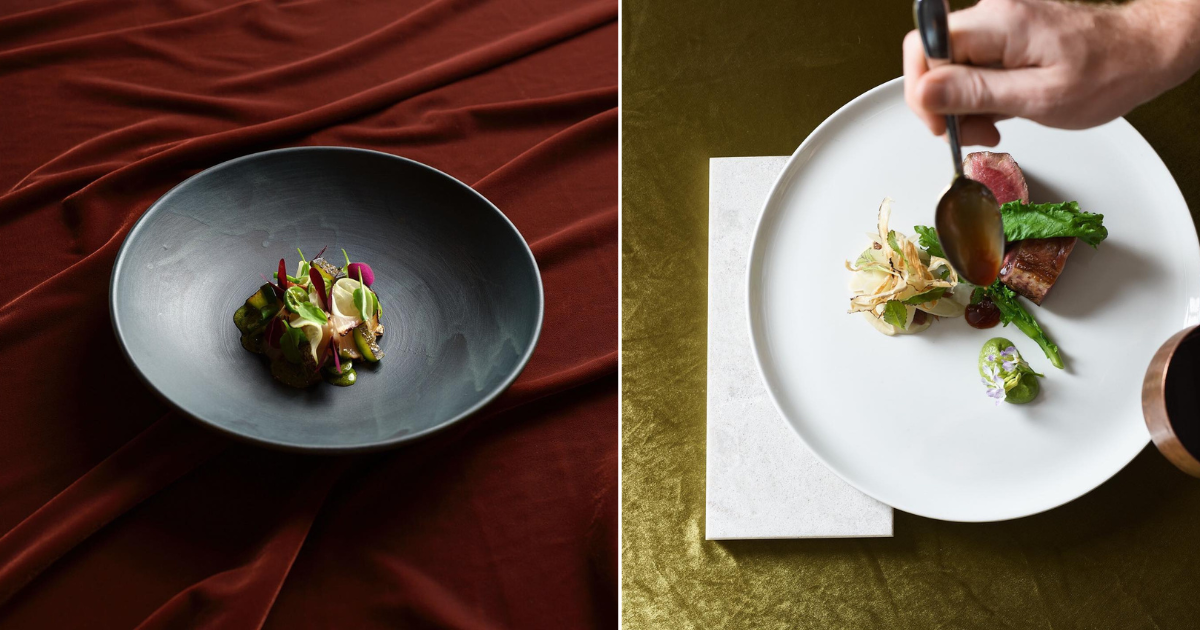
Tom’s food reads as quiet, which is another way of saying confident. The hard work hides in the details. That, he insists, is the point.





