From three Michelin stars to Lita: Kostas Papathanasiou’s new chapter



The first year after opening a restaurant is often cited as a chaotic time, but for Lita in Marylebone, it was year two which saw a massive period of change.
Little under 12 months on from opening its doors, Lita was awarded a Michelin star in February 2025, under former Corrigan’s head chef Luke Ahearne.
In July, Luke departed, going on to open Motorino in Fitzrovia, alongside Stevie Parle.
By November, a new name had quietly arrived to continue driving Lita forwards.
That man was Kostas Papathanasiou, who arrived in London with a glittering CV.
Background of Kostas Papathanasiou
Born and raised in Lamia, Greece, he has spent more than two decades in some of the world’s best kitchens, starting in the pastry sections before taking on wider-ranging leadership roles.
His path began with an internship at Ashford Castle in Ireland at the age of 16, before moving into a formative stint at Heston Blumenthal’s three-Michelin-starred The Fat Duck, in Bray, where he rose to sous chef.
From there, his career took in Nouri in Singapore, The Ledbury in London and five years with Jason Atherton’s The Social Company, where he became head chef at Little Social.
Kostas then moved on to Studio Frantzén at Harrods and, later, executive chef at three-Michelin-starred Frantzén in Stockholm.
That background helps explain why Lita saw him as the right chef to guide its next phase, arriving as culinary director.
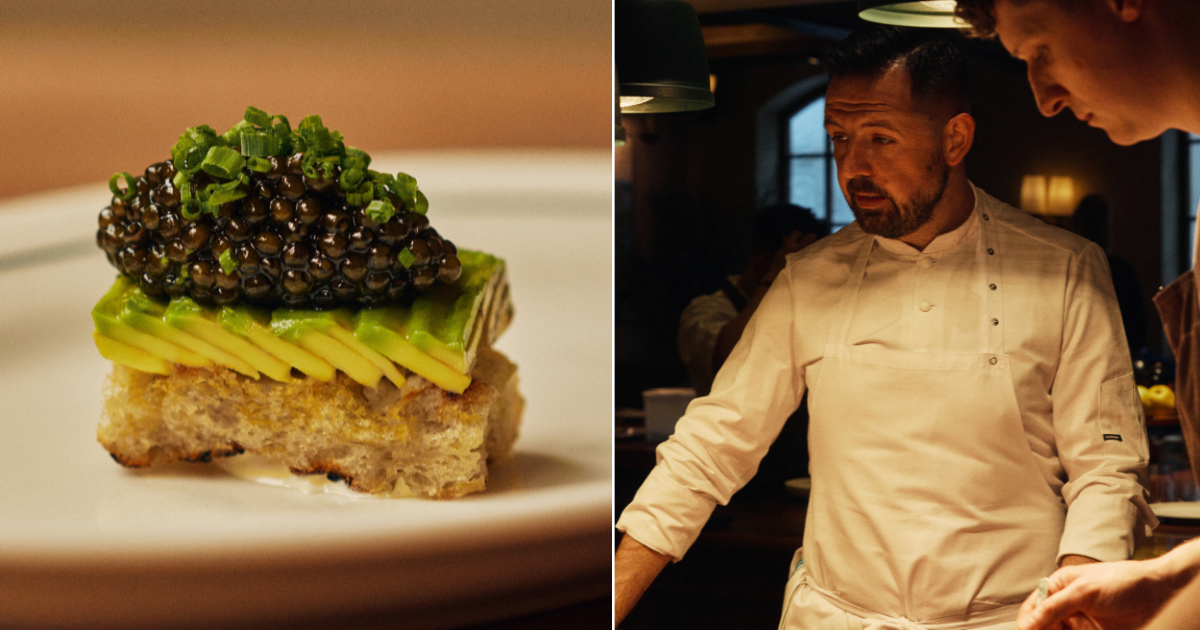
The philosophy of Lita
Lita describes itself as “modern Mediterranean bistro”, which retained its Michelin star in the 2026 Guide, with its seasonal menu, celebrating southern European cuisine.
“The philosophy behind Lita starts with the neighbourhood spirit. It is about warmth, elegance and generosity,” Kostas explained.
“There's a balance between having a refined environment and a more approachable experience for our guests.
“We focus a lot into seasonality.
“We spend a lot of time looking into our suppliers and what we use and what we put on the menu.
“And the food sort of combines that spirit. So, it's elegant, but it's approachable.”
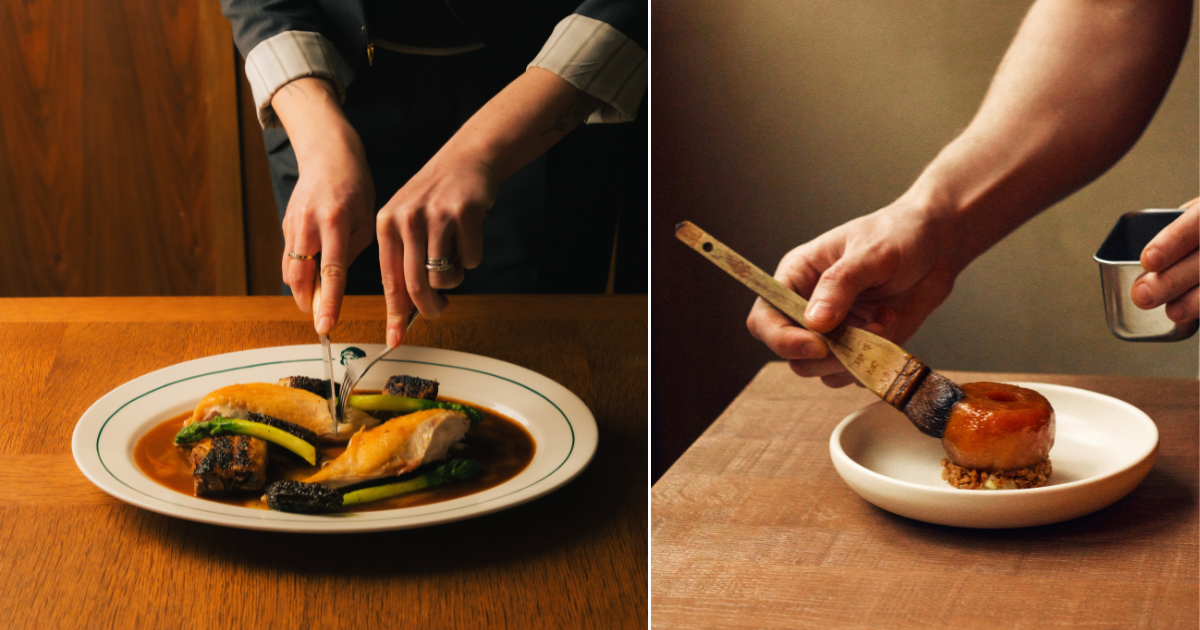
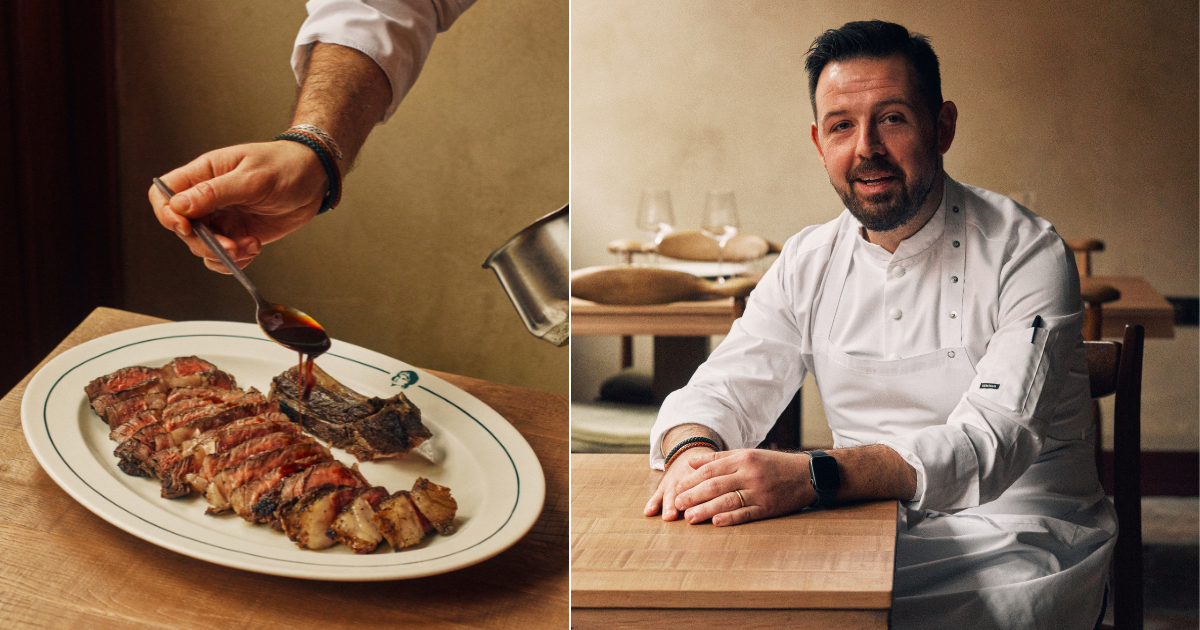
The current menu includes dishes built around Devon duck, Cornish cod, Native Scottish lobster, Sicilian red prawns and Lake District beef.
The open kitchen at Lita features open-fire cooking and offers a main dining area, as well as open counters, a private dining space and terrace.
Seven-day dining at Lita
“Lita is open seven days a week for both lunch and dinner,” said Kostas.
“It's a very busy restaurant. We accommodate around 80 covers per meal, and then we have a terrace that can accommodate about 16 covers.
“The team that we have in the kitchen is around 16 chefs that have a lot of work to do.”
He added: “Having an open kitchen, I wouldn't say it changes the way I lead the team, if anything just makes it a bit more fun.
“I think it's very nice for the chefs to be able to engage with the guests, to recognise familiar faces, say hello and see how people react when they eat the food, which is a very big part for me. For the team to be able to see a guest being pleasantly surprised or enjoying a dish or having someone walk past and say ‘thank you, the food is delicious’.
“And when it comes to leadership, it just makes more fun, more relaxing if anything.”
How to retain a Michelin star
Kostas has spent his career in Michelin-starred kitchens.
Asked what the key is to maintaining those standards, he said: “I would say the Michelin star demands a big commitment to consistency and quality.
“We received our star in 2026 and like I told the team the day we received our star, it's something that you celebrate every year.
“Receiving a star outlines the performance and everything that the team has done through the year.
“I'd say consistency is probably the most important part in our day-to-day routine.
“And that has to start from the very beginning of the day. That comes through the grooming standards, the way people are dressed, the way we go through our produce that comes in every day and the way we treat the produce.
“And then recipes, which is very important. For every dish, I like to be very precise with the recipes, have a method and a system for the team to follow and that helps create consistency.
“But then it also comes down to every individual that gets involved with the making of the food and making everyone understand the importance of tasting food and understanding the feeling, the look, but most importantly the taste of what they do.”
Staying motivated
Asked how he maintains motivation after spending so long in the industry, Kostas said: “It is going to sound like a bit of a cliche, but I love what I do.
“I've been doing it for a very long time, and after all these years, I still love it.
“I'm still very passionate about it and I'm very passionate about engaging with the team and making them feel the same and helping them grow.
“That's the biggest part of my day and what motivates me the most - help people become better at the job.”
He added: “I think you have to take a look at what you want to do and recognise and find the passion, understand how much you love cooking and what kind of cooking you love.
“But to sustain that effort I think is all down to determination, all down to consistency, is down to just believing that this is what you want to do.
“And again, that's something that you have to find in you and find the motivation.
“That's I think the most important part.”

For 18 years, The Staff Canteen has been the meeting place for chefs and hospitality professionals—your stories, your skills, your space.
Every recipe, every video, every news update exists because this community makes it possible.
We’ll never hide content behind a paywall, but we need your help to keep it free.
If The Staff Canteen has inspired you, informed you, or simply made you smile, chip in £3—less than a coffee—to keep this space thriving.
Together, we keep the industry connected. Together, we move forward.
Support Us
CONTRIBUTE
From three Michelin stars to Lita: Kostas Papathanasiou’s new chapter


