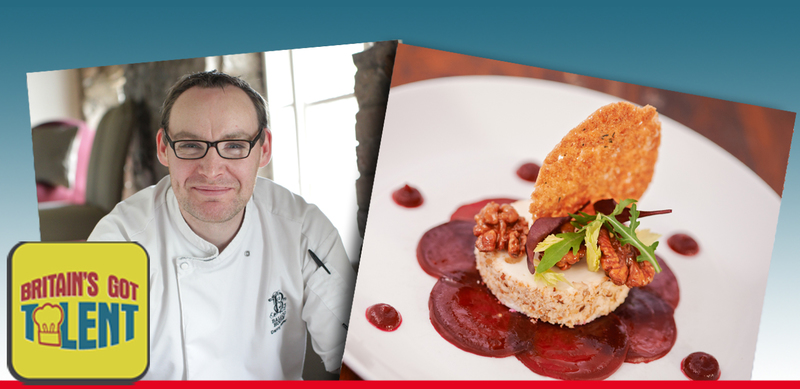
Danny Millar is chef director for Balloo Inns Limited – a group of three Northern Ireland pubs, Balloo House, The Parson’s Nose and The Poacher’s Pocket, that simply focus on seasonal, locally sourced ingredients all served in a relaxed country pub atmosphere. Having worked previously with Paul Rankin, Danny has been with Balloo Inns for 10 years and puts part of the success down to his team who he says he “wouldn’t exist without”.
How long have you been at Balloo House?
Coming up to 10 years now in October. I started as chef director when we had the one pub and we now have three.
How do you split your time between the three?
I tend to spend lunches every other day in Poacher’s Pocket and Parson’s Nose and then the evenings in Balloo. Each pub has it’s own head chef and it’s own general manager so without them and great staff you’re not that good.
And is there flexibility for people to move around within the group?
Definitely, if anything its encouraged.
Guilty pleasures:
Peanut butter on toast and banana
Porridge although that’s pretty cheffy
I’m a sucker for tea and toast with big slabs of butter and jam
Cheese
Chocolate ice cream
Top 5 restaurants:
In Ireland: Mourne Seafood Bar in Belfast
In England: The Fat Duck – head and shoulders above the rest
In Wales: The Hardwick
In Scotland: Tom Kitchin
Le Bernardin – New York
How important is it to have a strong team behind you?
It’s paramount, we wouldn’t exist without a strong team. There’s no point trying to do it alone, you could maybe run one unit, but going beyond one you need people beside you. It’s not about me it’s very much a team effort, my sous chef at Cayenne is now my head chef at Balloo, so we’ve been working together now for the last 15 years now.
I’m lucky to have that and I hope I look after them and treat them well; they become my family and that’s how I treat them.
So where were you before joining to group?
I was head chef at Paul Rankin’s Cayenne in Belfast, for four and a half years. I didn’t see much of Paul to be honest but I did learn how to run a very busy kitchen and it was very busy at the time, doing big numbers with a good standard. It was a lot of hours but it was good and was character building.
Before that I was at The Narrows in Portaferry for three years which was my first head chef job. It was seafood and very casual and was just around the corner from the harbour so has lovely turbot and plaice; so the menu wrote itself really.
Before that I was at Shanks in Bangor which is also closed now but Robbie Millar was the head chef there who unfortunately died in car crash but that had a Michelin star and I was there for two years. Robbie was a big influence on my food, big punchy flavours.

And then before Robbie it was Germany for four years and that was in The Black Forest, a five star hotel, a bit like the spas in Bath, it was great seasonal, local produce and a very well run kitchen.
What made you make the move to Germany?
I was travelling around Europe with my friend and through college he had done a bit of time over there in one of the hotels and he needed contacts and said he’d get me some work so I ended up in the hotel. There were about six of us, the food was great and I loved it.
So back to Balloo – was it just the downstairs when you opened?
Yeah just the downstairs, we were a country pub but my business partner was wondering what we could do with the space upstairs. We tried it as a restaurant, five nights a week, but because we had such a busy pub downstairs the food wasn’t much different from upstairs to downstairs; it was the same produce cooked by the same people.

So we had this problem of having this room upstairs and we tried to be a little bit different but it didn’t make any sense, so now we just hire it out for private events and functions. It’s intimate as only seats 20 people, it’s got a cosy snug area with a fire where guests can wait before and after dinner but again it wouldn’t stand alone as a restaurant.
Also fine dining has changed, people are moving away from that and are looking for a relaxed atmosphere, we’re a country pub without those polished waiters. People just preferred to eat


 So the produce you use is it all locally sourced?
Well apart from limes and pineapples which we struggle to grow in Northern Ireland…we definitely import that one. But no it would be bonkers not to, I don’t know why you wouldn’t. It’s why I love what I do as it’s on my doorstep, fantastic farmers and fisherman going out in all sorts of mad weather for not much money; so I’m honoured to do it justice.
Even bags of carrots are just handpicked from down the road, they’re not harvested from a big machine and put into a warehouse for a couple of weeks and that’s what I love.
Is there a particular ingredient you couldn’t be without?
So the produce you use is it all locally sourced?
Well apart from limes and pineapples which we struggle to grow in Northern Ireland…we definitely import that one. But no it would be bonkers not to, I don’t know why you wouldn’t. It’s why I love what I do as it’s on my doorstep, fantastic farmers and fisherman going out in all sorts of mad weather for not much money; so I’m honoured to do it justice.
Even bags of carrots are just handpicked from down the road, they’re not harvested from a big machine and put into a warehouse for a couple of weeks and that’s what I love.
Is there a particular ingredient you couldn’t be without?