Dry January and beyond: John Logue on Chance Clean Cider’s rapid rise


By John Logue’s own admission, the first year of trading with Chance Clean Cider far exceeded his own expectations.
But perhaps he should have seen it coming.
The low and no alcohol space in the UK is only going one way, with an increasing number of people reducing the amount of alcohol they drink.
And given his extensive background in the industry, John was well placed to know what the market was looking for.
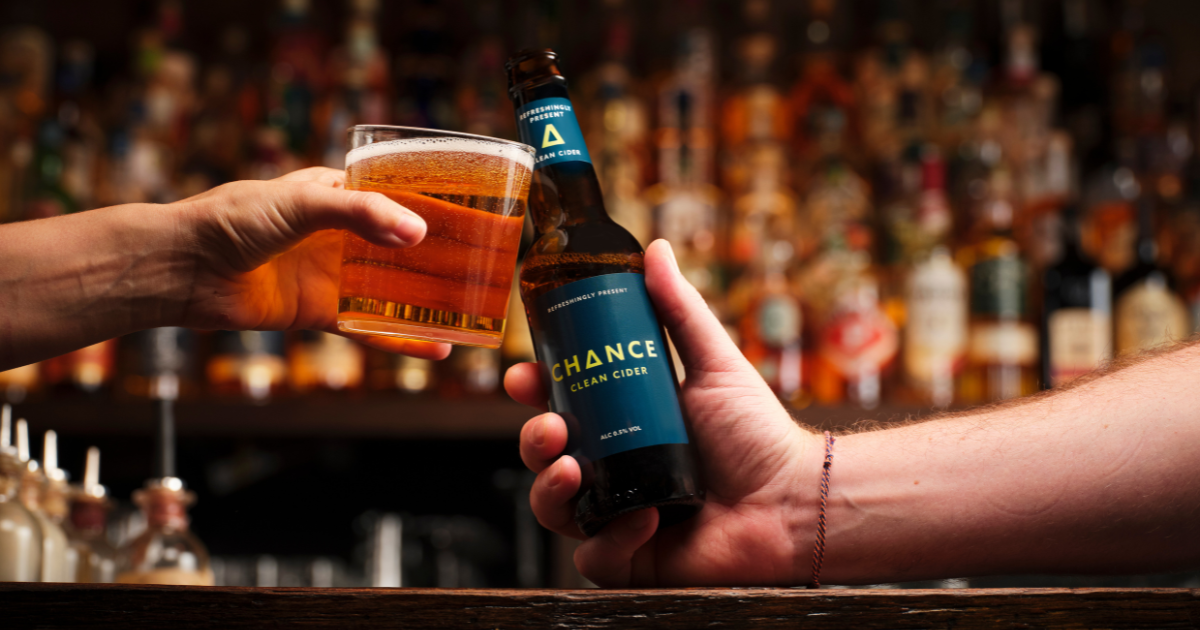
Chance launched in the second half of 2024 as the UK’s ‘first dedicated non-alcoholic apple cider’. They have now become widely available, via a variety of websites and bars, as well as being part of the menu at Italian restaurant chain Prezzo.
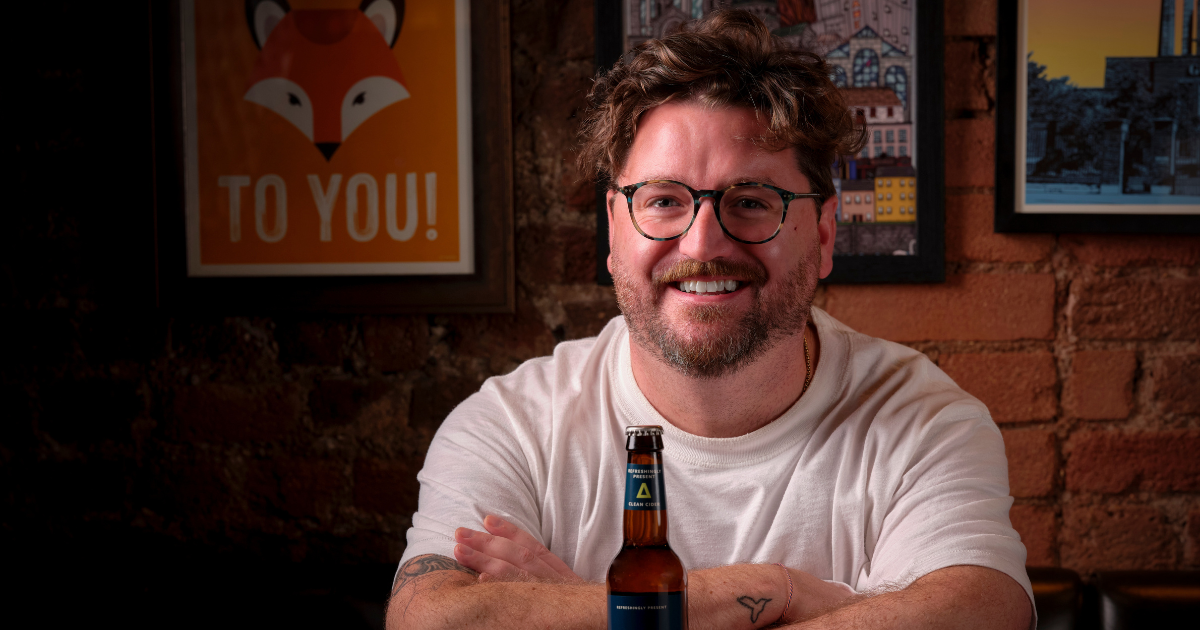
From Diageo and Rekorderlig to launching Chance
John has been around the alcoholic drinks industry for all his working life, with brands such as Diageo, Rekorderlig and BrewDog, mainly in marketing roles.
Even with all that expertise, launching a brand-new product in a relatively untapped area of the market was still a leap of faith.
“I basically just got to the point where my friends just went, ‘surely you’ve got an idea’,” John told The Staff Canteen.
“That was kind of the genesis of landing to Chance. It was a big melting pot of my experience and my category understanding, but also meeting great people along the way, learning from maybe not the best people along the way and just going, right, what can we do?
“The idea was how can I get a load of mates together to do a project? It just turned out that Chance was a cider.
“We’ve been in market just over a year, but a good two years before that we’d been working on the idea.
“There were two massive problems — or opportunities. One, how do you make it? Because I ain’t got a field and I don’t make cider for a living.
“So you have to find the partner. And there was a big journey about working with cider makers and not having their inclination and their time to invest into non-alc.
“I was very fortunate to meet the guys at Aston Manor, which accelerated it because they are big independent cider makers, so they were able to help me.
“But then you have to get the money.
“Until the moment when you get the money, the seed investment, and then you can put the order in for the PO — it moves slightly quicker.
“It’s the classic duck: your feet are going mad underneath the water for two years, but everyone just sees, ‘oh wow, look at this beautiful taupe green bottle of cider that’s arrived.’
“But it’s a long old journey for sure.”
Read more: How does Dry January really affect London bars?
Read more: The January Profit Playbook
Read more: The no/low big five - what’s actually selling in January?
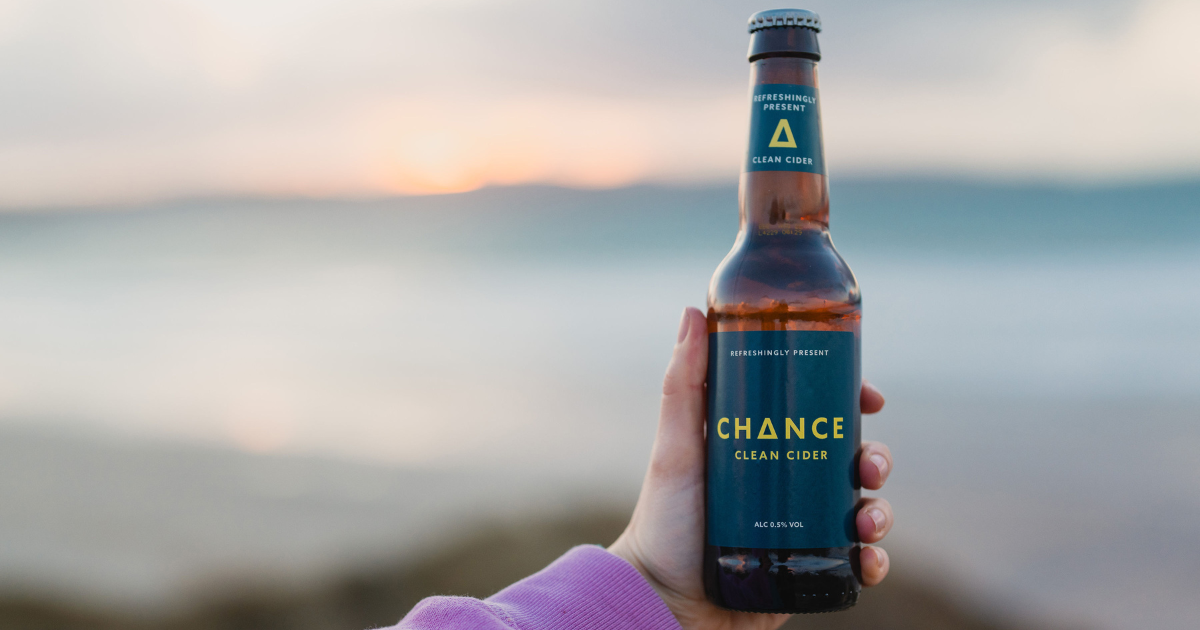
What is 'clean cider'?
While there is now plenty of choice when it comes to non-alcoholic beers, for cider drinkers, options have been limited.
“The rationale for having the term ‘clean cider’ was I wanted to have a non-regressive term. I wanted it to be a positive thing,” he said.
“I didn’t even want to call it alcohol free, because that almost puts it into a box of it’s not as good. Alcohol free is just the style, the same way high or mid-strength ABV are just a different style.
“So clean cider gave us a way to effectively create our own definition.
“Clean cider for us is low calorie, lowish sugar, vegan, celiac friendly, all the apples are made by British farmers. It’s independently owned. It’s so inclusive as a brand. It felt like I wanted a term that kind of captured that.
“In essence, clean cider means that it doesn’t have any alcohol in it apart from the small amount of 0.5%.”
Where 0.5% fits in the “alcohol free” conversation
Technically, by UK government standards, Chance is not defined as ‘alcohol free’, but by most global measures it is seen that way, as 0.5% is lower alcohol content than many everyday foods such as ripe bananas or bread.
“It’s positioned to be something which is not better for you, but it’s this new world of what non-alcohol is to people, which is a slightly better decision than drinking alcohol, but having the same occasions,” John added.
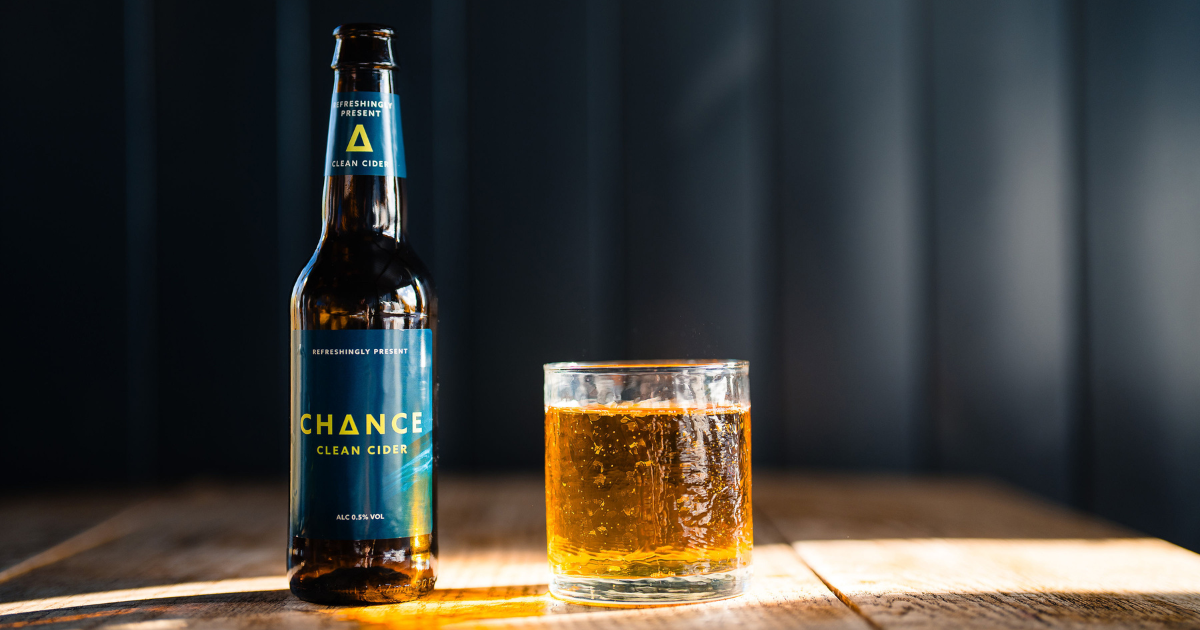
Backing British
Chance comes from apples grown in Worcestershire and the homegrown nature of the product has resonated with the UK audience.
“We wanted to make something which had as much authenticity as possible,” said John.
“With our partner at Aston Manor, they only use apples from 20 miles away from the cidery.
“Do consumers buy into it? Absolutely. The fact that we are using 100% juice and the fact that we talk about how we make our production and the fact that we can talk about what the apples are.
“I think consumers live in two different worlds. They can just go, ‘hey, that’s a cool thing. It tastes nice. And I had it at dinner in Prezzo.’
“Or there’s other consumers that go, ‘I want to dig deep into here.’ And we’re really welcome for them to do it because we’re really proud of all the layers of work we’ve put in.”
He added: “It would be remiss of me not to say that we have been phenomenally successful beyond what I thought we would be.
“That can sound a little bit big-headed, but when you have such brilliant partners as I do, and we have an incredible liquid, and for a living my job is as a consultant to help to be successful, I’d have to go back to my old clients and give them the money back if I wasn’t good at my own thing!
“In the UK, cider is the second biggest category by value and the third by volume. It’s been in this country for 2,000 years. It’s part of our history. It’s such an important category to us.
“We’ve really benefited from the hard work that beer’s done, because the confidence from consumers and customers that non-alc liquids can be amazing was already kind of done for us.
“We’ve been so lucky that when people try Chance, they love it. When sampling, lots of people go ‘I don’t like cider, but I really like Chance.’ It’s brilliant.”
Dry January as a key trial moment
Dry January is an added opportunity to attract more people to try new, healthier options, such as Chance Cider.
John said: “I was in Parliament last week with Alcohol Change. We’re a brand partner with them, so we were there with the Dry January campaign.
“Alcohol Change is all about people’s relationships with alcohol throughout the year. But they have these two big spikes: Sober October and Dry January.
“From a brand point of view, we obviously do have a bit of a spike, but also everyone and their dog is shouting about non-alc in January. So it’s kind of a loud moment.
“The amount of time and amount of people that stay in that habit or with those drinks longer into the year has grown.
“As a cider brand, we have a big spike in the summer. We don’t normally have a spike in the winter, but it’s great to have Christmas and Dry January as well.
“Dry January, apart from being an amazing charitable mechanic and doing wonderful things for the country, it’s the best time of the year for people to go and find their new favourite brand, and that’s what we’re really excited about.”

For 18 years, The Staff Canteen has been the meeting place for chefs and hospitality professionals—your stories, your skills, your space.
Every recipe, every video, every news update exists because this community makes it possible.
We’ll never hide content behind a paywall, but we need your help to keep it free.
If The Staff Canteen has inspired you, informed you, or simply made you smile, chip in £3—less than a coffee—to keep this space thriving.
Together, we keep the industry connected. Together, we move forward.
Support Us
CONTRIBUTE

Dry January and beyond: John Logue on Chance Clean Cider’s rapid rise


