Why restaurants are a home for creative people


Hospitality has always attracted people from different backgrounds, but restaurants can be especially powerful places for creative people.
A restaurant brings together food, drink, design, music, service and atmosphere, giving chefs, bartenders and front of house teams a daily opportunity to turn concepts into guest experiences.
That creativity in art and service is visible at Hausu and Auguste in London.
At Hausu, music and cinema, alongside cocktails and open-fire cooking, help shape the restaurant’s identity. At Auguste, theatrics and clowning alongside Abruzzo cooking and informal service mould theirs.
Tom Middleton-Joseph, the co-founder of Hausu, originally moved to London playing in bands and working in nightclubs.
He said: “I think that hospitality is often kind of a home for misfits and people trying to live an unordinary life. It's a real common story, and quite a beautiful one, I think.”
Why artistic people move into hospitality
Careers in hospitality are often planned, from training through to building your way up the career ladder, but some happen by accident.
Auguste, an east-London restaurant celebrating Abruzzo cuisine masterminded by chef Mike Bagnall and general manager Dylan Walters, is a product of that happy accident.
Dylan said: “I feel like you meet a lot of people in hospitality that do something creative as a means to fund something else. But then they end up falling in love with hospitality for the same reason.”
Dylan studied in Oxford before migrating to America, living in Los Angeles for a number of years playing music full time, with a stint in the fashion industry sandwiched between. His journey back to where he is today represents the appeal that owning a restaurant can bring to a creative soul.
He said: “Initially (hospitality) was a career to subsidise the music industry (for me). I think it's that vicarious joy that you get from both careers.
“All of the staff that we've hired have got other creative careers that they're really passionate about and they're all quite outgoing and charming and I think it's the kind of place that I'd want to go and eat.”
Tom, who co-founded Hausu with his sister Holly (head chef) and business partner Christian Williams, had a similar path to Dylan.
Tom said: “When I moved to London, I was playing in bands and because of that, like most of us, I worked in nightclubs. That’s where I met Christian actually. Then after both (Holly and I) working at a nightclub, and (me) running bars and raves and stuff like that, I ended up going into restaurants.”
Using creativity beyond the menu
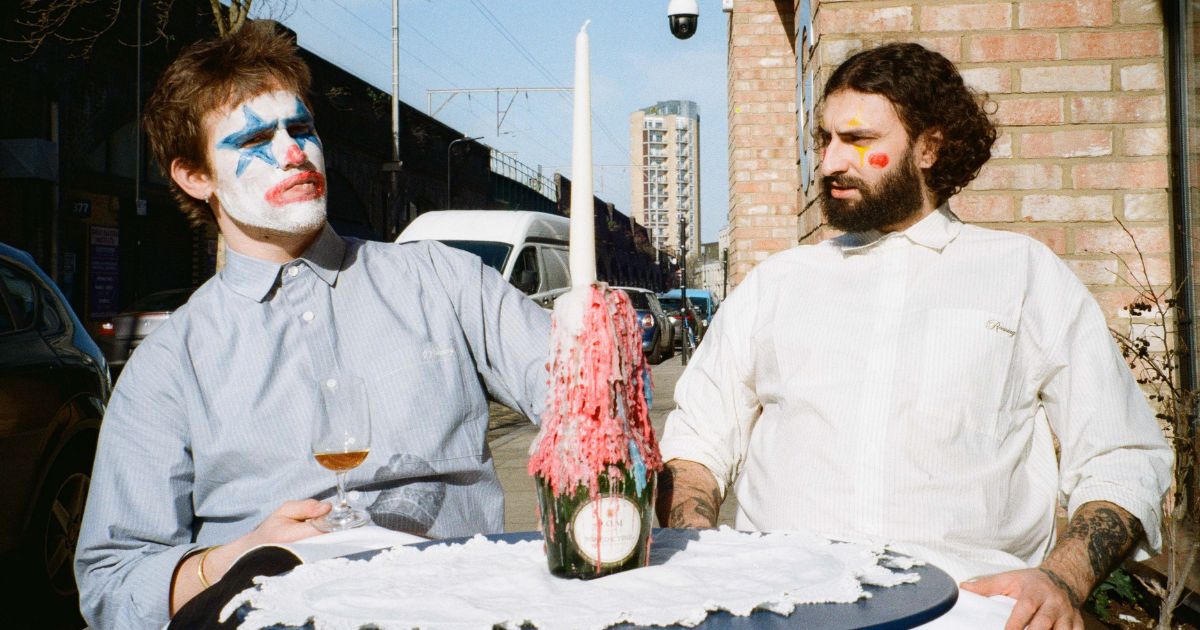
Both Auguste and Hausu reflect the creative values of their founders, and it’s impossible to ignore the artistic ethos of the restaurants.
Auguste is named after a type of clown, one of four main clown archetypes, known for slapstick pranks and described by Dylan as “the more pastoral end of clowns”. Meanwhile the name Hausu is inspired by a combination of a colloquial Japanese name for a home and the cult 1977 horror movie of the same name.
On Auguste, Dylan said: “The idea was to kind of play on the theatre of hospitality to kind of rip into ourselves a little bit as performers. To use that theme, it's like a golden thread that ties through into content and kind of the vibe of the restaurant. I guess it allowed us to build the space pretty quickly, because we had a theme. I think if you don't confine yourself to a theme in a space, it's very difficult as two creative people to just not let our minds run wild.”
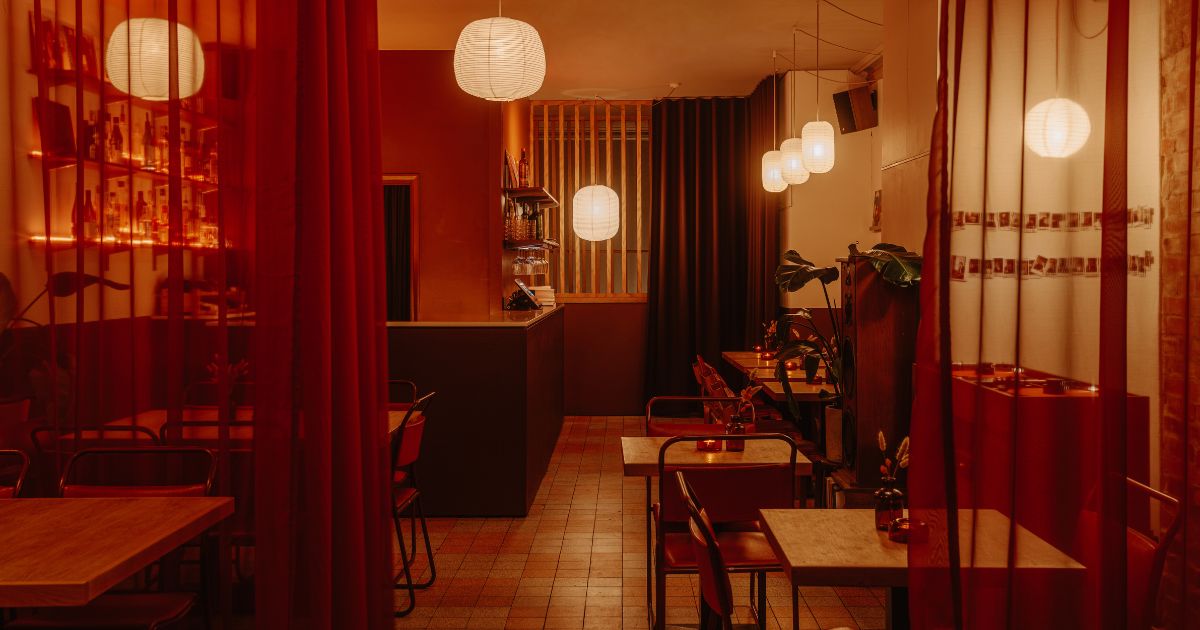
Hausu meanwhile brand themselves as a listening bar and restaurant, and have just opened an upstairs space modelled after the famous Red Room in the classic TV show Twin Peaks. Tom believes his own experience in the music industry has come in handy at the venue.
He said: “Christian had created the concept of Hausu as a moving listening bar. And they thought I'd be a good person to come and help. So to have a place (like) that it's kind of like a real joy and we get to play whatever we want and try and be a little bit different with that in some ways.”
Read more chef features -
Expressing creativity through the menus
Interestingly, neither restaurant’s menu reflects their name. Auguste, despite having German etymology, is an Italian restaurant, serving Abruzzo cuisine.
Chef and co-owner Mike Bagnall celebrates Abruzzo cuisine primarily in the form of arrosticini. Originally from Australia, Mike has spent a large amount of time in the Abruzzo region of Italy throughout his 11-year career as a chef.
Mike said: “I love going to nice restaurants, but I also just love sort of more accessible food. Every culture has their version of meat on sticks. (Whether it’s) moo ping in Thailand or souvlaki or any culture, everyone's got like a meat on a stick and this is a good version that's not really accessible in the UK.”
Mike uses a fornacella, a very specific type of Italian grill, to cook his arrosticini skewers. He buys the grill from a specific Italian supplier, one of only a handful to still make them, and will have to wait more than six months for his second order. It takes multiple hours every day to fire up the grill.
He said: “Because the skewers are so thin, you have to kind of get the grill ranging off. So when you grill it, you get this nice sear and crust on the
outside, but the inside's still got a certain amount of blush to it.”
Hausu’s food is more eclectic, with Holly’s menu reflecting a fusion of European and Asian flavours that also pays homage to the diverse backgrounds of the Middleton-Joseph siblings.
Tom said: “At the heart of it, it's just about really bold flavours and promoting seasonal food and cooking over fire really. In me and Holly's background, we have some Chinese and Trinidadian heritage in there, but I think really it's about celebrating Holly's learning from Italian cooking and Southeast Asian flavours after that.
“It’s just about creating the most exciting things for us to try and what we think people will enjoy. There's a real artistry to it I think when you're really in it. Making food is art, making drinks is art as well.”
A big part of the creative process for the Hausu and Auguste teams is how the restaurant space and ethos connects with the menus and the drinks pairings.
Hausu’s new upstairs bar presents a new challenge for Harvey Boobyer with multiple drinks menus a consideration for the restaurant and bar manager.
Harvey said: “Now when I'm thinking of drinks to make for upstairs, I have to approach it with how is that drink going to look in this space?
“You're not restricted to what's a great pairing. You can kind of just go off-piste entirely. And to be honest, I kind of have complete creative freedom to do what I want. Being able to do stuff like that and not restricted is really, really enjoyable.
“Myself and Holly, we try and work with one another and so sort of like cross-pollinate I guess between the menu and the food menu and the drinks. We use the pickle liquor, which is what would otherwise be waste from the kitchen and the pickles they make.”
Translating creativity into success
While a restaurant offers a unique canvas for creative minds, hospitality is still an industry where small details matter to create a successful business.
Harvey’s directives from the Hausu co-founders sums it up perfectly.
He said: “I kind of have complete creative freedom to do what I want, but within obviously not being too ridiculous and also still making money from the cocktails.”
For Mike, customer satisfaction represents success.
He said: “You want to feel just like you fit in or like you're in the right place, you just want to feel comfortable. So I guess just people leave and feel satisfied and happy. Getting joy out of it.”
Dylan is keen to ensure that the light-hearted persona Auguste has created doesn’t take away from the overall service.
Dylan said: “I think there's this performative element where we seem like we maybe aren't taking ourselves too seriously, but really Mike and I are really obsessed with this and it's something that we take very seriously behind the scenes. Mike is one of the most talented chefs in the game.”
“We’re really good at our job and the quality of everything is fantastic. I think sometimes when you're having too good of a time in a place, it maybe overshadows the quality of the work. So I want to make sure that whilst we're touching that, I also want to make sure that people really love what we're doing.”
And that connection between chef and guest, artist and audience, strikes at the heart of the connection between the arts and food.
Tom said: “I feel that's why a lot of people who are artists, musicians end up staying in here or wanting to come back into it even after leaving.”
At a glance
Hausu
Location: Peckham, London
Founders: Tom Middleton-Joseph, Holly Middleton-Joseph and Christian Williams
Head chef: Holly Middleton-Joseph
Creative influences: music, cinema, listening bars, Twin Peaks, bold seasonal cooking, cocktails
Food style: eclectic European and Asian influences, seasonal produce and cooking over fire
Auguste
Location: Hackney, London
Founders: Mike Bagnall and Dylan Walters
Head chef: Mike Bagnall
Creative influences: theatre, clowning, performance, informal hospitality
Food style: Abruzzo cuisine, arrosticini and cooking over a fornacella grill
FAQ
Why is hospitality a good career for creative people?
Hospitality is a good career for creative people because it allows ideas to be expressed through food, drink, service, music, interiors and guest experience. Restaurants are live creative environments where teams can see the impact of their work immediately.
How is cooking creative?
Cooking is creative because chefs use ingredients, technique, flavour, texture, seasonality and presentation to create dishes that express identity, culture and emotion.
How do restaurants express creativity beyond food?
Restaurants express creativity through cocktails, wine, music, lighting, service style, menu design, interiors and the overall atmosphere guests experience.
Why do artists and musicians often work in hospitality?
Many artists and musicians work in hospitality because it offers flexible work, social energy and a creative environment. For some, hospitality begins as a way to support another creative career, but later becomes the creative outlet itself.

For 18 years, The Staff Canteen has been the meeting place for chefs and hospitality professionals—your stories, your skills, your space.
Every recipe, every video, every news update exists because this community makes it possible.
We’ll never hide content behind a paywall, but we need your help to keep it free.
If The Staff Canteen has inspired you, informed you, or simply made you smile, chip in £3—less than a coffee—to keep this space thriving.
Together, we keep the industry connected. Together, we move forward.
Support Us
CONTRIBUTE

Why restaurants are a home for creative people


