Dinner by Heston Melbourne – A taste of history Down Under


When Dinner by Heston Blumenthal opened at Crown Melbourne in October 2015, it marked Heston’s first permanent restaurant outside the UK.
Following the success of Dinner by Heston London, the Australian restaurant brought the concept’s historic British cooking to a new city, translating centuries-old dishes through local produce, theatre and modern technique.
The opening also followed The Fat Duck’s temporary relocation to Melbourne earlier that year, when the Bray restaurant moved to Australia while its Berkshire home was being refurbished.
Dinner Melbourne then took over the Crown space as a permanent expression of Heston’s wider restaurant group in Australia.
For Melbourne, this was not simply a copy of London. It was the Dinner idea adapted for one of the world’s most confident dining cities: British food history, interpreted through an Australian lens.
The Concept: History Meets Local Produce
Like the London original, Dinner Melbourne drew inspiration from historic British recipes, including dishes linked to texts such as The Forme of Cury.
The idea was not to reproduce old recipes literally, but to reinterpret them using contemporary fine-dining technique.
What made Melbourne distinct was the use of Australian ingredients and references. The clearest example was ‘Rice & Flesh’, a dish inspired by medieval cooking but adapted in Melbourne with spiced kangaroo in a saffron-scented risotto.
That approach gave Dinner Melbourne its own identity. It kept the structure of the London concept - dated dishes, historical research, precise execution - but allowed the food to speak to its Australian setting.
Signature Dishes of Dinner Melbourne
Meat Fruit
Dinner’s best-known dish: a mandarin-shaped chicken liver parfait, glazed to look like fruit. In Melbourne, it remained one of the key links back to the London original.
Rice & Flesh
One of Melbourne’s defining adaptations. The dish used kangaroo in place of the more traditional meat references, connecting British culinary history with Australian produce.
Tipsy Cake
A rich brioche pudding baked to order and served with spit-roasted pineapple, already a signature of the Dinner brand.
Roast Marrowbone
A historically inspired dish that reflected Dinner’s interest in older British preparations and bold, direct flavour.
Frumenty
A medieval grain dish reworked for a modern fine-dining menu, showing how Dinner used old references as a starting point rather than a fixed template.
Together, these dishes helped Dinner Melbourne make its central argument: that food history can travel, adapt and take on new meaning in a different country.

Design & Experience
Dinner Melbourne was located inside Crown Towers and designed by Bates Smart. The dining room was created as a theatrical journey, with guests entering through a long ramp infused with aromas of damp moss, wood smoke and leather.
The restaurant overlooked the Yarra River and combined open-kitchen theatre with a darker, more immersive interior than London. The design reinforced the Dinner idea: historic inspiration, modern luxury and a sense of performance.
It was part restaurant, part stage - a setting built to make the meal feel like a journey through time.
The Team Behind the Restaurant
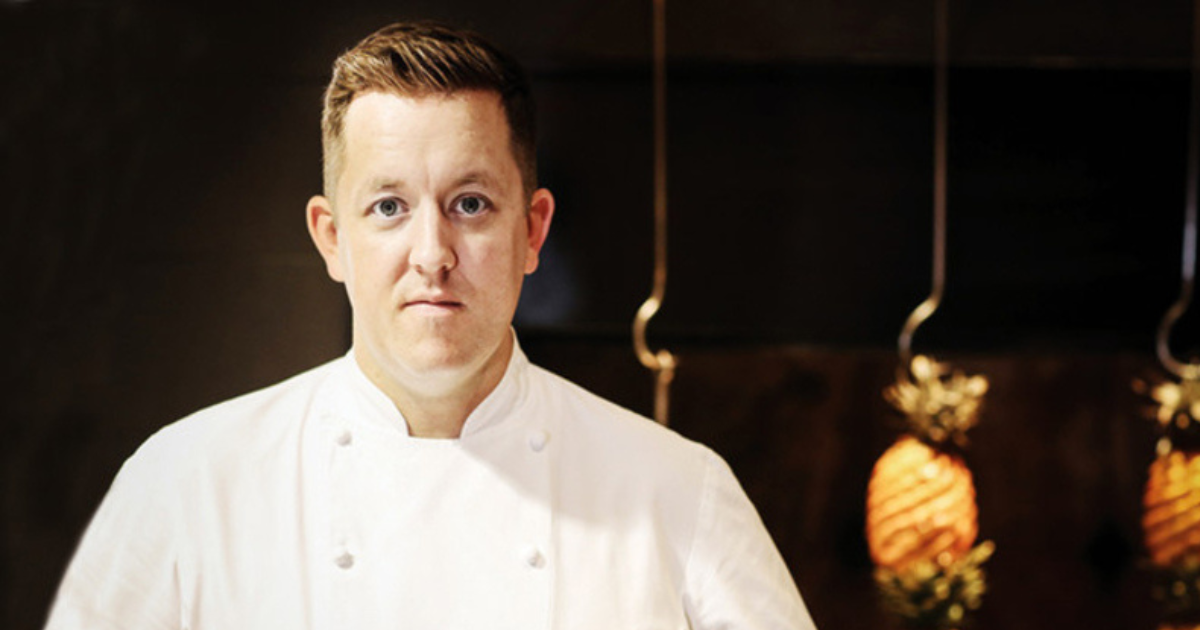
Ashley Palmer-Watts was central to the creative development and launch of Dinner Melbourne, bringing the London concept into an Australian context while maintaining the precision and structure of the original.
The wider Fat Duck Group development culture also shaped the restaurant. Dinner Melbourne shared the same foundations as London and Bray: research, storytelling, technical control and curiosity.
Its success depended on adapting the concept without losing its identity. That meant keeping the historic framework of Dinner while giving the Australian restaurant enough local character to stand on its own.
Critical Reception & Impact
Dinner Melbourne quickly became one of Australia’s most talked-about fine-dining openings.
Its arrival brought global attention to Melbourne’s restaurant scene and reinforced the city’s reputation as a serious international dining destination.
The restaurant was widely discussed for its design, service and signature dishes, particularly Meat Fruit, Tipsy Cake and the Australian version of Rice & Flesh.
It also earned recognition within the Australian dining scene, including two hats in The Age Good Food Guide.
Its cultural impact was less about longevity and more about ambition. Dinner Melbourne showed that a deeply British concept could be translated into another market without losing its identity.
Challenges and Closure
Dinner by Heston Melbourne closed after final service on February 14, 2020, following a five-year run at Crown Melbourne.
The closure came after a difficult period for the restaurant, with reports covering lease issues, financial pressures and investigations into staff underpayment.
While the circumstances around its ending were complex, Dinner Melbourne remains an important chapter in the wider Dinner by Heston story.
The 2026 Context
Looking back from 2026, Dinner Melbourne now sits as the middle chapter in the Dinner by Heston story.
London remains the original restaurant and is still listed with two Michelin stars in the 2026 Michelin Guide, but it is now scheduled to close in January 2027 after 16 years at Mandarin Oriental Hyde Park.
Dubai, which opened at Atlantis The Royal in 2023, continues as the active international outpost of the Dinner concept. That makes Melbourne an important bridge between the original London restaurant and the later Dubai chapter.
It was the first test of Dinner outside Britain - and, despite its difficult ending, it proved the concept could travel.
Legacy
Dinner Melbourne remains a significant chapter in Heston’s global restaurant story. It brought British culinary history to Australia, adapted the Dinner format for local ingredients, and created one of Melbourne’s most high-profile fine-dining openings of the 2010s.
Its legacy is complicated, because the creative ambition of the restaurant sits alongside the reality of its closure. Both points matter.
What remains clear is that Dinner Melbourne helped expand the idea of what the Dinner concept could be: not just a London restaurant, but a framework for retelling food history in different cities, cultures and dining rooms.
Explore the Story
Continue your journey:
Dinner by Heston – A Global Dining Legacy
Overview of the Dinner concept across London, Melbourne and Dubai.
Dinner by Heston London
The original two-Michelin-starred restaurant at Mandarin Oriental Hyde Park, now entering its final chapter before closing in January 2027.
The Fat Duck: 30 Years of Wonder
The restaurant that started Heston’s global story.
The Birth of The Fat Duck
How Heston opened The Fat Duck in Bray and began building one of Britain’s most influential restaurants.
The Science of Taste: Heston Blumenthal and Harold McGee
How curiosity, flavour science and sensory thinking shaped The Fat Duck and the wider Dinner philosophy.

For 18 years, The Staff Canteen has been the meeting place for chefs and hospitality professionals—your stories, your skills, your space.
Every recipe, every video, every news update exists because this community makes it possible.
We’ll never hide content behind a paywall, but we need your help to keep it free.
If The Staff Canteen has inspired you, informed you, or simply made you smile, chip in £3—less than a coffee—to keep this space thriving.
Together, we keep the industry connected. Together, we move forward.
Support Us
CONTRIBUTE
Dinner by Heston Melbourne – A taste of history Down Under


