Jack Stuart, chef-owner of Blume in the Scenic Rim, has built a restaurant shaped by its landscape, its growers and a belief in cooking that feels honest and grounded. His food is precise without noise, rooted in the region’s produce and guided by a calm discipline that defines the Blume experience.
From the Scenic Rim to his own kitchen
Blume opened with a simple idea. Keep the restaurant small, build the menu around what the surrounding farms can offer and focus on flavour before anything else. That clarity allowed Jack to shape a model that feels rare in modern dining. The restaurant operates three days a week, with Thursdays dedicated solely to preparation. It is a rhythm that gives the kitchen space to work with intention and lets the menu evolve naturally instead of reacting to the pressures of a packed weekly schedule. The setting supports that calm approach. Jack’s mother lives on a nearby property at the top of the hill, a place that supplies vegetables, herbs and the distinctive apple marigold that has become one of Blume’s signatures. The land is woven into the restaurant. Jack stays there across the weekend, reducing travel and increasing time with the produce that shapes the menu.
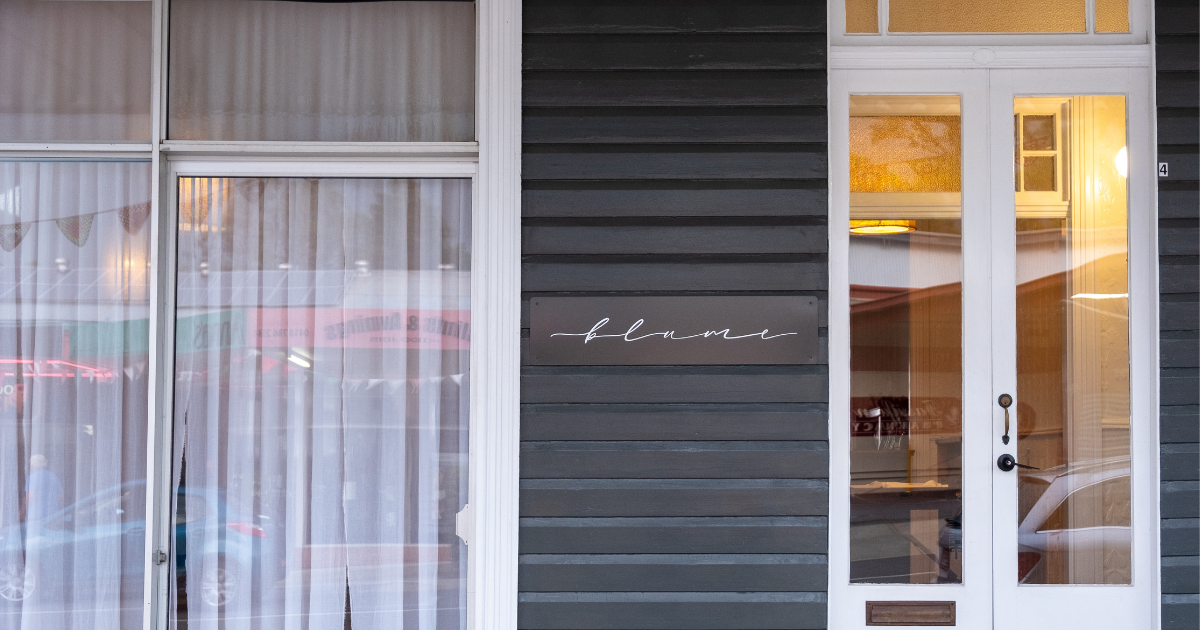
What the Scenic Rim offers has always been central to his thinking. The possibilities are wide. Sheep’s milk. Camel halloumi. Jersey cream with deep yellow richness. Finger limes and native herbs. Heirloom vegetables with real flavour. Even cuts like Brahman hump, which Jack had never worked with until he moved to the region. “You cook with what the land gives you,” he said during our original conversation. “The ingredients tell you what belongs.” That relationship has only strengthened. Blume plays an ongoing role in Eat Local Month, and Jack continues to build direct connections with farmers, growers and producers who appreciate a chef who listens rather than dictates.
The daily discipline
Stuart’s cooking revolves around what he calls complex simplicity. The dishes appear quiet on the plate, but each rests on layers of work that rarely draw attention to themselves. His beetroot course embodies that idea clearly. Treacy beetroots are cooked slowly in porous clay to draw out moisture, cold-smoked to deepen flavour, sliced thin for texture and set against Jersey crème fraîche sour cream, fennel pollen and a dressing made from ten kilograms of reduced beetroot. Nothing is wasted. Everything has purpose. That discipline extends across the menu. Sourdough is made in-house. Cream is cultured. Koji is grown for marinades and glaze work. Kombucha and preserved juices shape acidity. Garums sit quietly in the background, adding depth. Blume is not a restaurant built on tricks or flourish. It is built on repetition, patience and the kind of craft that relies on doing the same thing well every day.
Service follows the same logic. Blume does not turn tables, which changes the atmosphere entirely. Guests are invited to settle in and stay as long as they wish. The room is small, warm and often punctuated by something personal. On many weekends Jack’s uncle, a former Supreme Court sketch artist, sits in the dining room and draws portraits of guests as they eat. It is a gesture that feels unexpected, sincere and deeply tied to the restaurant’s identity. Some nights feature handwritten menus prepared by Jack’s mother. On others, guests are given small gifts of produce, wine or preserved items to take home. The hospitality is not loud. It is thoughtful and human.
Behind the pass, the kitchen works almost silently. There are no printed dockets. Orders are held in the team’s rhythm. It feels more like a studio than a traditional service. The small scale allows for connection, precision and a consistency that larger dining rooms often struggle to achieve.
Produce, place and season
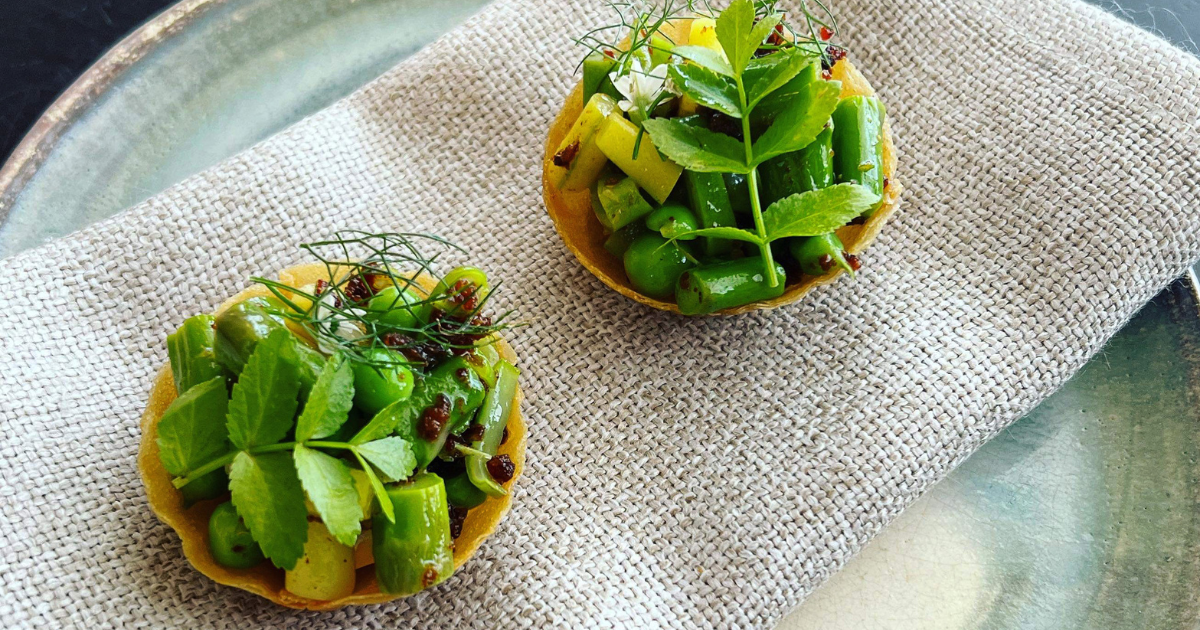
Blume is part of a wider shift in the Scenic Rim toward regional identity. Stuart believes the future of Australian dining lies in specificity. “Modern Australian is too broad,” he said. “The Scenic Rim should be its own category. If we keep building it, people will know what this place tastes like.” The sourcing reflects that intention. Jack and his team work directly with growers, often adjusting dishes based on what arrives in the prep kitchen that morning. If a vegetable is not at its best, it does not go on the menu. If a supplier calls with something special, the team finds a way to use it. Seasonality is not a label. It is the framework that holds everything in place. Vegetables, dairy and native ingredients drive the menu. Seafood is sourced from a trusted supplier in Sunnybank, collected personally to maintain quality and consistency. It is a system that requires extra work but delivers a sense of place rarely found outside the capital cities.
The UK years and the influence of craft
Before opening Blume, Stuart’s career took him through the UK, including time with Simon Rogan in Cartmel. The kitchens were demanding, disciplined and deeply rooted in foraging, fermentation and minimalism. “So much of my repertoire comes from what I learnt there,” he said. The techniques he absorbed became the foundation for Blume’s style. Foraging. Preservation. Patience. Tasting and adjusting without rushing. The relationships formed during those years have continued to influence him. Many of the chefs he worked alongside have gone on to open Michelin-starred restaurants, shape sustainability movements and redefine what regional British dining looks like. Returning to Australia was not straightforward. Melbourne was challenging, both personally and professionally. Mental health issues resurfaced and pushed him toward finding a new balance. The move back to Queensland brought clarity, family and the chance to build something on his own terms.
Craft, people and pressure
Blume’s rise surprised Jack. The restaurant opened with low overheads, a minimal team and a strong sense of purpose. It quickly found its audience. Demand grew, reviews followed and the restaurant secured recognition across Queensland’s dining scene through 2024 and 2025.
Stuart has always been candid about the realities of running a restaurant and the mental health challenges he manages, including cyclothymia and ADHD. He speaks openly about the importance of structure, routine and exercise, and that honesty has resonated with younger cooks who see their own struggles reflected. It has also shaped the culture inside Blume. The team is small and carefully built. Hiring is slow and deliberate. The aim is not to scale, but to maintain an environment where attention, integrity and calm are normal.
The restaurant operates with clear boundaries and expectations, which is rare in an industry that often rewards chaos. For Jack, this consistency is part of the craft. If the kitchen is grounded, the food will follow.

Food, future and focus
As regional Australian dining continues to evolve, Blume feels increasingly important. Diners are seeking restaurants that feel specific and sincere, and Stuart’s cooking offers both. He is not pursuing expansion, multiple venues or rapid growth. His focus remains on improving the garden, refining the preservation program, strengthening relationships with growers and making the menu even more connected to the region than before. “For chefs, the lesson is to build a restaurant around what you believe in,” he said. “For guests, the invitation is to taste what happens when you give everything the time it needs.”
Blume remains one of the Scenic Rim’s most memorable places to eat because it protects the element that defines it: a sense of place that cooks quietly and confidently.





