Kane Pollard is the chef-owner of Topiary in the Adelaide Hills and the creator of Place Dining, a series of ticketed meals cooked directly within the environments that shape them.
His work is grounded in restraint. Use what is around you, use it fully, and build menus tight enough that every dish earns its place.
Across both projects, Kane’s cooking is less about invention and more about attention. Understanding ingredients completely. Removing waste from the workflow. Letting environment, rather than ego, guide the plate.
Learning flavour before kitchens
Kane grew up in a market gardening family in the Adelaide Hills, where ingredients were never disconnected from soil or season. There were no major supermarkets nearby at the time. Fruit and vegetables came from markets and small shops, meat from the butcher, and much of his time was spent outdoors.
Wild fennel, blackberries and watercress were part of the landscape and part of daily life. He still remembers coming home smelling of fennel after spending entire days moving through the hills.
At home, food was varied and constant. His mum cooked across cuisines without framing it as anything unusual. Fried rice, stroganoff, Mexican nights. Different ingredients, different smells, different rhythms through the week.
Time on the coast added another lesson. Fishing and crabbing produced meals that were direct and uncomplicated. Catch it, cook it, finish with lemon, eat.
He started working in kitchens at 14 in a local pub that made everything from scratch. Early roles were built on prep, repetition and observation. Washing up, topping up, doing whatever service required. Long before ambition, there was rhythm.
A school careers meeting suggested two paths. Farmer or chef. Once spoken, chef felt like the natural extension of everything he already understood.
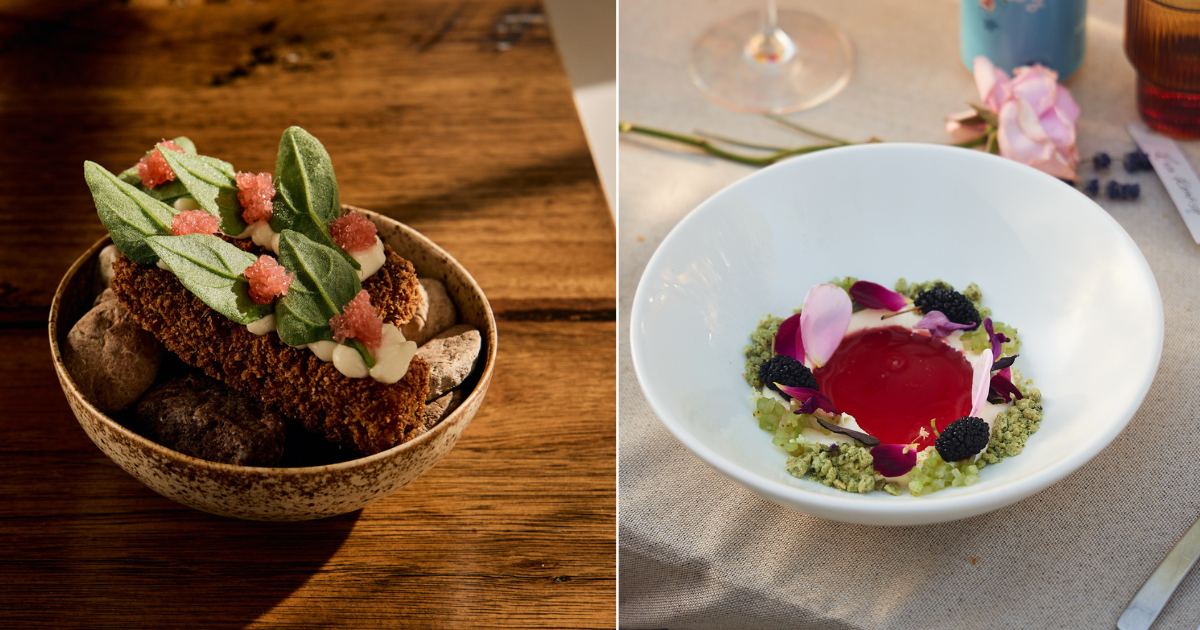
Eliminating waste at its source
An early turning point came unexpectedly. While working in a nursing home kitchen, Kane made a beetroot soup using whole beetroots, including the leaves, roasted with garlic and onion before being blended and balanced with vinegar and salt.
“That’s literally just come from the ground. It’s been washed, roasted and blitzed.”
The flavour came from completeness, not addition.
Later, in restaurant kitchens, he began noticing how easily waste became normalised. A general waste bin always within reach. Frames, trim and liquids discarded without thought. Breaking down whole animals made the disconnect clearer.
When Kane and his father-in-law purchased Topiary nearly 14 years ago, he had the opportunity to rebuild the kitchen’s workflow from the ground up. One of his first actions was to remove the bins entirely.
“To figure out how much actually goes to waste, you get rid of the bins altogether.”
Everything that would normally be discarded was logged, examined and reassessed. From there, systems replaced habit.
Pickle liquor reduced into glaze. Whey used for brining. Buttermilk cultured into dressings. Olive marination oil repurposed into vinaigrettes. Vinegar produced from unsold wine.
A salad dressing built from olive oil, olive brine and house vinegar became a quiet signature. Guests responded to flavour before they understood its origin.
Proteins often overlooked became opportunities. Ox tongue was brined, slow cooked and finished over charcoal, served as corned beef. Properly handled, it delivered richness and texture comparable to far more expensive cuts.
The process was not about novelty. It was about removing waste as a default outcome.
Changing a kitchen without breaking trust
When Kane arrived at Topiary, the venue was still defined by its past as a tea house and daytime café. The clientele was loyal and established, and change needed to happen carefully.
He focused first on consistency and familiarity. House sourdough and cultured butter became early anchors. Small shifts that signalled care without disruption.
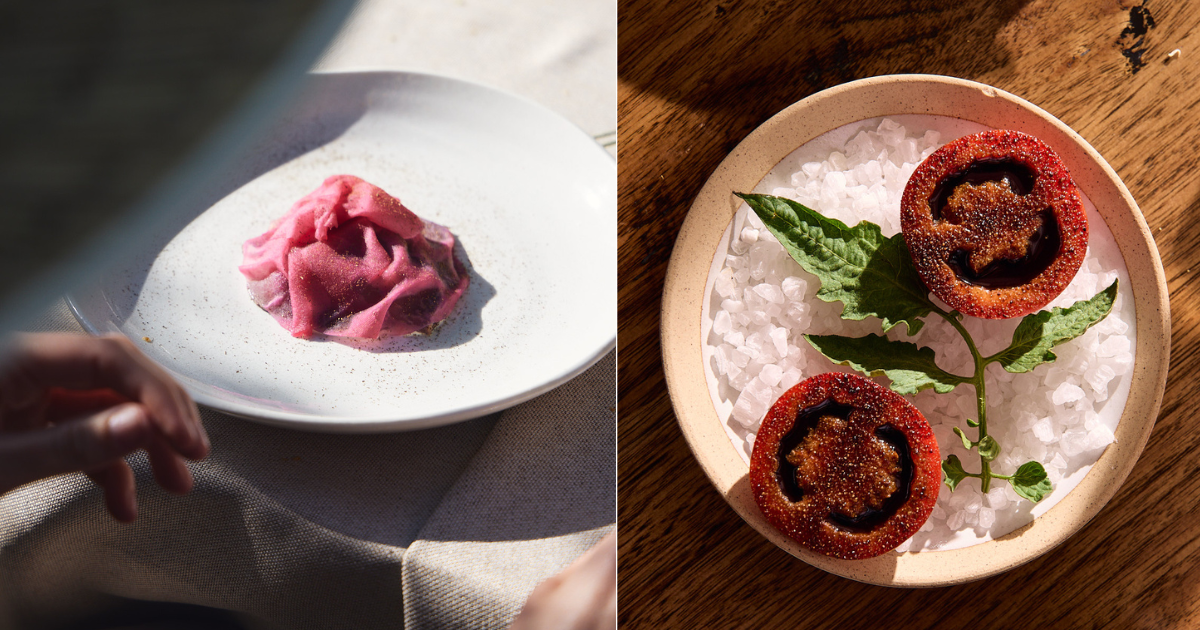
Trust formed gradually. From there, the menu evolved naturally.
The regional setting continues to shape the kitchen’s structure. Hiring locally builds a team connected to the place itself. People who understand the environment and the community they serve.
“We really live by that ethos of, you know, welcome to our home.”
Kitchen culture follows the same philosophy. No yelling. No shaming. Problems are solved collectively. The physical constraints of the building demand clear communication, and continuity allows skills and standards to deepen over time.
Ideas are encouraged. Growth happens through participation.
Cooking within the landscape
Foraging is not treated as an occasional exercise. It is a constant way of seeing. Driving through the Hills, walking with family, moving through everyday environments, Kane is always observing.
“Weeds are only an invasive plant if we see them as an invasive plant.”
That perspective led to dishes like lamb in the weeds, inspired by watching lambs graze freely on wild plants. What might normally be cleared becomes part of the flavour system.
Seasonal conditions reveal themselves through wild growth. Rain softens flavour. Dry periods concentrate it. These signals help shape dishes before ingredients ever reach the kitchen.
This instinct extended naturally into Place Dining.
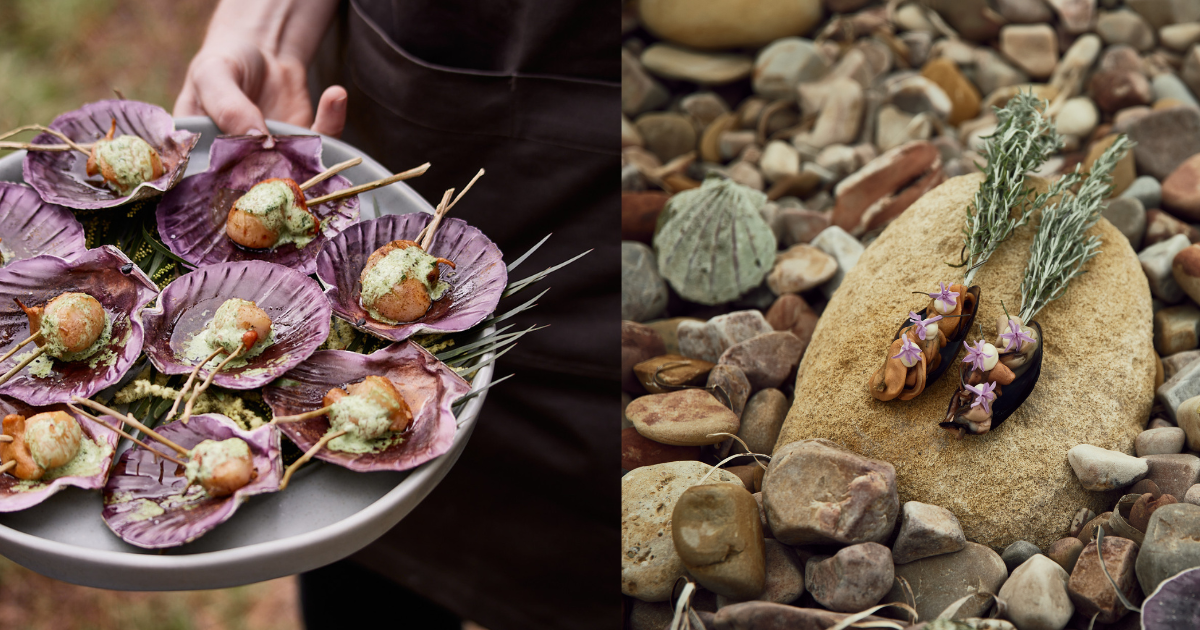
The concept emerged from time spent cooking and eating outdoors with his team. Fire, landscape and environment changed how food was experienced. Smell carried differently. Temperature altered perception. Sound shaped attention.
At Mount Crawford Forest, dishes were designed to reflect the environment itself. Potato and celeriac layered with truffle to mimic tree rings. Components structured to represent canopy, forest floor and root systems.
Place Dining now operates as a series of ticketed events across South Australia, with each menu built directly from the landscape it inhabits. Coast, hills, plains and forest all offer distinct starting points.
The goal is not spectacle, but awareness.
“Disconnect to reconnect.”
Restraint as a working system
Across Topiary and Place Dining, Kane’s approach remains consistent. Sustainability is not framed as a statement. It exists as workflow. Systems designed to ensure ingredients are respected completely.
Restraint is not aesthetic. It is operational.
Menus stay tight. Waste stays visible. Ingredients stay connected to place.
The result is cooking shaped less by invention and more by understanding. A discipline that can be taught, repeated and passed on.





