For Ruben Lopez Mesa, cooking was never decorative. It was survival.
He grew up in Pinto, south of Madrid, in a family where food was stretched, never wasted and always shared. His grandmother Emilia raised six children through the aftermath of the Spanish Civil War. Ingredients were limited. Waste was unthinkable. Lentils, leftover vegetables, garlic and olive oil could feed a table if handled properly.
That early exposure did more than teach him recipes. It established a framework.
Food had to make sense. It had to respect the ingredient. It had to bring people together.
“Preparing food is an act of love,” he says. “But it also needs discipline.”
As a teenager, he was invited into his grandmother’s kitchen with intent. They began with lentil stew. A simple pot built from scraps and patience. He still describes the smell of garlic hitting warm oil as the moment everything clicked. Years later, he would cook that same stew on SBS’s The Cook Up with Adam Liaw. The technique had evolved. The principle had not.
Spain’s regional diversity shaped him just as strongly. His mother’s family in Castilla-La Mancha cooked inland food defined by saffron, garlic, bread and sheep’s cheese. His father’s Galician heritage exposed him to seafood, wild weather and slow vegetable stews designed to warm cold kitchens. Travelling across Spain reinforced one idea: geography dictates flavour. Regional cooking was not branding. It was identity.
From dishwasher to high-pressure kitchens
Ruben arrived in Australia in 2009 after the Global Financial Crisis shut down the Madrid deli where he worked. Newly married and starting again, he landed without local references and had to adapt quickly to a new kitchen culture and language.
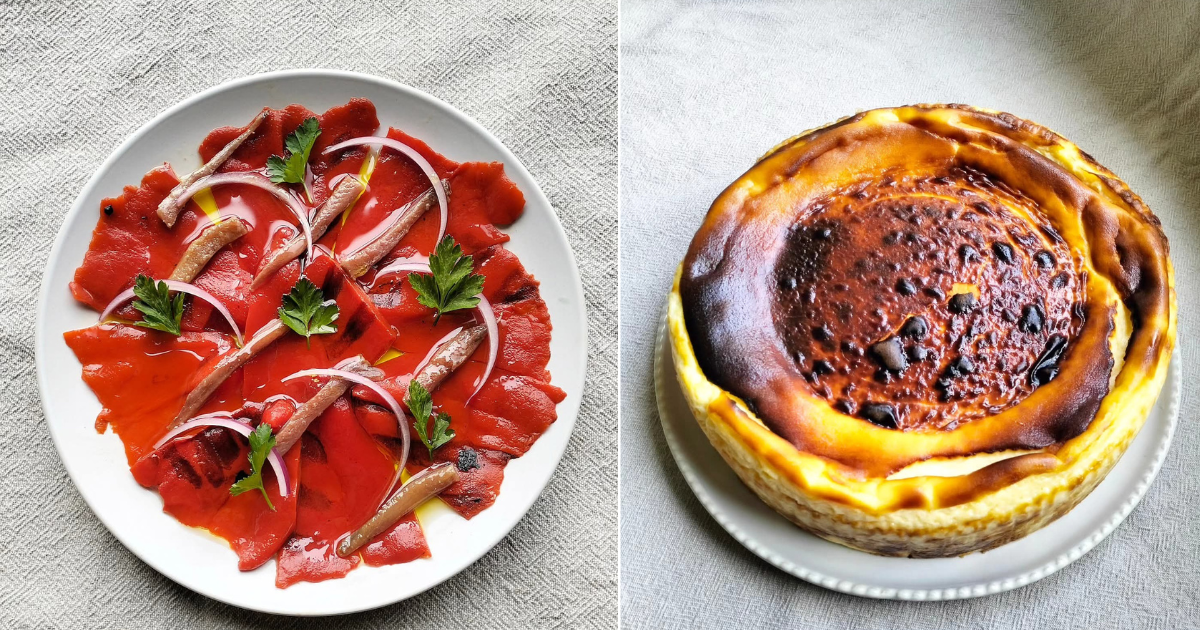
He started as a dishwasher.
Australian kitchens were louder and faster than what he knew. Orders came sharp. Communication was direct. Service moved quickly. Between shifts, he enrolled at TAFE NSW to complete formal Commercial Cookery qualifications. Classical technique became structured. He began understanding how Australian kitchens interpreted European food traditions.
Those early years demanded humility and adaptation.
In 2014, he joined the opening team at MoVida Sydney under Frank Camorra.
Long shifts in a high-pressure tapas kitchen sharpened everything. Timing. Plating. Consistency. Service rhythm. In a busy tapas environment, there is no hiding place. Dishes move constantly. Standards cannot slip.
“There are no shortcuts,” Ruben says. “You find your voice through pressure.”
At MoVida, he saw how regional Spanish food could resonate deeply with Australian diners when executed with precision. He also recognised how little structured support existed for Spanish chefs navigating a new country. Around this time, he co-founded Eat Spanish Australia, a network designed to connect Spanish chefs across the country, share knowledge and raise the profile of regional Spanish produce.
For migrant chefs building careers far from home, structure and community matter.
Why Orange made sense
After years in Sydney’s Inner West, Ruben and his family moved to Orange in 2018.
The decision was not about slowing down. It was about alignment.
Orange offered four seasons, volcanic soil and serious agricultural capability. Garlic growers. Saffron producers. Olive oil. Cool climate wines. The landscape reminded him of inland Spain.
In Orange, he moved toward a zero-kilometre approach wherever possible. Hyper-local sourcing became the starting point for menu decisions.
It is not about purity. It is about proximity. If a product can be sourced locally at the right quality, it is.
“If you know the grower, you cook differently,” he says.
He works with producers including Boutique Garlic’s Dougal Munro, Four Jay Farms hazelnuts and Argyle Saffron. Honey from a neighbour’s bees is infused with local saffron for a version of mel i mató. He has explored paella built around kangaroo alongside locally grown saffron, applying Spanish technique to Australian protein without compromising either identity.
The technique remains Spanish. The terroir is Central West NSW.
This is not fusion. It is regional thinking applied to a new geography.
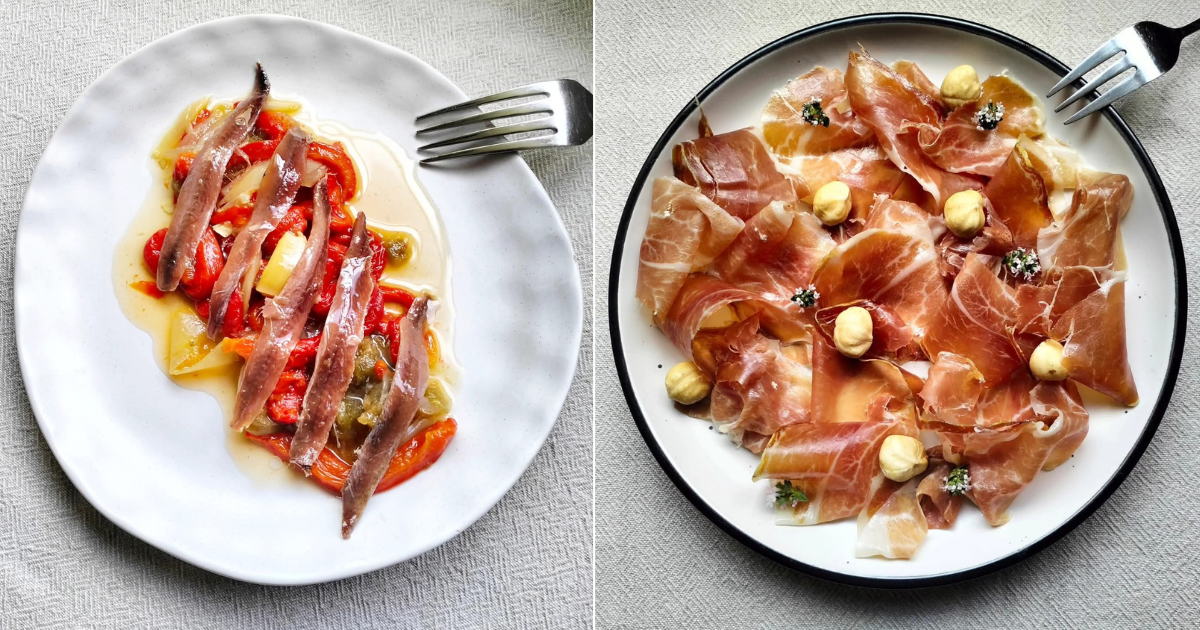
Zero waste as baseline
Ruben’s zero-waste mindset predates sustainability language.
In his family kitchen, nothing was discarded without purpose. That approach remains central to his cooking.
A single roast chicken becomes multiple meals. The initial roast anchors the first service. Leftover meat is shredded for sandwiches or folded into other dishes. Bones and trim become stock with onion, carrot and herbs. That stock forms the base of fideo soup with chickpeas. Remaining meat can be bound into béchamel for croquetas.
The logic is practical. It reduces cost. It deepens flavour. It respects the ingredient.
This philosophy comes directly from Spain’s cocina de aprovechamiento, the practice of using every part of the animal or vegetable. It was born from necessity. Ruben now teaches these principles through community cooking classes and workshops in Orange, encouraging both home cooks and young chefs to see thrift as technique rather than compromise.
“For me, zero waste is not an idea,” he says. “It’s just how we cook.”
The operational reality of A Table of 10
In the period following COVID disruptions, Ruben developed his private dining concept, A Table of 10, into a defined offering.
From the outside, it appears intimate and relaxed. Operationally, it is exacting.
One chef. Multi-course menu. Different venue each time. Unfamiliar kitchens. Variable equipment. Live cooking. Full service. Complete clean-down.
No brigade. No pass. No safety net.
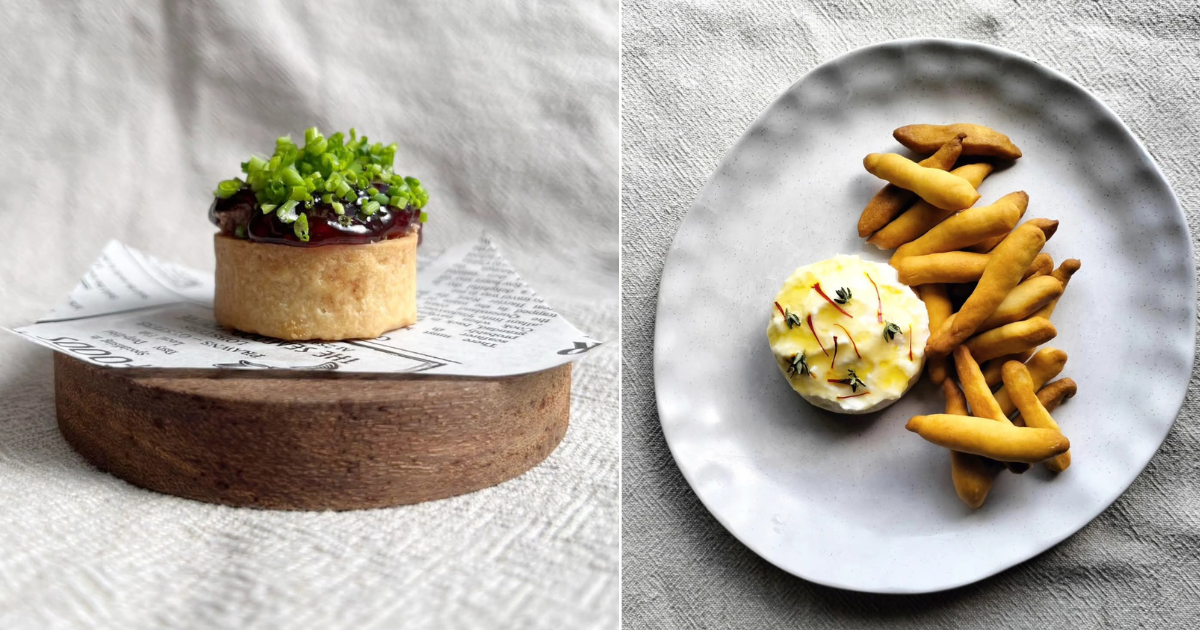
Each event is mapped carefully. Menus are structured to control heat, timing and flow. Mise en place is planned to withstand disruption. Equipment is transported deliberately. There is no room for guesswork.
Pacing is critical. Courses must land with rhythm. Guests must feel engaged but not overwhelmed. Ruben reads the room constantly, adjusting interaction while maintaining standards.
“Delivering a perfect service on your own after days of prep,” he says, “that’s satisfying.”
For chefs accustomed to brigade systems, the model demands a different skill set. Organisation becomes survival. Clarity of identity becomes essential. Every detail is owned.
At the end of each event, the kitchen is left spotless. That discipline is non-negotiable.
Spanish, Australian, both
Seventeen years after arriving in Australia, Ruben describes himself as a Spanish-born Australian chef. His foundations remain anchored in Castilla-La Mancha and Galicia. Garlic. Saffron. Pulses. Seafood. Shared plates. But his palate has evolved. Australian produce and native proteins now sit comfortably within his framework.
Spain has recently signalled stronger international focus on promoting its gastronomic identity, and Ruben sees Australia as an important part of that conversation. At the same time, his attention remains local.
In Orange, he can engage directly with producers. He can cook in a way that reflects both his upbringing and his adopted home. He can align environment, values and execution.
For Ruben Lopez Mesa, that is not a retreat from professional intensity. It is alignment.
And for chefs working the pass in major cities, his trajectory poses a practical question.
If your geography, suppliers and values were fully aligned, how would your cooking change?





