Tasmania’s restaurant scene has developed into one of Australia’s most distinctive food landscapes, defined less by scale and more by clarity of purpose. Across Hobart, Launceston and regional areas, chefs continue to build menus around proximity to produce, disciplined technique and concepts that reflect where they cook rather than where trends dictate.
Hats as a marker, not the whole story
The 2025 Australian Good Food Guide listings show Tasmania holding a notable number of hatted venues relative to its size. Hobart and Launceston anchor the state’s representation, with restaurants such as Dier Makr, Aloft, Fico, Peppina, Stillwater, Josef Chromy Restaurant and Black Cow Bistro among those recognised.
What’s notable is not just the presence of hats, but how different these kitchens are from one another. There is no single Tasmanian style being rewarded. Instead, the guide reflects a spread of approaches, from restrained produce-driven menus to more expressive, technique-forward cooking.
For chefs, this matters. It suggests Tasmania’s dining scene rewards clarity and execution rather than conformity. Kitchens are judged on how well they deliver their own idea, not how closely they follow a prevailing format.
Menus shaped by supply, not theory
Across many Tasmanian kitchens, menus are written in response to what arrives at the door rather than what was planned weeks earlier. This is not unique to Tasmania, but the proximity between chefs and producers amplifies the effect.
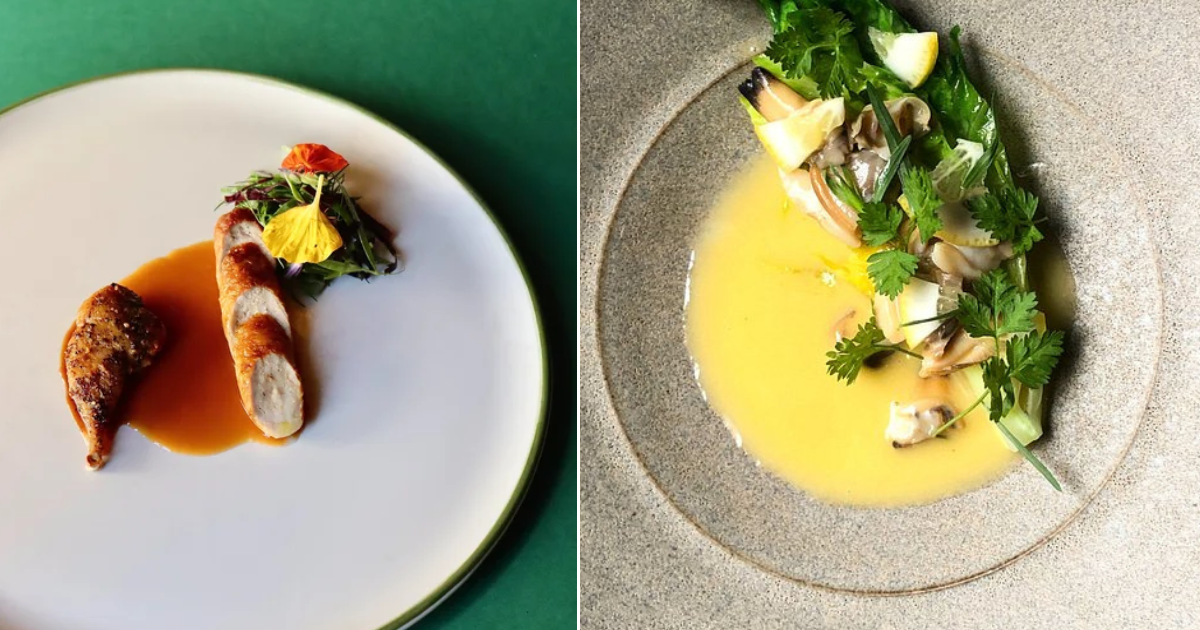
Vegetable-led dishes are common, not as a statement, but as a practical outcome of quality and availability. In Hobart, menus frequently feature brassicas, roots, brassica leaves, bitter greens and legumes, often treated with techniques borrowed from European cooking rather than modern garnish-heavy plating.
At venues like Dier Makr, dishes are often built around fermentation, curing and preservation techniques that extend the usefulness of local produce across seasons. These techniques are not framed as novelty, but as core kitchen practice. They also allow small teams to maintain depth of flavour without relying on complex supply chains.
Seafood plays a similar role. Tasmanian oysters, mussels, abalone and line-caught fish appear widely, often handled with minimal intervention. The cooking is confident but restrained, focusing on temperature, seasoning and timing rather than heavy sauce work.
Concepts rooted in place
One consistent feature of Tasmanian restaurants is how closely concepts align with location. Rather than importing ideas wholesale, chefs tend to adapt formats to suit their surroundings.
In Hobart, dining rooms often lean towards intimacy. Smaller spaces, shorter menus and limited seat counts allow chefs to control service and cooking quality. This has practical implications for staffing, prep and waste, all ongoing pressures in the industry.
Launceston’s dining rooms, by contrast, often balance destination dining with local patronage. Restaurants such as Stillwater operate in heritage settings and must cater to both visitors and regulars. Menus reflect that balance, offering recognisable formats underpinned by high-quality ingredients and refined technique.
Regional venues push this further. Winery restaurants and farm-adjacent kitchens often blend hospitality roles, with chefs involved not just in menu development but also sourcing, events and guest experience. The concept becomes broader than the plate, encompassing how guests move through the space and connect with the landscape.
The Agrarian influence and beyond
The Agrarian Kitchen remains a reference point in Tasmanian cooking, particularly for its emphasis on whole-ingredient use, kitchen gardens and technique-led simplicity. While not every restaurant follows that model directly, its influence is visible in how many chefs approach vegetables, bread, dairy and meat.
Dishes across the state often reflect a willingness to do less, but do it better. A plate of slow-roasted root vegetables with carefully balanced acidity, fat and seasoning is not uncommon. Nor is a simply cooked piece of meat paired with one or two supporting elements rather than a layered composition.
This approach is not about nostalgia. It is about control and repeatability. In smaller kitchens, with fewer hands and tighter margins, restraint becomes a tool for consistency rather than a stylistic choice.
New openings favour refinement over scale
Restaurants opening in Tasmania this year have tended to be modest in size and ambition, but not in intent. Rather than large multi-room venues, most new dining rooms are compact, chef-led operations designed to be sustainable from day one.
Menus are often concise, sometimes changing daily, and built to suit the team’s capacity. This allows chefs to maintain standards without overextending. It also creates space for experimentation within limits, whether through offcuts, secondary cuts or alternative cooking methods.
These openings may not arrive with extensive publicity, but they contribute to the overall strength of the scene by adding variety and opportunity. For younger chefs, they also represent viable pathways into leadership roles without needing to leave the state.
Why Tasmania continues to attract chefs
Tasmania’s hospitality scene appeals to chefs for practical reasons. Access to high-quality produce, closer relationships with suppliers and a more contained service environment allow for deeper engagement with craft.
Career progression can look different here. Chefs often take on responsibility earlier, manage broader aspects of operation and stay longer in roles. That longevity supports stronger kitchen culture and skill development.
While wages and costs remain challenges, as they do nationally, Tasmania offers an environment where kitchens can still focus on cooking rather than constant reinvention. For many chefs, that focus is increasingly valuable.
A scene defined by intent
Tasmania’s restaurant landscape is not driven by volume or trend cycles. It is shaped by intent. Chefs cook what makes sense for where they are, using ingredients they can access reliably, and designing concepts that suit their teams and guests.
The result is a dining scene that feels coherent without being uniform. Hats and awards provide markers of quality, but the real story lies in how kitchens operate day to day.
For chefs watching from elsewhere, Tasmania offers a working example of how smaller markets can sustain serious cooking through discipline, clarity and respect for place. That may be its most enduring contribution to Australia’s hospitality landscape.





