Queensland’s 2023 Chef of the Year, Tom Hitchcock, has built a reputation on flavour, technique and restraint. From early days in Weipa kitchens to leading Spirit House on the Sunshine Coast, he has become one of Australia’s most quietly influential chefs, blending fermentation, Thai flavours and a focus on people to shape a new generation of cooks.
From Weipa beginnings to the Spirit House pass
It is a long way from a bowls club kitchen in Weipa to the pass at one of Queensland’s most established restaurants. But for Tom, the journey began with curiosity, not ambition.
“I started as a kitchen hand when I was 14,” he said. “I was fascinated by how flavours worked together. The chefs would send us home with pizza, and I’d be amazed at how every ingredient changed the taste.”
He laughs at the memory. “At that age, I thought more toppings meant better flavour. It took a while to learn what restraint actually meant.”
After finishing school, Tom moved south and began an apprenticeship at Noosa Beach House under Peter Kuruvita. It was there he first discovered fermentation. “I didn’t realise how many everyday things were fermented, like bread, cheese, chocolate and soy sauce,” he said. “It blew my mind. I started fermenting at home to see what would happen.”
That curiosity would define his cooking, leading to a method built on patience, precision and instinct.
Building his craft through mentorship
After time at Ricky’s River Bar & Restaurant in Noosa, Tom joined Spirit House in 2018 as a chef de partie, working under head chef Aaron Tucker.
“From the start, Aaron and I shared the same values around food and people,” Tom said. “When he asked me to help rebuild the kitchen team, it felt right. He gave me a lot of freedom to experiment and learn.”
Spirit House, a long-time Sunshine Coast favourite surrounded by tropical gardens and outdoor dining decks, has built its reputation over three decades as a destination for modern Thai food. Under Tom, the restaurant has leaned further into fermentation and sustainability, refining a style that balances depth of flavour with lightness and freshness.
“Fermentation is patience,” Tom said. “It is a process that forces you to slow down and pay attention.”
When Aaron later moved on, Tom was the natural successor. He had helped lead pop-ups with Cameron Matthews, including Winstone at Wasabi in Noosa, before returning to Spirit House as head chef. “Taking over from someone you respect is always daunting,” he said. “But Spirit House has this heartbeat that you just want to keep alive.”
Teaching through fire
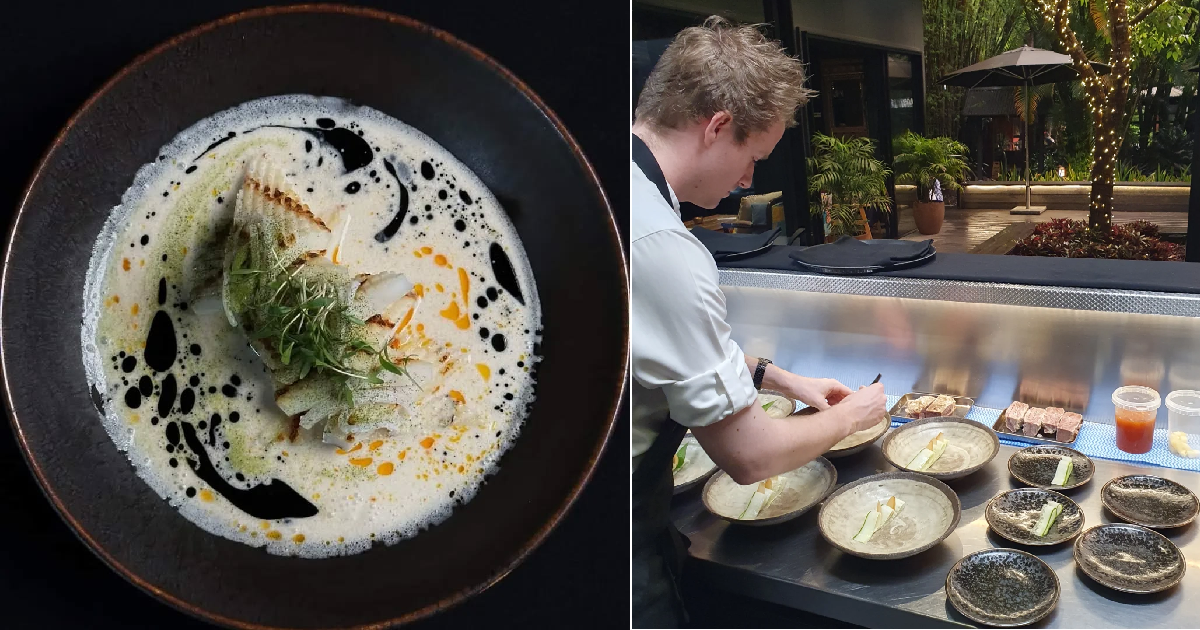
Step into Spirit House today and you can see Tom’s imprint everywhere. The kitchen hums quietly beneath the sound of woks, with jars of fermenting fruits and sauces lining the shelves. Every day’s menu is written from what arrives that morning: the fisherman’s catch, a grower’s best harvest or a forager’s find.
Tom’s leadership style is built on education. “A chef’s job isn’t just about cooking,” he said. “It is about teaching people how to think about food. If you understand why something ferments or caramelises, you make better decisions every day.”
He encourages curiosity in his team. “Sometimes things work, sometimes they don’t,” he said. “That is part of the process. The important thing is learning why.”
Tom adapts his approach to each member of his team. “Everyone learns differently,” he said. “Some people need structure, others need space. My job is to give them both.”
He is also a firm believer in balance. “I would rather see a team that is consistent and happy than burnt out and brilliant for six months,” he said. “If my chefs come to work rested and proud, the food will show it.”
Fermentation and flavour at the core
Tom’s dishes are built around clarity and restraint. “You can taste when a plate has too many ideas in it,” he said. “It is like noise. The best food is focused.”
Spirit House’s menu reflects that philosophy: line-caught fish with tamarind caramel and burnt lime, wagyu short rib with green peppercorn and fermented rice, and brown butter and kimchi fried rice, which Tom calls his “death-row meal.”
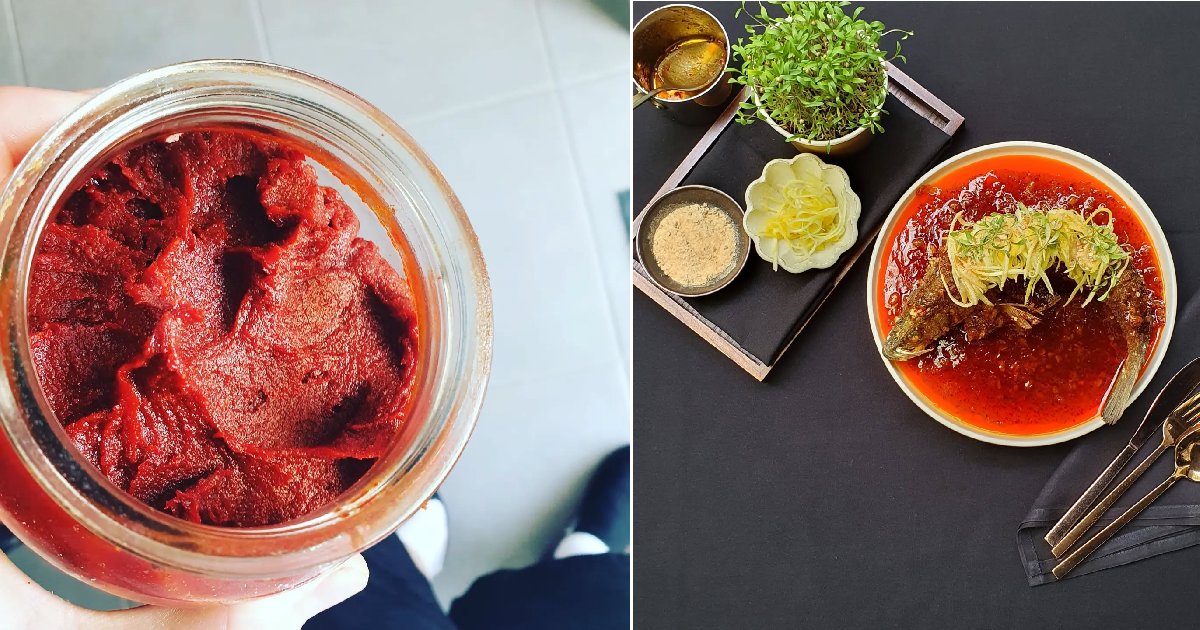
Fermentation runs through it all. “Ferments are not just about preserving,” he said. “They build complexity. A little funk changes everything. It rounds sweetness, softens acidity and adds depth you cannot fake.”
He credits chefs like Ben Devlin at Pipit and Ton Tassanakajohn of Bangkok’s Le Du, ranked No.1 in Asia’s 50 Best Restaurants, for inspiring him. “Ben puts fermentation at the heart of everything he does,” Tom said. “And Ton’s way of mixing French technique with Thai flavours shows you can innovate without losing authenticity.”
Lessons in failure and growth
Tom is quick to admit that not every idea works. He recalls one disaster vividly. “I tried to make soy sauce from egg whites,” he said. “The temperature spiked and ruined the batch. Then the ovens overheated overnight and burnt the beef ribs. The whole kitchen smelt like smoke for days.”
He smiles now. “You learn more from failure than from success. It makes you pay attention to the smallest details.”
That lesson feeds into his approach to sustainability. From fermenting trimmings to using every part of an ingredient, he treats waste as a creative challenge. “Waste is just potential you have not figured out yet,” he said.
The next generation and Queensland’s food future
Tom’s rise has coincided with a growing focus on regional Queensland dining. In 2024, he represented Spirit House at national food festivals and masterclasses, sharing his knowledge on building umami, reducing waste and managing people with purpose.
“There is so much talent outside the cities,” he said. “I want young chefs to know they can build a career here, surrounded by producers and community.”
He draws ongoing inspiration from Rene Redzepi, Peter Gilmore, and Clare Smyth. “They have all stayed true to themselves,” he said. “That is what I try to do every day.”
His philosophy now extends beyond food to culture. “We are not just cooking for guests,” he said. “We are building a space where people can grow. If my chefs feel inspired, that is success.”
Looking ahead
Two years into his leadership at Spirit House, Tom shows no sign of slowing down. He is developing plans to expand the restaurant’s fermentation program and deepen its producer partnerships. “I would love to create a small lab on site,” he said. “Somewhere to study and share what we learn.”
He also dreams of taking his approach overseas. “Collaborative dinners across Asia would be incredible,” he said. “Thailand, Japan, Vietnam, places where fermentation is part of everyday life.”
His advice to young chefs remains simple. “Be yourself,” he said. “Do not copy anyone else. If you are good at something, people will see it. Authenticity lasts longer than trends.”
Tom Hitchcock has become one of Australia’s chefs to watch. At Spirit House, surrounded by banana trees, smoke and the steady rhythm of service, he continues to prove that Queensland dining can be both refined and grounded, a balance of patience, precision and purpose.





