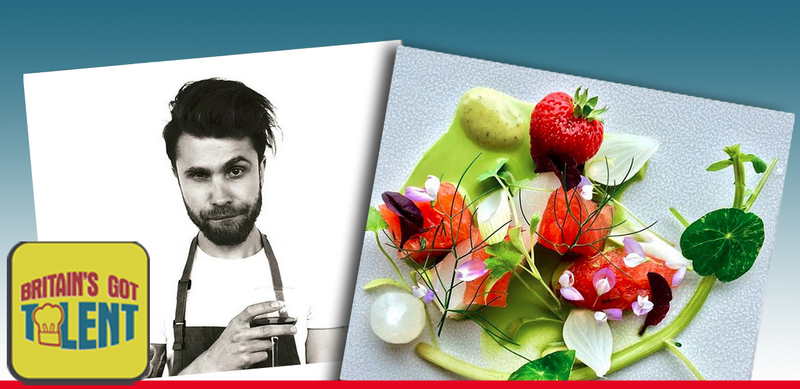
Born in Lithuania, Martyn Meid came to London ten years ago and was in banking – luckily for the culinary world he turned his back on that career and pursued his love for cooking. Opening his first solo venture, INK, last year, the 29-year-old’s food may not be to everyone’s taste but he has certainly got people talking, delivering dishes such as milk textures and pea ten ways. The Staff Canteen caught up with him at his east London based restaurant to find out more about his daily changing menu, Nordic cuisine and his love of urban foraging.
Cooking for a living wasn’t your first choice, what made you give up your career in banking to pursue it?
It just wasn’t right for me. A friend got me into a kitchen where I stayed for two years and then I had to decide if I wanted to pursue it seriously or not. The place I was at was a brasserie, so the food I didn’t find interesting, a lot of it was frozen and it wasn’t really what I wanted to do – I wanted to cook! I moved to a D&D Company kitchen with a Michelin star and I was like ‘wow’ – it was a different story. It was so fresh and you could really build something. It pulled me in and I’ve never looked back.
I started building, creating and obviously now owning – it was as simple as that!
Being in a Michelin star kitchen clearly had an impact on you?
It was the structure, the structure of the kitchen and how it’s supposed to be run. I also found out what seasonality really means in the UK, how we should appreciate the ingredients and how hard it is to get those ingredients.
The good ingredients sometimes you have to fight for, London is a massive city with more than 16,000 restaurants and as a chef you need the best for your customers so you can show them consistency. In London it’s really hard to do that because everyone wants to be good, they want something special – to keep being interesting we have had to wow people.
How do you wow people?

We are growing our own vegetables so carrots, beetroot, Japanese pak choi, wild rocket, radishes. We try as much as we can to build something for ourselves. Plus we have the park where we are foraging every day, so for example at the moment there are wild cherries. The taste is completely different, it’s sour and sweet at the same time. It’s really delicate so we are going to make gel and a jam for the winter, which we will probably serve with beef.
There are good chefs who understand foraging but a lot of restaurants will just order what they want from the suppliers but that to me isn’t interesting. Foraging is an adventure, to go and get those ingredients and then bring them to the restaurant and cook, clean, ferment and present them that is passion – it’s the coolest thing.
What inspires your dishes?
First you should find the ingredients, if that ingredient is sexy enough you start building the textures. I try as much as I can to make different variations and different textures from one ingredient. So today with the beetroot there will be 34 textures – we take a simple ingredients and look really deeply into it.
You describe your food as European Nordic cuisine, what is that?
It’s fresh, raw and experimental. We try to keep everything as wild and natural as we can because I hate really strict shapes on the plate. For me those shapes are bullshit, you’ve destroyed nature – I like the natural shape because when you take them from their natural environment you will never find two ingredients which look the same. So why would you destroy that beauty? To me that’s what Nordic means, it’s new cooking in a new way.

From preserving to pickling to experimenting, fermenting, smoking, curing, drying, dehydrating, juicing and it’s all sustainable. We try to have no wastage and I work completely by the season. Mushrooms may be in season in Scotland but I’m not in Scotland, so I try to look around where we are and be 100 per cent local. Not local as in going into the markets, we get as much as we can from what we are surrounded by.
As you are completely seasonal, do you have a favourite season?
Mine is winter because it’s the hardest season. You have to be clever to build the dishes at this time. In the Nordic countries it’s so cold so you need to preserve as much as you can for the winter time. We start working in the summer, thinking about what we are going to do and how we will be building it.
Which ingredients do you most like to work with for winter?
Beer barleys, potatoes and of course pork fat. We cook everything in pork fat unless it’s the vegetarian option and then we use rape seed oil. So we don’t have butter, olive oil, just pork fat which is really good! It creates beautiful flavour, beautiful texture, eats really well and makes everything insanely crispy.
 You’re working really far in advance when planning your dishes, how long do they take to put together?
We are already thinking to collect the cherries to make different textures so we’ll cook, it freeze it, steam