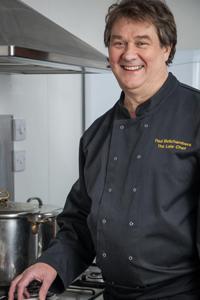
Paul Bellchambers discusses his role as Chef and Owner of The Late Chef and his own inspirations with regards to pursuing a career as a Chef.
Name:Paul Bellchambers
Place of work: The Late Chef: my own small catering business.
Role: Chef and Owner
Bio: Paul prepares and caters for a wide range of business and private clients in the kitchen that he designed and built. He also does regular radio work and writes for a number of local magazines, as well as developing and teaching cookery courses at the WI Cookery School. Paul founded the Wallingford Food Festival and is also the Head Chef at 1855 Wine Bar and Bistro in Oxford, which entered the 2014 Oxfordshire Restaurant Awards in its first year of operating and came second in the Gastro/Brasserie category.
Paul Bellchambers takes us through his personal experiences whilst being in the Culinary Industry. These key skills that young Chefs and industry professionals learn as part of their basic training.
How long have you been in this role?
Since 2009
What made you decide to go into catering?
I have cooked since I was a teenager and got a diploma in professional catering in 2003. When the time came in 2009 I knew if I didn’t do it now then I would regret not grabbing the opportunity with both hands. I also spent time in Le Manoir with the team lead by Gary Jones. It was a fantastic experience that helped form the basis of my business.
Is it a sector that you would advise for Chefs entering the industry?
Yes definitely, you must find your unique speciality and focus on that. Develop a plan for at least two- three years ahead and keep your eye on your customers. If you don’t you will lose them.
What experience and how many years would someone need in order to progress to the top level of the industry?
I think you can get lucky and success happens immediately, but that is rare. Hard
work and talent will succeed longer term, so I suspect between five and ten years is a realistic timescale.
Five years to really establish your style and the rest to build up your profile and success.
What are your ultimate top tips for someone looking to start a career in the hospitality sector?
You need a sense of humour, be flexible, look for new ways to improve yourself, don’t be afraid to ask questions and be yourself. It is important to be a team player but also lead when needed.
Also, be prepared to stick to your guns when you need to. I have learnt that there are times when you have to stand up for yourself and your team in the face of awkward people. Being treated rudely or abusively is not acceptable, no-one should be on the receiving end of it and as the leader, you have to deal with it firmly.
Who are the key Chefs and restaurants that someone should be speaking to and trying to gain experience with?
Gary Jones at Le Manoir – great Chef and leader.
Giorgio Locatelli – the “cookapedia” of Italian food.
Rick Stein – fish expert and I love watching him cook.
James Martin – no nonsense, this is how you do it, practical and passionate about food.
Nearer to home, I would look at Turl Street Kitchen in Oxford, Carl Isham runs a great team and a wonderful seasonal menu sourced locally.
What are you looking out for on a CV or in an interview if someone was applying to work with you?
I want to see a willingness to learn, the ability to be part of a team, time management, problem-solving, organisation, creativity and above all a love of food and cooking.