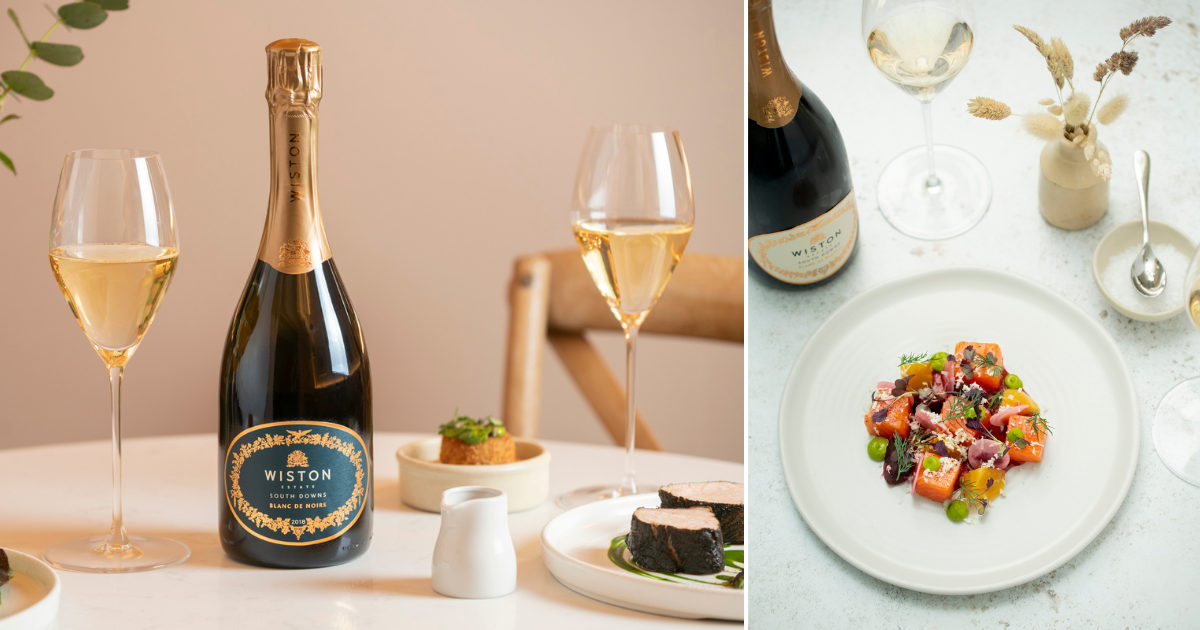
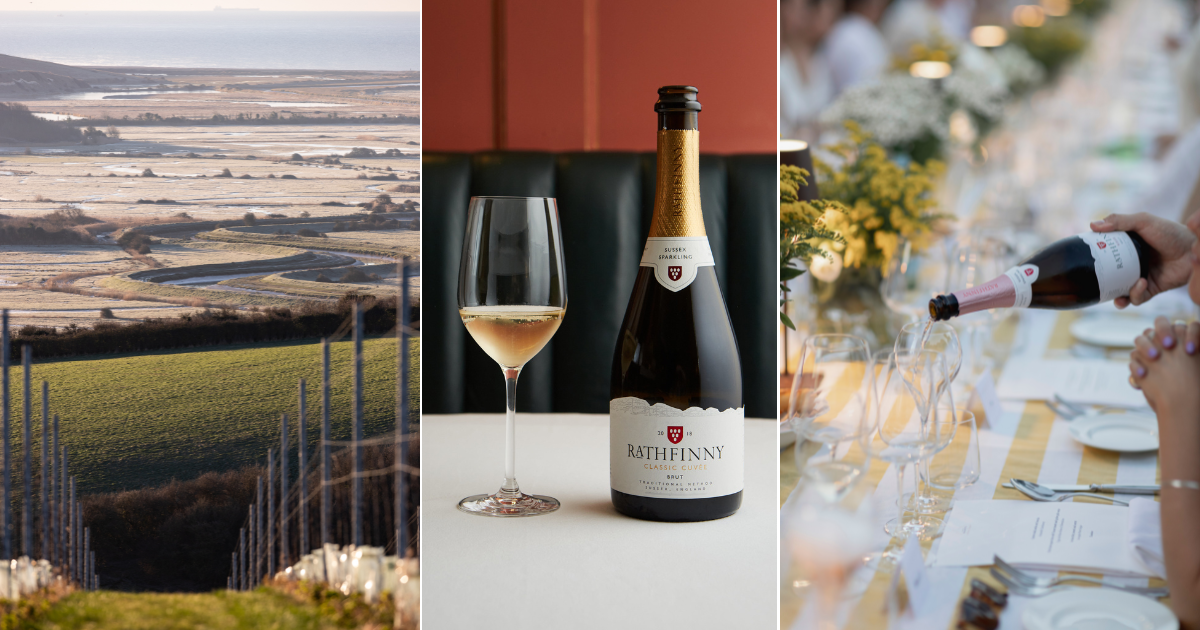
key way to get teams excited about English wine themselves.
“There’s a great chance to visit and see first-hand what producers in the UK are up without having to go abroad,” adds Duncan Schwab, head winemaker at Sandridge Barton, the South Devon winery which produces sparkling wines Sharpham Classic Cuvée and Sandridge Barton Blanc de Noirs as well as a range of still wines under its Don’t Feed the Ponies label.
“Winemaker’s dinners are also a great way to gain traction and for guests to also engage with the wines and the people behind them.”

Master sommelier Laura Rhys MS, is head of wine communication, education and style at Gusbourne, producer of still and sparkling wines made from the three classic grape varieties grown on their estate in Kent. She and the team work closely with restaurants and this month Gusbourne has a busy programme of events planned, including masterclasses at The Whisky Exchange in London and a wine-matching dinner at Àclèaf restaurant in Devon.
There is always room for more, however: “The English wine industry is hugely exciting, with a great breadth of wine styles now being produced. It would be great to see more wine lists showcasing this – and perhaps highlighting it with dedicated pages in the list.”
Tori at Wiston agrees there is still work to be done to promote the breadth of English wines.
“There is a big swathe of consumers who are still simply unaware of its existence outside being a novelty. Price is still an issue – the best English wines to date have been traditional method sparkling wines which are expensive to make, and the average consumer does not fully understand this.”
Abi at Rathfinny agrees that price is a barrier to boosting sales of English wine in hospitality, alongside the perception that ‘restaurateurs believe their clientele would deem English wine inferior’. However, she says the tide is turning and is excited by the moves she is witnessing.
“We are increasingly seeing regional wine categories developing on wine lists showcasing a range of producers from areas such as Sussex, Kent and Hampshire, whereby before it was generally the case an establishment would only feature one as their ‘English Sparkling pour’ alongside several Champagne houses.”
While he has the enviable job of head chef at Wiston Estate’s onsite restaurant, Chalk, giving him direct access to quality English wine, Jordon Powell is really pushing things to the next level. With every new dish created at the restaurant, he considers how components will work with wines in the Wiston portfolio.
“We often use Wiston wines in our sauces too, which helps with the dishes resonating with the wine pairings,” he says.
But Jordon doesn’t believe you have to be working on a wine estate to champion English wine, if you’re using local produce to create dishes, matching them to wines grown and produced in the same region is ‘a no brainer.’
“Chefs in France, Italy, Germany and Spain have been doing for centuries. Aside from the sustainability element, which is key, it’s great to be able to show off a unique ‘terroir’ to use a wine-geek term, especially in such a digital world, produce that comes from this land is so important to champion.”
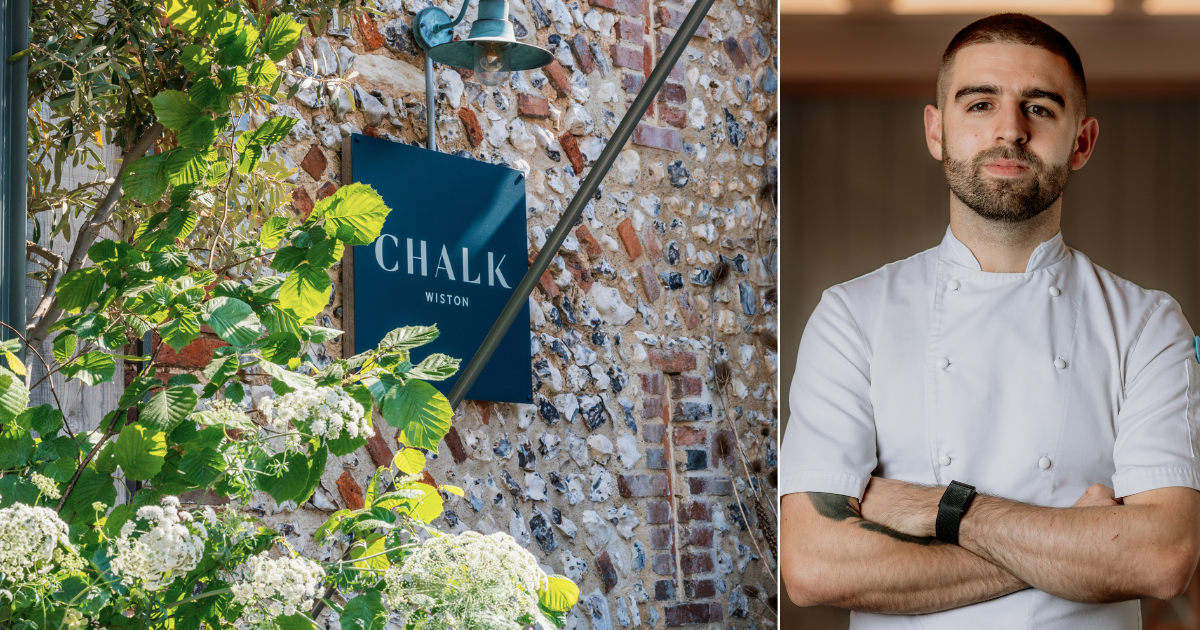
Food and wine for thought: Top English wine and food matches
Jordon Powell (pictured above), head chef at Chalk, Wiston, West Sussex: “Cured-Cornish mackerel with cucumber, horseradish and elderflower (foraged from the nearby hedgerows) with the Wiston Blanc de Blancs 2018. [The wine] has beautiful acidity which complements the oily mackerel, as well as body and flavour which can balance the horseradish and elderflower.”
Duncan Schwab, head winemaker, Sandridge Barton, Devon: “Recently our new restaurant onsite has served a rare fillet from the South Devon herd on our estate with an anchoiade sauce which paired really well with our chilled light red called Billy, which is made with Pinot Noir and Madeleine Angevine.”
Laura Rhys, MS, head of wine communication, education and style, Gusbourne, Kent: “Gusbourne Chardonnay Guinevere 2023 (the new vintage launches on 9 June) with fresh seafood and fish - a simple dressed crab, scallop ceviche or langoustines in a lemon butter sauce.”
Will Clarke, director of operations at 10 Greek Street, London: “Bread and butter pudding with Nyetimber 'Cuvee Cherie’ Demi Sec MV. The wine is off dry and the bubbles, acidity and slight sweetness work so well with the classic English dessert.”
Jack Butler, general manager, The Peacock Inn, Chelsworth, Suffolk: “Disaronno macerated Essex strawberries, woodruff panna cotta and a wild strawberry gel with Rathfinny Rosé. The strawberry core of this traditional method sparkling wine with red berry fruit flavours, refreshing acidity and a fine mousse, compliments the layered expression of strawberry in the dish while the almond flavours introduced through the amaretto mirror subtle autolytic notes of the wine. Finally, the acidity and fine mousse refresh the palate by balancing the richness of the panna cotta.”
(Written by Emma Eversham)