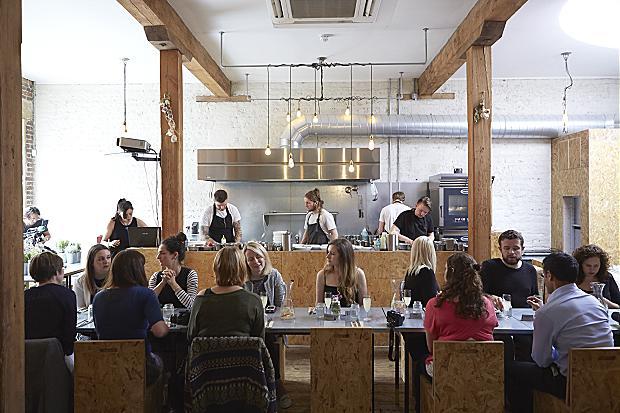
Next week we will be at Food on the Edge 2016 festival so let’s take a final look at one of this year’s speakers, Dougie McMaster from Silo in Brighton.
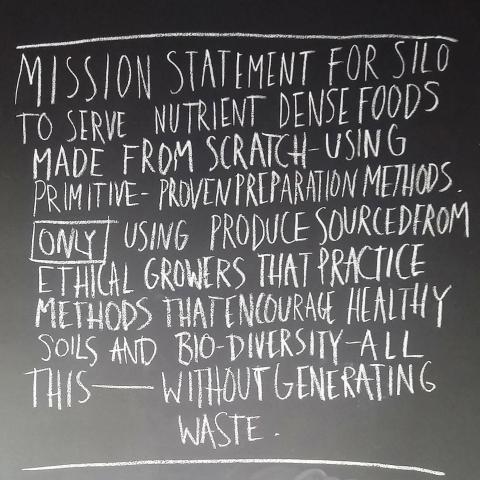
This ‘zero waste’ restaurant was the first of its kind in the UK, and was conceived from ‘a desire to innovate the food industry whilst demonstrating respect: respect for the environment, respect for the way our food is generated and respect for the nourishment given to our bodies’.
We spoke to Dougie about his culinary journey to where he is now, the challenges he faces as a zero waste restaurant and why he wanted to be a part of the Food on the Edge symposium.
Dougie’s story is similar to most chefs, he fell out of love with school and fell into the kitchen but it wasn’t the food which attracted him there at first. “It was more the environment,” explained Dougie. “The kitchen was this pirate ship kind of environment and I’ve always liked that. I was more interested in the lifestyle first and then I fell in love with food.”
Dougie’s zero waste ethos developed quite naturally, he found himself working in restaurants that may not have taken it to the level he has with Silo but they were dealing with ethical and ecological and sustainable food issues, almost without knowing it.
He said: “I was at St John in London and people were tagging them as sustainable. It’s incredibly sustainable – they’re maximising resources. Then I was in Copenhagen and in restaurants over there it’s like everything wild – you’re using the roots of vegetables rather than the vegetables! By default, it was more ecological food I guess. When I was in Australia there was a designer and an artist making buildings from waste materials and it was when I met him that it all clicked. There’s a Dutch guy called Joost Bakker, he wasn’t a chef but he was really into food and he designed living, breathing buildings and had this great idea to have no waste produced from it.”
In 2011 Dougie quickly became executive chef and business partner of ‘SILO by Joost’, he said: “I was the boss so it was down to me to make it work. The thing is, the zero waste thing is like a system and my experience didn’t really lend anything to that system. Everything comes in without a package and if it does have a package, it’s biodegradable and there’s a compost machine.”
With this ethos in mind it’s hardly surprising that he is on the bill for the Food on the Edge which is themed around the future of food. His topic choice is Zero Waste - Literal or Philosophical? And when you listen to him talk you can see why organiser JP McMahon thought it was important to have him there.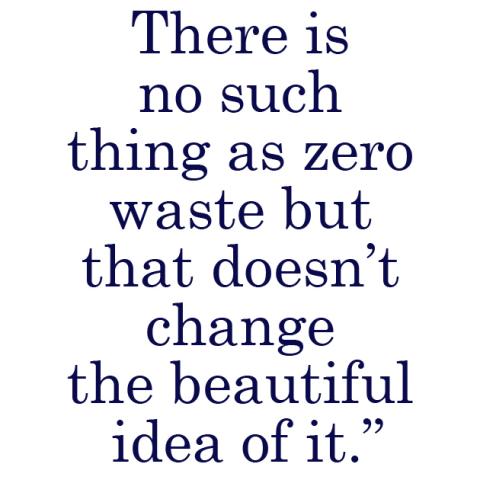
Dougie said: “I did the Galway Food Festival last year and met JP there and immediately I was just like “this guy is cool as f**k, he’s awesome” and I’ve just been following him since. I just love him, I think he’s a force of nature. He’s trotting everywhere across the globe just doing the right things and I just had a lot of time for him. If he asked me to do something, I’d say yes!”
He added: “Zero waste can be very literal and I can literally say there is no such thing as zero waste. Every single part of my restaurant will eventually be waste. Unless it’s totally natural and can go into something to be broken down to create more life, it’s eventually going to be waste. So there is no such thing as zero waste but that doesn’t change the beautiful idea of it.
“It’s a way of thinking, it’s a behaviour and it’s applying yourself to daily logical and ethical decisions. You can be very literal about it, you can calculate how much waste you’ve got and you can be literal and say that nothing leaves the building, food, produce, people. Produce goes into people’s bellies or a compost tube’s belly and the only thing that leaves is compost which is not waste at all, it’s a productive life giving thing. My other term is ‘thinking in circles’ because when you study ecology or permaculture, you realise how all these closed loops interconnect. I had the idea that if you can design items from nature, why can’t you design a system from nature?”
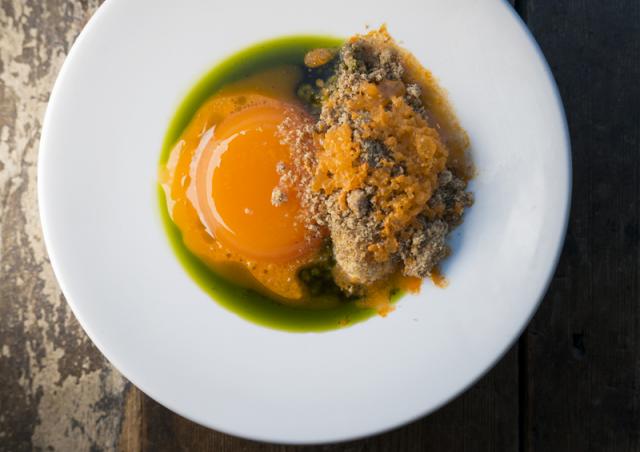
Unlike most chefs, Dougie is very restricted in what he can use within his restaurant. Other chefs will use oils, vinegars, soy glazes but he can’t use anything unless it come in a reusable container – he only deals with raw produce.
“We have to make everything on site so we’re very limited,” he explained. “I love the idea of making a British fish sauce but they’ve been making it in China for centuries so trying to do that isn’t easy! In fact, I would say that all specialist items, I can’t use. I’m literally dealing with raw produce so whole animals and vegetables and herbs whereas another chef would have all of them then he’d have a whole artillery of condiments and flavourings and oils and vinegars that are all very high end specialist and taste good.
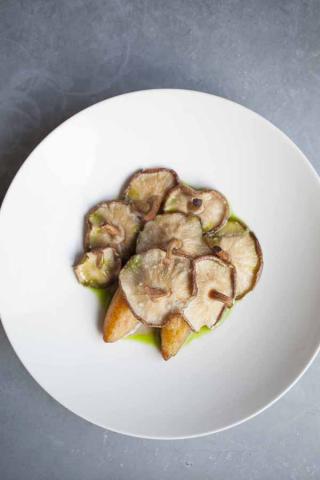 “I don’t want to say it’s cheating but it’s so much easier! You can cook a scallop badly and cover it with soy glaze and it will taste good. There’s no skill in that, there’s no pride in that. It’s very frustrating because you know that it’s not delicious, they’ve added all these intense condiments that are just easy. It is very frustrating but hopefully