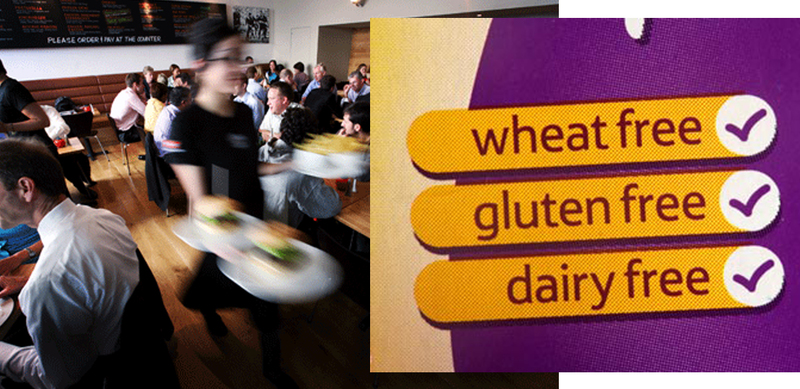
too?
Colum said: “Some foods do taste different due to the lack of wheat or gluten, but the more restaurants make an effort to provide free-from foods, the more people will choose to eat out.”
The Truscott Arms in London have been providing selected free-from dishes for many years now. The Staff Canteen spoke to CEO, Andrew Fishwick, about whether his customers can tell a difference.
“If it’s made well – there is no difference in taste at all! Our fish and chips have been made with gluten free flour and gluten free beer since the days we opened. It’s become famous, although 99% of our guests would be unaware that it was a ‘free-from’ food!” said Andrew.

And this is a similar situation for Dominic and his team at the One Aldwych Hotel in London.
He said: "When we launched the new menu last summer, we didn’t tell guests for four months that the menu was entirely gluten-free and dairy-free. Nobody realised, which is the way it should be. When we told them they were pleasantly surprised, we have great feedback and lots of support."
However, creating dishes that require certain ingredients, with specific tastes and textures, can be difficult to alter if the consumer is gluten or dairy intolerant. But, really it is the responsibility of the restaurant to accommodate for these needs, if they wish to continue the consumer.
Marc continued: “I think as a food person I would say no restaurant could, or should, try to be all things to all people and it shouldn’t compromise the food at the cost of the dietary needs, but should give it consideration adapt where they can."
“I think it’s essential that different diets are given consideration on menus now. So many of the population have different dietary needs - gluten and dairy being biggies,” explained Marc.
As with many modern day evolutions, the change is often needed and required in order to satisfy our ever-changing society. So the real question here is whether offering free-from foods is a necessary procedure for supermarkets and restaurants? And for many reasons, the answer to both is yes. Living with an intolerance is not often a choice, therefore there should not have to be a compromise for this.
Over the last year, there have been a number of food conventions that have focused on promoting free-from foods. A Feast of Opportunity, held in Barcelona, showcased an array of new products designed to accommodate for those who require specific dietary needs.

While these foods are vital if we are aiming to cater for the specialist dietary movements, there can be the cost constraints of particular products. Free-from foods are often more expensive, due to the nature of their production. There needs to be assurance that cross-contamination has been eliminated, therefore adding the cost of strict handling procedures. But should it really be that much more expensive?
Discussing the future of free-from foods, Marc explained: "I think they will get better and better and there will be more variety. With any luck, they will come down in price a bit too!"
It is clear that the prospect of free-from foods is likely to take permanent residency in our shops and restaurants. And with the market developing in the way that it currently is, for many this can only be a step in the right direction, catering for the needs of all customers – regardless of the fortune of their digestive system.
By Katie Mallalieu