What it takes to keep a Michelin star


When the Michelin Guide is released each year, attention usually settles on who gained or lost stars.
But in professional kitchens, chefs understand a different truth: retaining a Michelin star for five, 10, 15 or 20 years is a far greater test of discipline, consistency and cultural resilience.
Some of the UK’s longest-standing Michelin-starred restaurants demonstrate what that endurance looks like in practice. The Waterside Inn in Bray has held three Michelin stars continuously since 1985, representing the longest uninterrupted Michelin record in the country.
London’s Pied à Terre first featured in the Michelin Guide a little over a year after opening in 1991 and has retained Michelin recognition for more than three decades, making it the capital’s longest-serving starred restaurant.
Together, these restaurants underline an important distinction within the Guide. While annual gains and losses draw headlines, Michelin’s most demanding test is sustained excellence: the ability to deliver the same standard, year after year, regardless of external pressure, personnel change or shifting dining trends.
Against that backdrop, The Staff Canteen examined the realities of long-term Michelin performance through three very different restaurants – Core by Clare Smyth (three stars), Trivet (two stars) and Benares (one star). The operational principles behind each restaurant illustrate how star longevity is built, protected and sustained at every level of the Guide.
Three Stars - Sustained Precision at Core by Clare Smyth
Core by Clare Smyth earned three Michelin stars in the 2021 Guide and has held them ever since, marking one of the most significant achievements in modern British dining.

Three-star longevity depends on absolute consistency: technical precision, ingredient quality, clarity of identity and a kitchen culture able to reproduce the same level of excellence every service.
Core’s evolution - and its ability to retain three stars over consecutive years - reflects the Michelin definition of three-star cooking: exceptional cuisine worth a special journey, delivered identically no matter who cooks or when inspectors visit.
Two Stars - Trivet and the Real Mechanics of Consistency
Jonny Lake and Isa Bal
Trivet opened in 2019, earned its first Michelin star in 2022, and rose to two stars in 2024. Its journey offers one of the clearest insights into how long-term standards are built from within.

Jonny Lake described how the restaurant matured: “Trivet now is somehow six years old. It's an established restaurant. I don't really know how we got there after our very auspicious start.”
That 'auspicious start' refers to opening immediately before the pandemic - an early challenge that forced the team to refine structure, vision and resilience. For Michelin, this kind of operational stability is essential to retaining stars over time.
Jonny emphasised Trivet’s willingness to remain flexible while guarding its identity.
He added: “We've got a very clear vision of what that is. But I also know enough to be ready to be flexible and to adapt.”
Longevity depends not only on cooking but on understanding the guest relationship. Co-founder and sommelier Isa Bal highlighted how diners will travel for the kind of experience Michelin rewards:
Isa said: “People do travel for good food, good wine, good ambience, that's for sure… And it will be the other way around as well.”

One Star - Benares and the Discipline Behind Identity
Benares, led by executive chef Sameer Taneja, reclaimed its Michelin star in 2021 and has held it for four consecutive years. The restaurant’s longevity is built on a precise interpretation of modern Indian cuisine informed by classical technique.
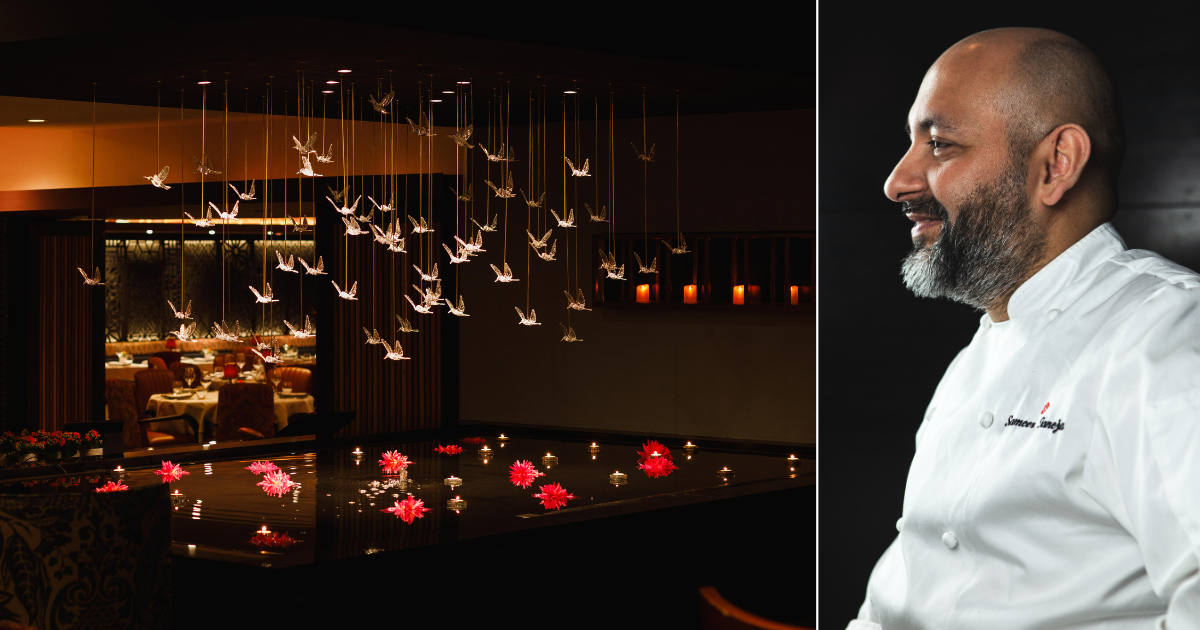
One-star longevity relies on protecting identity and maintaining accuracy: a clear culinary point of view, delivered consistently across large dining volumes.
Michelin’s one-star criteria-high-quality cooking, consistency, value and coherent culinary style - are demonstrated through Benares’ ability to evolve while retaining precision year after year.
What Michelin Actually Measures in Long-Term Success
Although the criteria are the same across star levels, longevity intensifies the pressure:
The five Michelin criteria
-
Ingredient quality
-
Mastery of technique
-
Clarity of the chef’s personality in the cuisine
-
Value for money
-
Consistency
For restaurants maintaining stars over long periods:
At one star
Identity and technical accuracy must remain clear, focused and repeatable.
At two stars
Refinement, maturity and a deeper expression of the restaurant’s philosophy matter.
At three stars
Perfection becomes the baseline. Cultural discipline and team stability are often the defining factors in long-term retention.
Michelin inspectors assess restaurants through repeat visits over time. A single weak service can threaten a rating; the pressure never lifts.
A 20-Year Benchmark - Galton Blackiston and Morston Hall
Any serious discussion around Michelin longevity in the UK tends to include Galton Blackiston and Morston Hall in Norfolk.
Morston Hall has held a Michelin star since 1999, making it one of the longest-standing single-star restaurants in the country. Galton announced earlier this year that he was stepping away from Morston Hall.
Read more: Galton Blackiston leaves Morston Hall after 30 years
This uninterrupted run places Morston Hall firmly within the 20-plus-year longevity category - a level reached by only a handful of UK restaurants. While many Michelin-starred venues experience multiple head chef changes over a decade, Morston Hall’s continuity of leadership has remained central to its success.
Rather than chasing trends or radical reinvention, Morston Hall has evolved gradually, refining technique and presentation while staying rooted in classical foundations and seasonal produce.
In the context of Michelin longevity, Morston Hall represents a different model to urban fine dining operations. Its success underscores the importance of stability, discipline and restraint - principles that align closely with Michelin’s focus on consistency across repeated inspections.
As the Guide continues to reset each year, Morston Hall remains a clear example of what long-term Michelin excellence looks like: a restaurant where standards are embedded deeply enough to withstand time, change and pressure.
Morston Hall sits alongside several other UK restaurants that have demonstrated exceptional Michelin longevity.
Why Longevity Matters More Than Ever
Running a high-level restaurant in 2025 requires navigating recruitment shortages, inflation, rising energy costs and shifting diner expectations. Against this backdrop, holding Michelin stars for long periods signals not only culinary excellence but operational resilience.
Together, they illustrate the reality behind Michelin longevity: an unbroken chain of standards upheld every day, by every member of the team, regardless of circumstance.
As Jonny Lake put it: “It's never exactly how you think it's going to be, so be ready to adapt and be open-minded to whatever comes.”
Read more: Michelin Guide UK 2026
The ceremony
The next Michelin Guide ceremony for Great Britain & Ireland will take place in February 2026, continuing the Guide’s recent move to a standalone annual event rather than a quiet online release. For chefs, this shift has changed the rhythm of the industry.
Read more: Michelin Guide UK 2026 ceremony to be held in Dublin
February has become the moment when years of discipline, investment and consistency are tested publicly, live on stage.
For the chefs and teams involved, February is never the end point. The moment the Guide is announced, the clock resets, and the long process of proving consistency begins again.

For 18 years, The Staff Canteen has been the meeting place for chefs and hospitality professionals—your stories, your skills, your space.
Every recipe, every video, every news update exists because this community makes it possible.
We’ll never hide content behind a paywall, but we need your help to keep it free.
If The Staff Canteen has inspired you, informed you, or simply made you smile, chip in £3—less than a coffee—to keep this space thriving.
Together, we keep the industry connected. Together, we move forward.
Support Us
CONTRIBUTE
What it takes to keep a Michelin star


