a maturity to the boys. Having ten lads in the kitchen they can be a bit immature and laddish. A woman in the kitchen brings a sense of calm and definitely organisation, they are a lot more precise.”
Claude has five women in his kitchen and said: “My dream was to one day have a female head chef, I already have a fantastic head chef so I hope he is not hearing this, but I worked in a kitchen with a female head chef and 20 -30 years ago, you would not have wanted to be told off by a woman!”
Similarly, Daniel has always had girls in the kitchen and says, ‘there is no difference’.
“Everybody comes on a trial and you are looking for that passion, ability and want and drive. As chefs we work out of passion not because of what sex we are. If I had 12 women standing behind me in the kitchen I’d be a happy man because it’s 12 chefs and that’s what I need.”
He added: “We came into this industry because we love to cook and we love to please people, that hasn’t changed. We are here talking about men and women and there is no difference – if they care about what they are doing that is the most important thing.
“You can’t advertise ‘female chefs wanted’ can you? The point of the matter is, it needs to start in the schools and at home. Our industry needs to be flagged up a lot more before they leave school.”
 Although discussions focused on hospitality, Jessica, Online Operations Manager at the Ginger Pig, finds it equally hard to encourage women into the meat industry. She said: "It's not an attractive career. It's not marketed as that, it's not discussed as that and from a stereotypical view - it's messy, it's dirty and it can be quite grotesque. And although it can be those things, there are so many opportunities for people in the meat industry.
"There are barely any young people who want to get into this trade because in the UK, it's difficult to get onto the butchery training course and you have to start at the very bottom. It takes years as you are essentially learning anatomy and it's hard to get people enthused about that."
Sandia, who started her career as a chef before moving into wine and becoming a sommelier, agrees that passion is more important than gender and said: “I was in the kitchen and I was one of the boys and I didn’t think of myself as different, then I moved on and went into the wine business which was the same . I didn’t think that just because I’m a woman, I don’t have to move all of those wine boxes. I did what I was supposed to because it was my job.
“Young women coming through the industry saying, ‘what can I do to be a successful woman in the industry?’, I’d say the first thing you have to do is stop thinking you are women in this industry. You’re just another passionate person in this industry and the moment you stop thinking you are different is the moment you are most likely to succeed.”


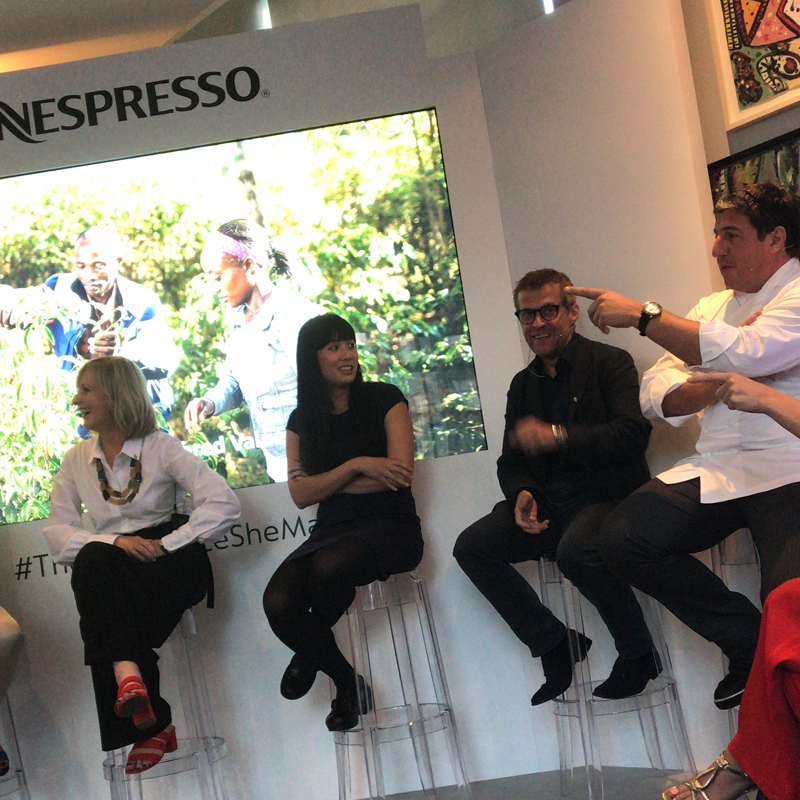
 Nespresso brought together a panel at two Michelin-starred Bibendum to discuss women in the industry. This included; Daniel Clifford from Midsummer House; Ruth Hansom who will open her first restaurant later this year; Sandia Chang from Bubbledogs, Jessica Wragg from Ginger Pig, Michael Wignall who recently left Gidleigh Park and Claude Bosi.