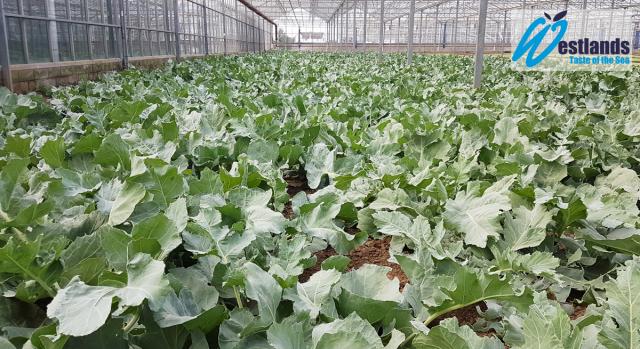
winter and early spring mature crowns are lifted, forced and blanched; very much like rhubarb. Harvesting is limited, as not take too much energy from the crown
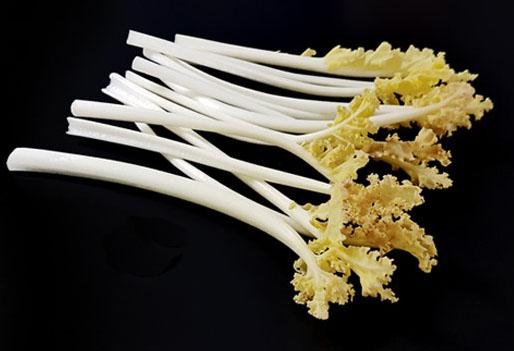
• The blanching process creates a real delicacy - however stalks exposed to sunlight will turn green and bitter
Culinary
• The entire plant is edible; roots, shoots, leaves, flower buds and pods. Its best known for its tender, blanched ivory shoots; classically served much like asparagus with hollandaise sauce or just melted butter
• Its taste is described as a cross between white asparagus and celery – a subtle, tender, almost nutty flavour with a slight salty sweetness
• Leafstalks are eaten raw in salads; lightly steamed, boiled, pan fried or roasted; even pickled or fermented
• Classic food partners include white fish, shellfish, poached eggs, bacon, hollandaise or béchamel sauces
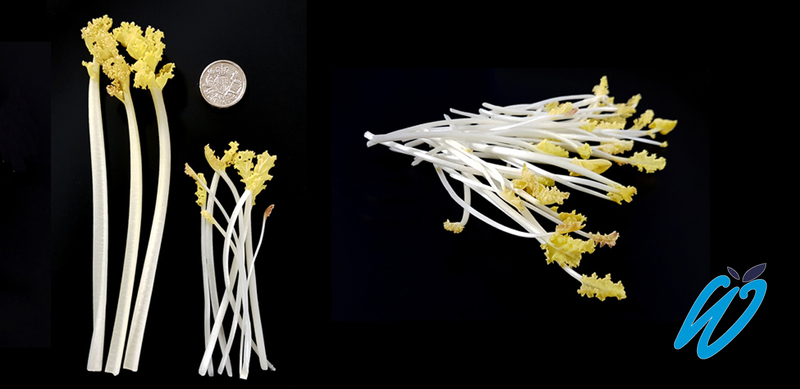
Westlands Sea kale is British grown in the Vale of Evesham and is now available in 2 size formats; Sea kale – the classic blanched, crisp white stalks with a subtle saltiness [80 g punnet] Micro Sea kale – NEW! Mini spears of delicate, salty white shoots [40 g punnet]
Seasonal availability – December to May
Westlands products are available nationwide from leading Foodservice suppliers and Wholesale Markets. Speak to your supplier or contact us at [email protected] to find a stockist in your area.
Westlands products are grown and packed to BRC Food Safety, Red Tractor Assurance and LEAF Marque standards. Sea kale is best stored away from light to prevent ‘greening’.
Come and see Westlands at the Great Hospitality Show, NEC on January 23-25, 2017, stand 660 in partnership with The Staff Canteen.