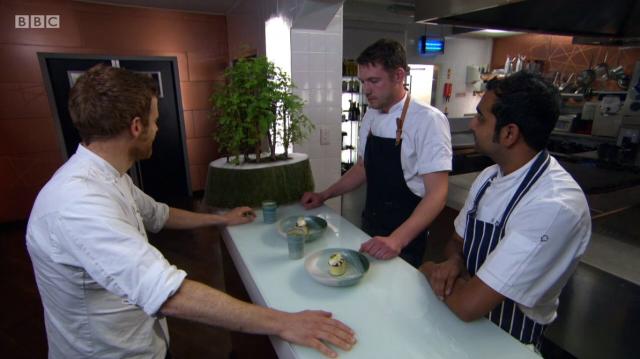
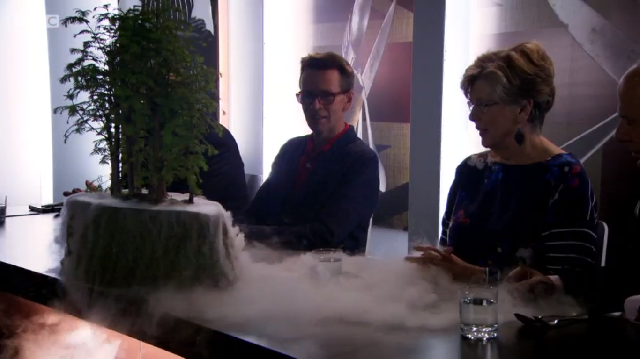
This week on Great British Menu 2016, three chefs from the North East were hoping to impress veteran judge Tom Aikens. Tom is the youngest British two Michelin star chef and a former Banquet champion.
Another young chef who works in a Michelin star restaurant, Tommy Banks (The Black Swan at Oldstead) was new to the competition this year. Returning chef Mini Patel (The Pointer) was eliminated on the Thursday in the 2015 heat but he was determined that he would make it to the final this year. The third chef, Chris Archer (Cottage in the Woods) was another newcomer to GBM but seemed confident.
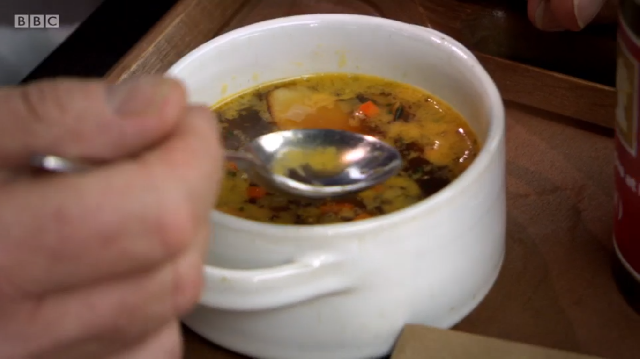
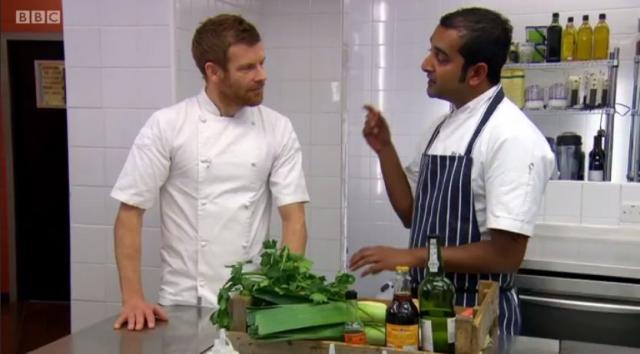 Mini’s starter ‘Charity Begins At Home’ was inspired by the Queen’s charity work and also by some time he spent working at a soup kitchen. He was making a guinea fowl broth/consommé with white port, chicken stock, white wine and vegetables. The heat was on – judge Tom Aikens got a nine for his Banquet starter and that too was a consommé. Mini also made spheres from the thigh meat of the guinea fowl, blanched vegetables and some reduced broth. These would be served chilled, and would release when the hot broth was poured over the top. With the broth would be an aerated celeriac puree, black truffle and pan fried porcini mushrooms.
A rather whimsical addition to his dish, Mini made rarebit ‘toasties’ – combining Cheviot & Reiver cheeses with cream, Worcester sauce, mustard, North East brown ale and truffle. He sandwiched this in white bread, cut them into little shapes and served them on wooden sticks with the dish. Donation pots were also on the side.
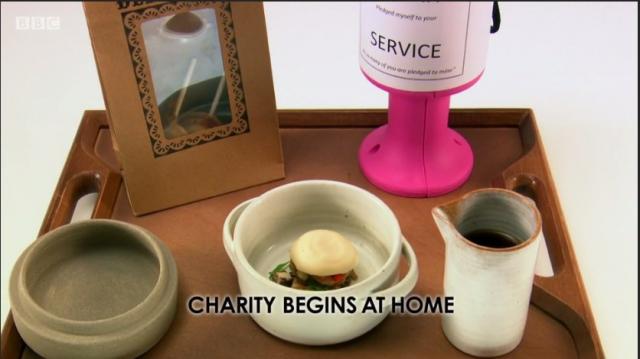
Tom loved the way Mini had interpreted the brief and felt the sphere was a nice, contemporary touch. He didn’t like the toastie very much and felt the vegetables were too crispy. While he liked the flavour of the consommé, he didn’t agree so much with the addition of purée.
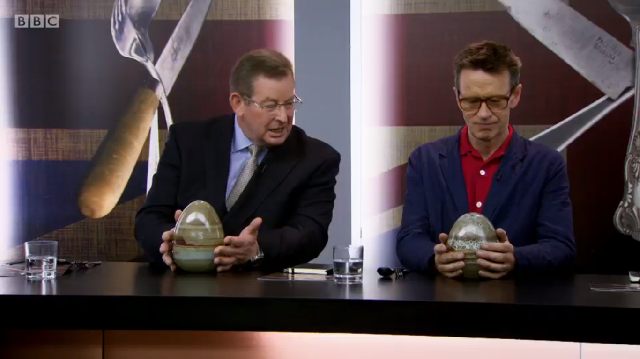
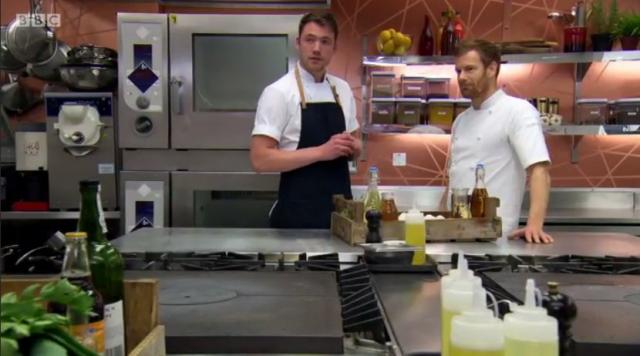 Tommy Banks was doing a take on ‘Oeuf Drumkilbo’ for his starter. Rumoured to be a favourite of the Queen mother, the dish is a bit like a prawn cocktail with slow cooked eggs. Tommy was using duck eggs, which he cooked in the water bath for an hour before smoking them with oak woodchips. He was also cooking kohlrabi in butter, which he had grown himself. Tom said he doesn’t like kohlrabi but Tommy didn’t seem phased by this and felt confident in the produce. He made a vinaigrette using rapeseed oil, mustard and chicken stock. To add acidity to the dish, Tommy pickled thin slices of radish and blanched mustard seeds. Finally, he pan-fried langoustine tails and served it all in a ceramic egg shape dish.
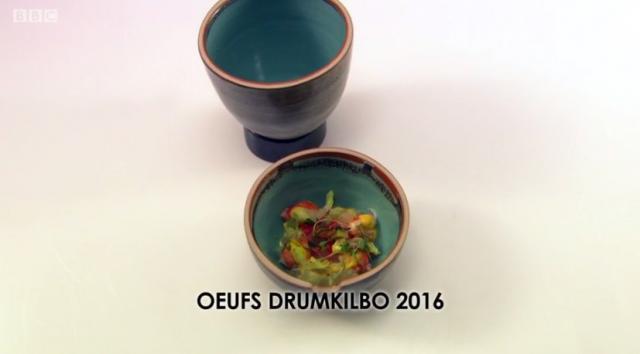
Tom liked the presentation, with the theatre of the wood smoke. He also liked the smokiness of the egg and felt the acidity of the radishes and mustard seeds were a nice touch. He added that he wasn’t expecting the sweetness of the kohlrabi – he had almost been converted! Overall however, Tom felt the dish “lacked finesse.”
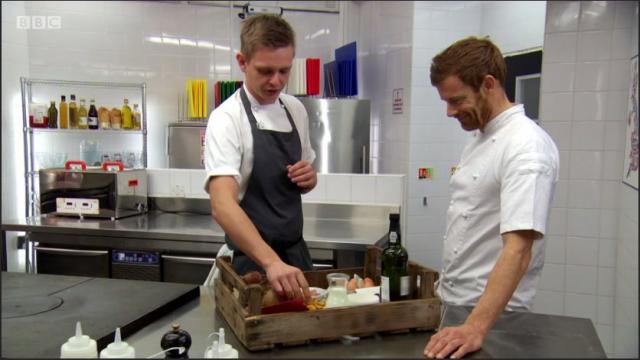 Chris Archer was dedicating his starter to Great British athletes. A keen cyclist himself, his dish was called ‘Gold’ and featured many golden elements including slow cooked egg yolk, golden beetroot consommé and lamb sweetbreads deep fried in curry powder. He too was making a consommé but was trying a very contemporary clarification technique. Chris was using agar, which when hydrated, boiled and added to the liquor is supposed to set like a curd, holding the part you don’t want.
He managed to get this to work and his consommé came out clear. He added real gold leaf to it before serving in a specially designed terrine, modelled to look like a velodrome. In a separate bowl, Chris served girolle mushrooms glazed in maple syrup, slow cooked egg hen’s egg yolk, cubes of golden beetroot and crispy lamb sweetbreads. A golden cycling trophy was also beside the plate.
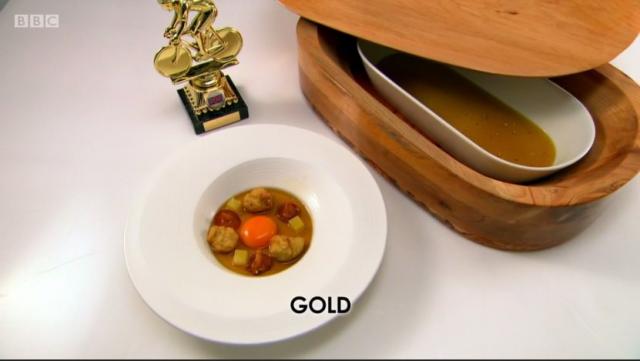
Tom Aikens said that the eggs were perfectly cooked and congratulated Chris on getting the consommé clear. However, a traditionalist at heart, he said that the agar didn’t show enough skill. He wanted more crispness from the sweetbreads and more acidity to bring the dish together. He also added that he didn’t quite understand the story.
Tom scored Chris and Mini six eight, and gave Tommy an eight. He said he expects to see more skill, and wants to see a ten from the next course!
Tommy Banks was out in the lead after a rather impressive round of starters from the North East chefs. Chris and Mini were in joint second and Tom Aikens was expecting big things from the “world-renowned fish” we have here in Britain.
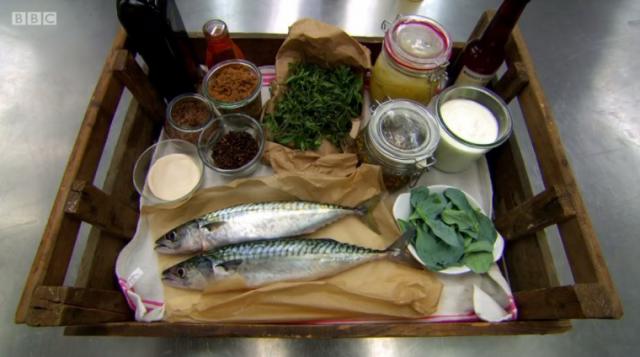
Tommy’s dish ‘Preserving the Future’ was to shine a light on British produce, not just the mackerel he was using but also a rather unique herb, some sweet woodruff. He described it as a ‘spicy’ flavour but one that can be used in desserts, a bit like Tonka bean or vanilla. Tommy featured different preserving techniques in the dish – curing the mackerel and fermenting some dragon’s egg cucumbers.
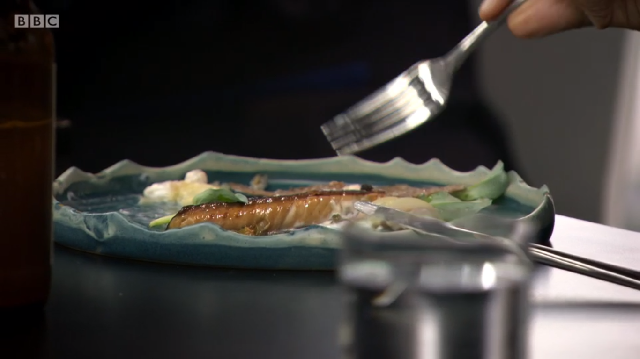
As he is allergic to oysters, he had chosen to use oyster leaf instead as the next best thing. He was also making a linseed cracker from linseed that his Dad grew. A frugal chef, Tommy used the fish trimmings to make a mackerel tartare. For acidity, he made a vinegar liquor with the woodruff, red wine, sugar and cloves. He added some gellan gum and water to it before chilling to make a gel. Just before serving, Tommy scorched his mackerel fillets with a blowtorch. First on to the plate was ewe’s milk yoghurt, followed by the fillets, seed pods from the oyster leaf plant, the tartare, the fermented cucumber, oyster leaves and dew drops of the vinegar gel. He topped it with the linseed cracker and served a Woodruff Beer on the side.
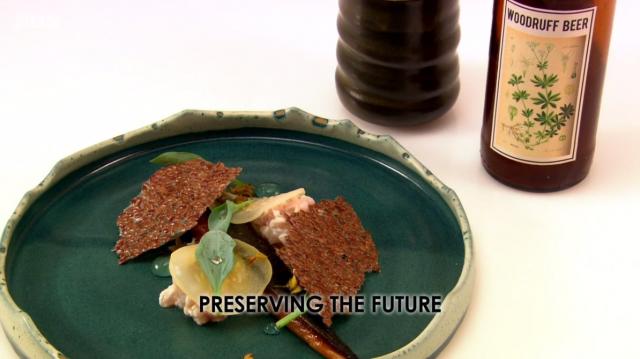
Judge Tom said that the tartare was a touch under-seasoned. He had been worried about the acidity levels of the dish, but said that ultimately the flavours worked well together. He thought that the gel in particular was excellent and that a lot of thought, care and attention had gone into Tommy’s very original fish course.
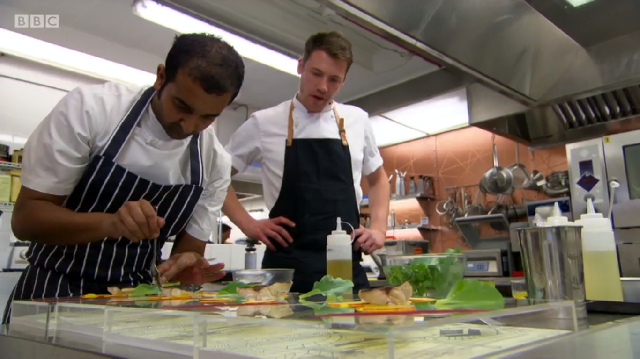
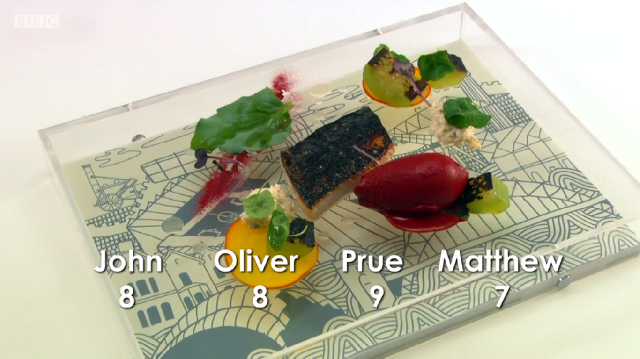
Mini Patel was hoping to improve on his previous appearance, having received a five for his fish course last year. ‘Little Fish, Big Fish’ was a tribute to North East landscape architecture and the idea of the eventual success of someone who starts out small. He had chosen very similar ingredients to Tommy – curing and lightly blowtorching his mackerel. He diced the tail, almost like tartare and added it to diced shallots, gherkins and capers.
To the ‘tartare’, Mini added horseradish, crème fraiche, lemon and parsley. Using a more contemporary technique, he compressed cucumbers, before scorching those too. His pickling liquor had a golden beetroot base. The final and rather unusual accompaniment to the dish was a savory sorbet made from red beetroots. Mini juiced them before reducing them, then he added liquid glucose, malic acid and transferred them to an ice cream maker. These were served on a cold Perspex presentation box with illustrations of well-known Northern architecture. He garnished the dish with nasturtium leaves, beetroot powder, radish seedlings and lemon oil dressing.
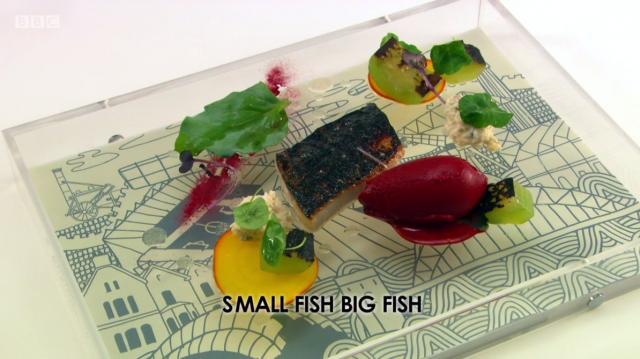
Tom Aikens said that after yesterday, Mini needed to come back fighting and he did with this dish. He called nearly every component “faultless” apart from the scorched cucumbers, which he said could have done with a touch more seasoning.
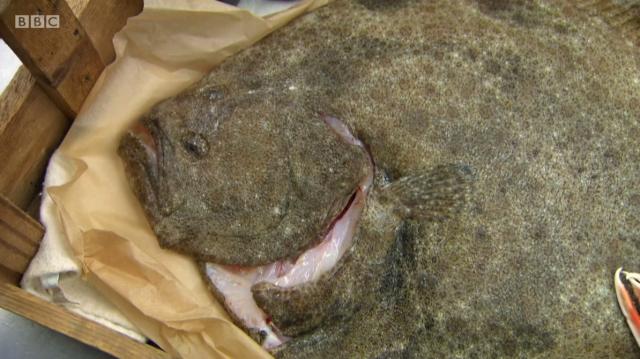
On Monday, Tom had said that he didn’t really get Chris’ story behind his dish. He was hoping that ‘The Beautiful Briny Sea’ – an homage to British fisherman – would show a stronger link to the brief. Chris was attempting a more refined take on the humble British classic, fish and chips. He made ‘langoustine bonbons’ – a fishcake-style combination of pan-fried langoustine tails, baked potato flesh, ketchup and parsley that were then deep fried. Another fried element to the dish, Chris was making beer battered ‘scraps’. He wanted to create a “pleasurable seawater jelly” using oyster juice, fish stock and fish sauce. He boiled the three together before seasoning with fresh lemon juice and setting w agar.
Tom Aikens was horrified to find out that Chris was throwing away the actual oyster itself! He made a luxury tomato sauce by roasting langoustine shells with shallots, carrots and tomatoes. Chris reduced the sauce down before finishing it with butter and a bit of store-bought ketchup! Another classic element of the dish that he was hoping to refine, mushy peas or “Yorkshire caviar” as he called it. Chris started with softened shallots and garlic, then added frozen peas, vinegar, fresh cream and pea puree. Finally, he added chop chives and parsley to season. The majority of the dish was served on a fish-shaped plate, with the ‘bonbons’ on a separate presentation box resembling a wooden crate.
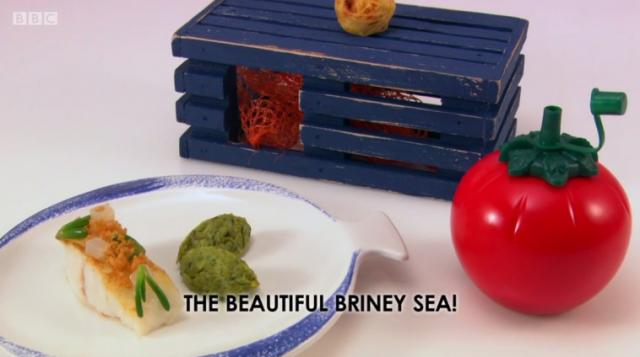
Because of Tommy’s allergies, he couldn’t sample the dish. Mini was unimpressed that the oysters weren’t present in the dish, but he did like the sauce. Tom said that he could see how Chris had tried to elevate the dish and liked the bonbons and the ketchup. He did however call it “sacrilege” that Chris had thrown away the oysters and felt that overall, the dish lacked originality.
All three chefs were particularly nervous about the scores, especially Chris who said: “I just served fish and chips to Tom Aikens!”. He seemed to be quite impressed by both Tommy and Mini, scoring them a rather generous nine each but he only gave Chris a seven for his fish and chips.
Last night’s episode of Great British Menu started on a rather sad note. We were informed that Chris Archer had been taken ill and couldn’t continue in the competition. This left Mini Patel and Tommy Banks competing for the North East. With only two points in it and Tom Aikens still wanting to see a ten, things were pretty tense!
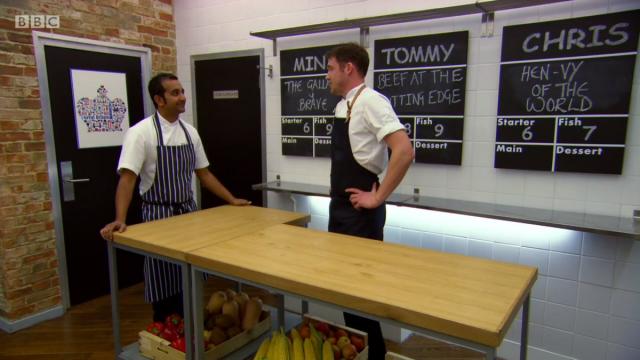
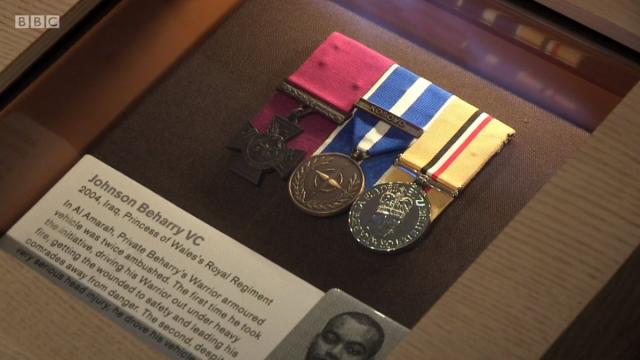
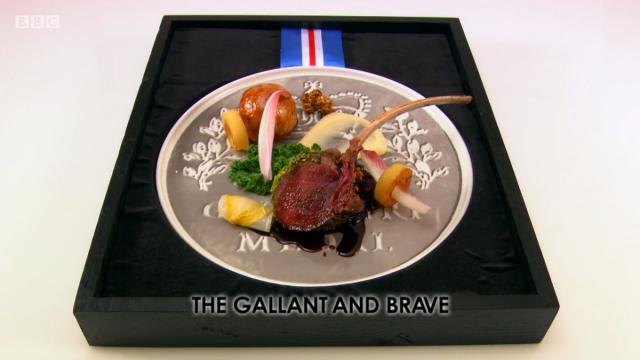
Mini’s main course was called ‘The Gallant and Brave’ – a tribute to British servicemen and women and civilians who have been awarded the Queen’s Gallantry medal. Mini met one such person, Sergeant Johnson Beharry who had to undergo emergency brain surgery when injured in the line of duty. An explosive device hit Johnson’s truck and despite sustaining serious brain injuries, he managed to drive his fellow soldiers to safety before being taken for surgery. Sgt Beharry was awarded the Victoria Cross in 2005.
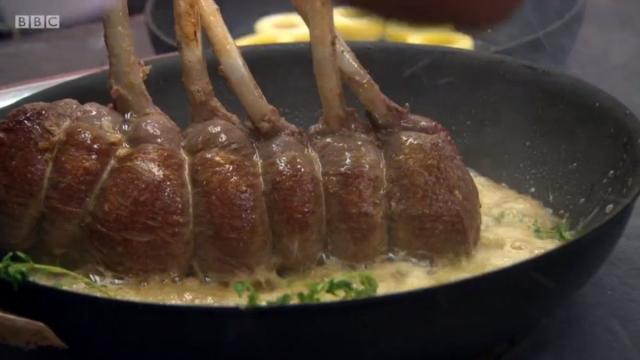
The star of Mini’s dish to honour such heroes was a rack of venison. He slow cooked the venison in the water bath, vacuum packed with butter, fresh herbs and juniper berries. He was also making a venison ‘bun’ combining the mince with diced shallots garlic, chicken livers, port and spices. He made the mixture into balls before wrapping them in


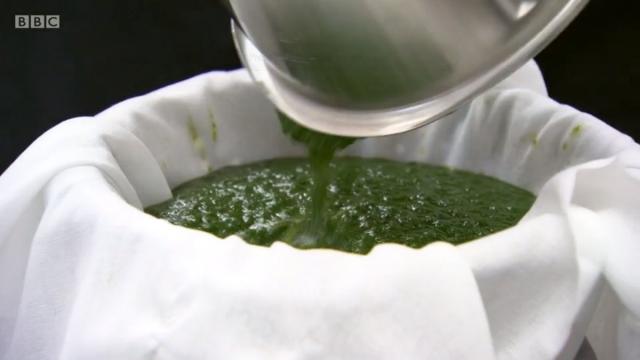 Tommy’s dish was called ‘Beef at the Cutting Edge’. He was cooking a Wagyu/Angus cross sirloin raised in his neighbour’s garden. He said he didn’t want the animal too have “died in vain”, slow cooking it in the water bath and then sealing it on an indoor barbecue. Tommy was also cooking bone marrow, chopping it and combining with fresh herbs before returning it to the bone to roast. Tommy was making a lovage and garlic emulsion. He started by blanching the lovage in boiling water, then blended it with grape seed oil at a low temperature. He then passed the lovage through a fine cloth to get the oil. Combining mustard and wild garlic caper brine with a chicken reduction, he then whisked in the lovage oil to make a lovage/garlic emulsion.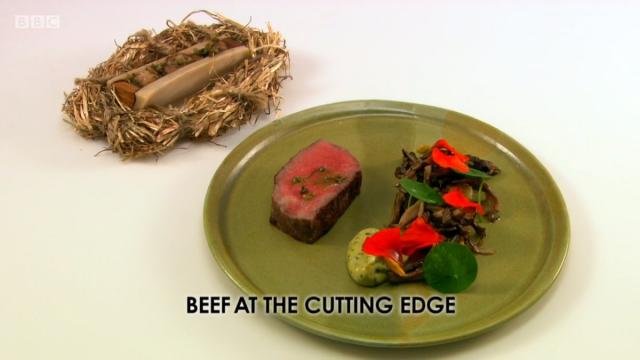
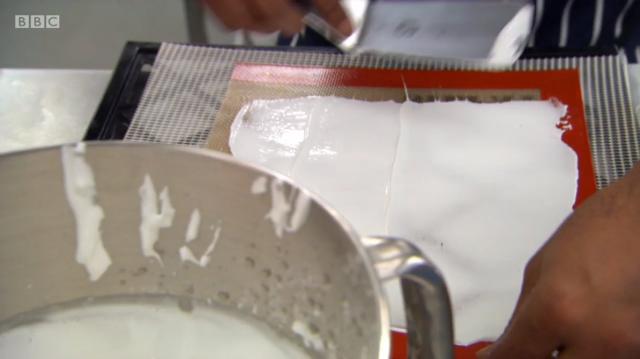


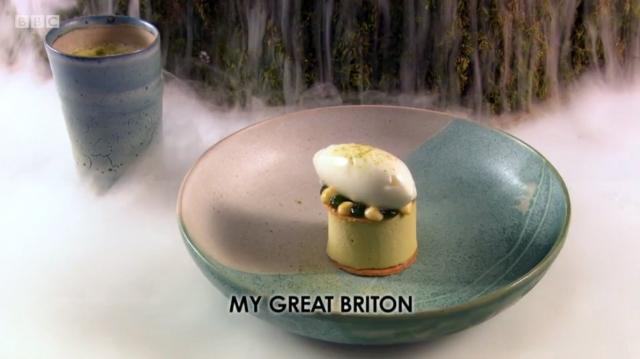
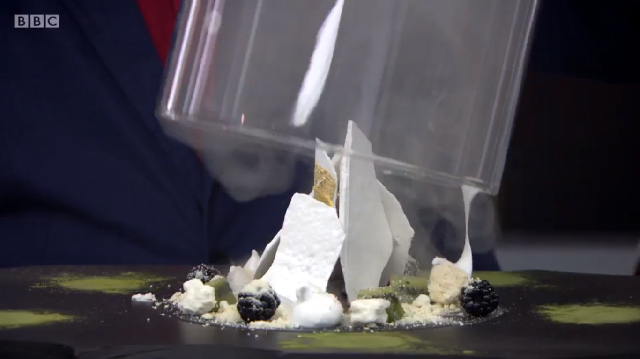
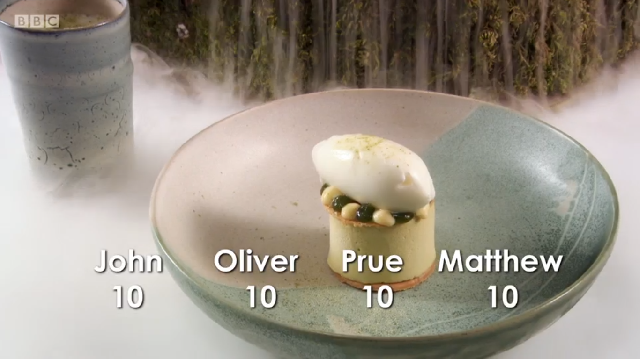
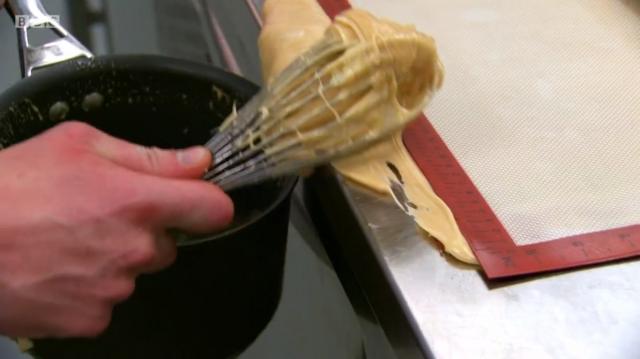 Tommy’s dessert was called ‘My Great Briton’ and it was a tribute to his late grandfather. Fred Banks was a big figurehead in the local community and was responsible for looking after the Kilburn White Horse – a structure built into the side of a hill. Tommy really admired him and the way he looked after people and so this was a very important dish for him. He was using Douglas fir in several elements in his dish, making a parfait and a sherbet and including it in a sour cocktail.