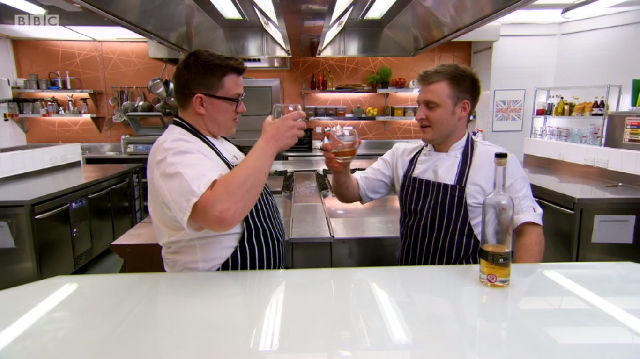
Last night’s starters kicked off this week’s Great British Menu 2016 Welsh heat.
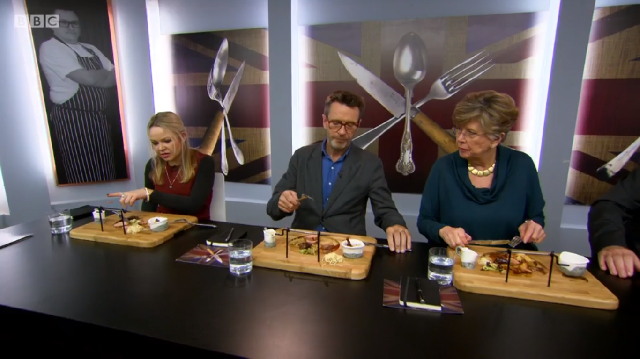
Judging the three chefs was American-born Michael Smith, chef proprietor of Loch Bay restaurant on the Isle of Skye. Returning to the competition were last year’s winner for Wales Adam Bannister and runner-up Phil Carmichael. Making his first appearance this year and hoping to beat both is Andrew Birch of Fishmore Hall Hotel.
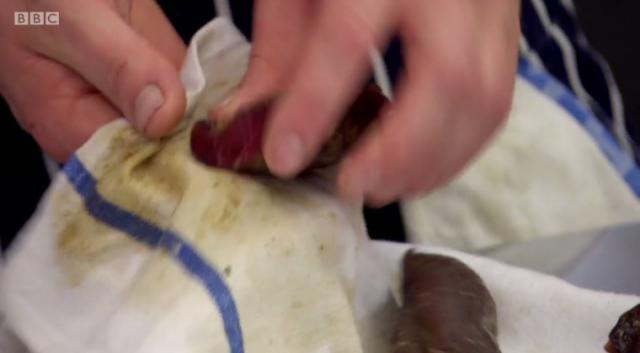
Adam’s starter was a reimagining of classic Welsh dish. A play on words, ‘On Cawl’ paid tribute to those working in the NHS – something close to Adam’s heart as his girlfriend and other family members are healthcare providers. A cawl is a Welsh soup with lamb and vegetables.
Adam set himself a real challenge with the lamb, serving pressed breast, crispy belly, cured loin, poached loin wrapped in mint. He made a Welsh cheese custard and a terrine of potato, swede and carrots.
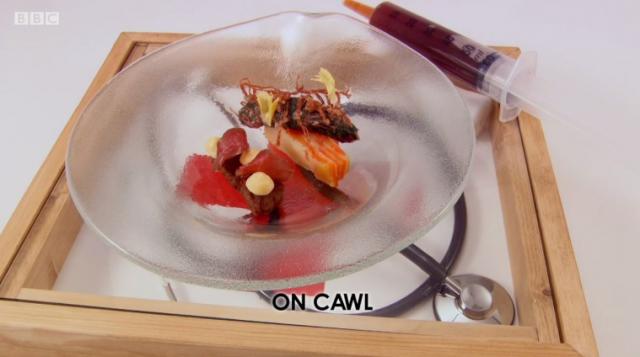
Presenting in a medical-themed box, Adam even served his lamb consommé in a syringe! Michael said that the very technical dish definitely told a story and delivered on flavour. He wasn’t sure if the cheese was a necessary addition though.
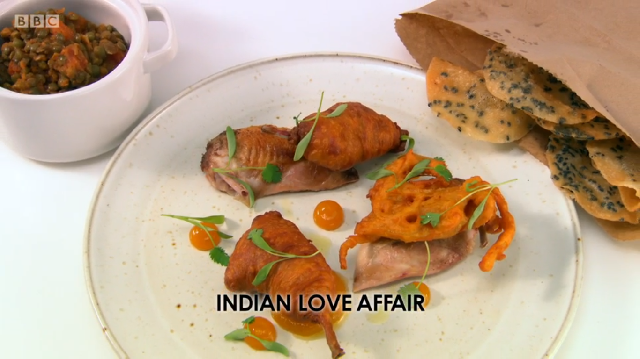
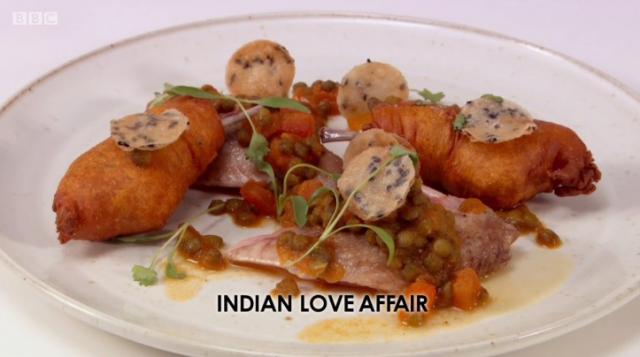
Phil Carmichael opted to create an Asian-inspired dish for his starter. ‘An Indian Love Affair’ was to represent the cultural 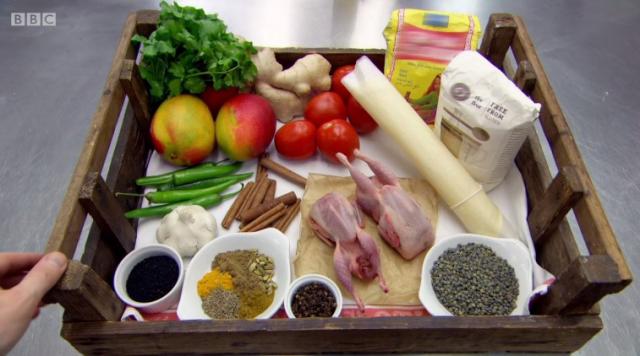 diversity of modern Britain and pay tribute to the much-loved curry.
Cooking quail, he deep fried the legs in bahji batter and roasted the bird’s
crown. Phil made his own mango chutney and pastry poppadum’s. He made a lentil and tomato sauce, inspired by traditional dahl and garnished with coriander shoots.
Michael loved the idea of Phil’s dish and said it had some big flavours - the spicing he called ‘spot-on’. He had however hoped that Phil’s poppadum’s had been served in a pile like in an Indian restaurant. He also found the quail to be a touch underdone and said that overall the presentation could have had more impact.
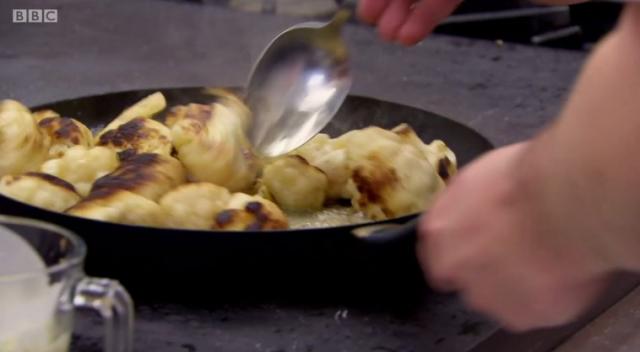
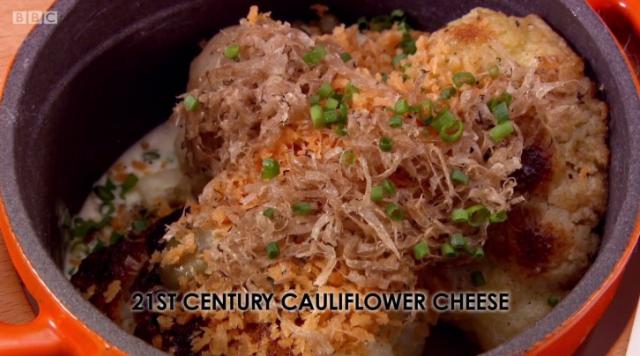
Newcomer Andrew Birch’s starter ‘21st Century Cauliflower Cheese’ featured a not-Welsh Tunsworth cheese from which he made a sauce with white wine and english truffle. He started to caramelise the cauliflower and the other chefs were a bit dubious about the colour.
Making a last minute addition of apples, he served his cauliflower with panko breadcrumbs, a golden raisins and caper puree, chive oil, his cheese sauce and topped with grated truffle. Michael called the dish tasty and said that the cauliflower was the way he liked it but said that the raisins and apple weren’t strong enough and that overall it was underwhelming.
Michael awarded Andrew a six, Phil a seven and Adam the highest score of eight. There’s still everything to play for as we head towards the fish course tonight though!
Reigning Welsh champion Adam Bannister was out in front after Monday’s first course. One point behind was last year’s regional runner up, Phil Carmichael. Newcomer Andrew Birch’s cauliflower cheese starter failed to impress judge Michael Smith and so he was in third place. Michael said that the fish course would be an opportunity for the chefs to showcase their technical ability.
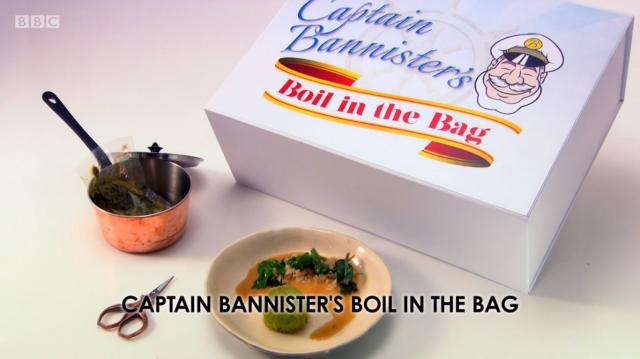
Hoping to maintain the lead, Adam’s fish course was based on a convenience food favourite, ‘boil-in-a-bag’. Inside the bag, ‘Captain Bannister’ was to serve turbot, inside a caper and crab stock sauce. He cooked these in a temperature-controlled water bath and served them in small pans for Michael and the other chefs to open at the table.
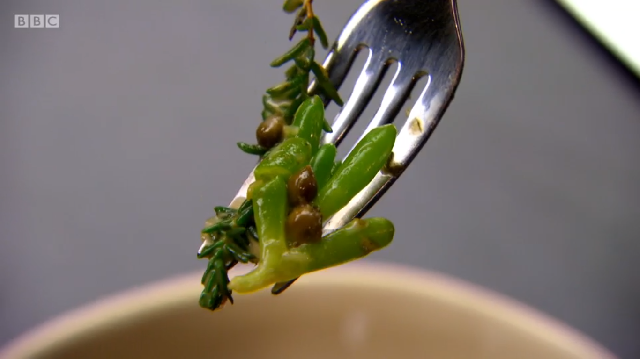
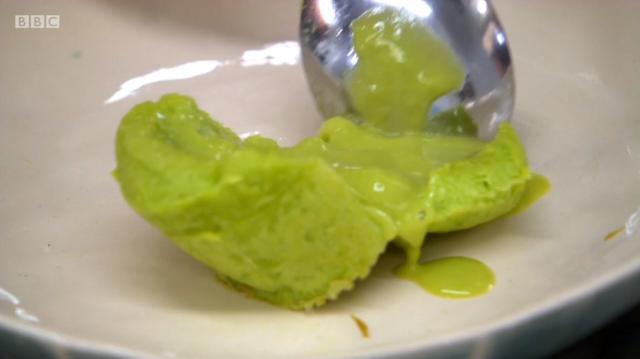
Accompanying the fish, Adam wanted to make a ‘pea fondant’. Similar in principle to the dessert, it would be made of flour, eggs, melted butter and pea puree with a liquid centre. Also on Adam’s plate was crab meat, salty fingers, sea blite and crab sauce. The dish was presented in a novelty box.
Fellow chef Andrew called Adam’s pea fondant “nearly inedible” and said it tasted too strongly of flour. Judge Michael told him to “throw it overboard” and added “it wasn’t correct in any way”. He did however feel the presentation was fun and called his turbot and sauce delicious.
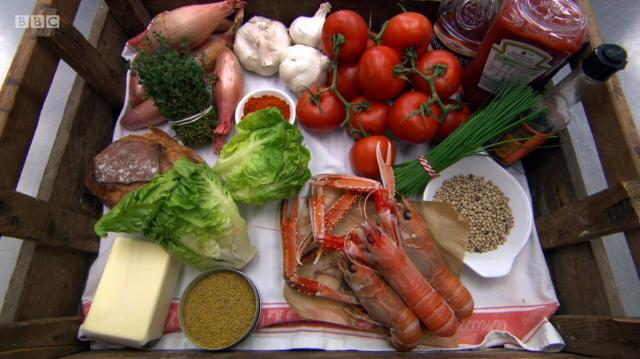
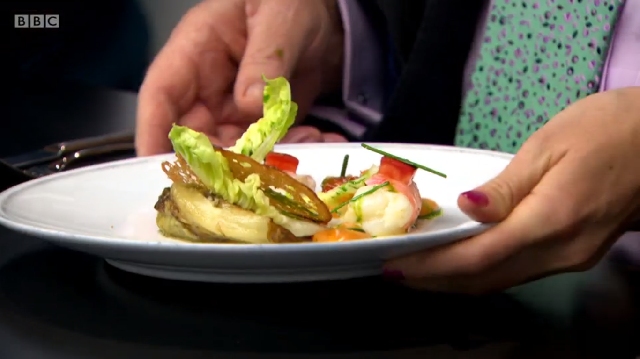
Phil’s dish would be a modern interpretation of prawn cocktail, celebrating how far British chefs have come. Like Matt Worswick from last week’s heat, Phil had opted to substitute the traditional prawn for a more luxury kind of seafood, langoustine.
Putting an interesting twist on the dish, Phil made a hot Marie Rose sauce, combining cooked tomatoes with a classic hollandaise, then adding brandy and Worcester sauce. He braised baby gem lettuce and added a dash of chicken stock. Important additions to Phil’s dish were chive oil, which he extracted himself and brown sourdough wafers – a reimagining of the traditional croutons in a prawn cocktail. Phil garnished with fennel pollen and cayenne pepper.
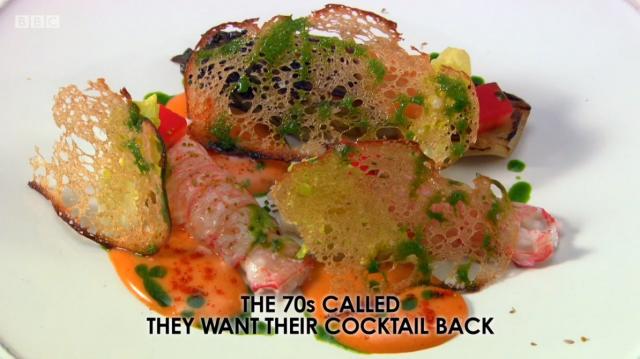
Despite Michael’s criticism of Phil’s lack of theatrics in his presentation, Phil chose to continue serving his course on a simple white plate. Michael said the dish had flavour and innovation and that the langoustines were cooked to perfection – he just wanted more of them! Once again, the judge mentioned that food fit for the Banquet needs to show creativity and he said that Phil was “missing a trick” with the lack of visuals.
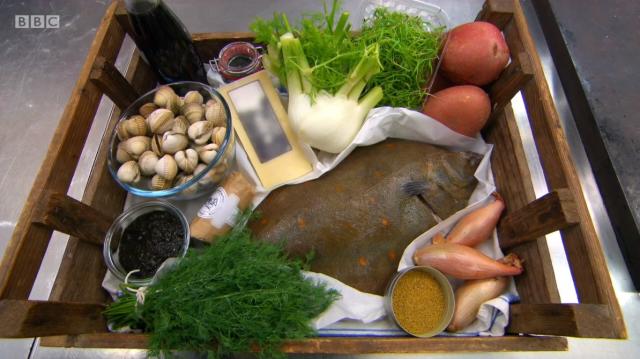 For Andrew’s fish course, he chose to cook plaice – a ‘plentiful’ fish that he believes is underused. Another seafood element, Andrew’s dish featured cockles as a tribute to the women of the Industrial Revolution, who harvested cockles when their husbands died or were no longer able to work. He also wanted to include traditional Welsh lava bread - a cooked seaweed.
To accompany his fish, Andrew was making a risotto using the humble British potato instead of rice. He had spotted the recipe on a menu from last year’s veteran judge, Tom Kerridge. He also made a fennel salad and a malt vinegar gel in an attempt to elevate and refine the dish. Andrew also served on a plain white plate with a garnish of fennel pollen, dried lava bread, fennel cress and rapeseed oil. With the dish was a scroll, telling the story of The Ladies of Penclawdd.
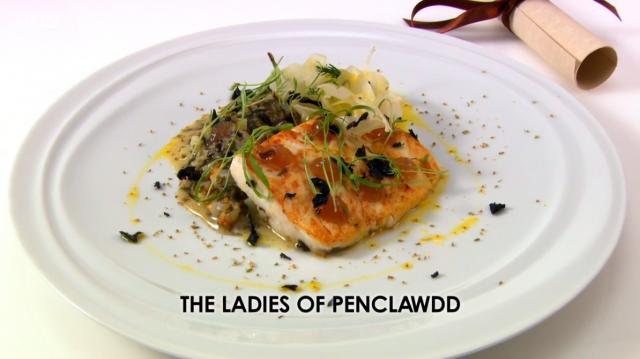
Michael said that it fit the brief perfectly but he felt Andrew too had missed an opportunity to be creative with his presentation. He called the plaice ‘spot on’ and said that the vinegar gel showed good innovation.
Andrew was awarded the highest score of this course, an eight. Phil and Adam were both given a seven which puts Phil and Andrew on a tie and Adam one point in front.
Judge Michael Smith won the Banquet with a main course so he had high standards for the Welsh chefs for this course.
Still in the lead, Adam Bannister was serving a ‘spitroast’ inspired main with wild boar saddle. To give it a smoky flavour, he cooked some of the boar on an indoor barbecue and cooked the belly in the water bath. He couldn’t get any boar cheek so he served the meat with slow-cooked pigs cheeks which he finished with Welsh whiskey.
To go with the meat, Adam made a hot ‘slaw’, with shredded charred cabbage, onion and carrots. He also created an apple and shallot puree and cooked celeriac in butter before rolling it into balls.
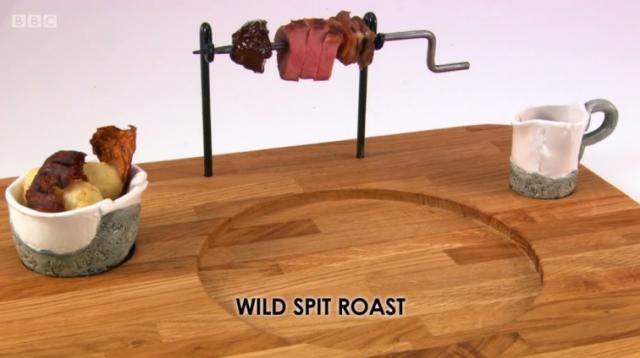
Adam served his main course on a wooden board, with the boar meat on a mini spit and the slaw and celeriac in a side bowl. His sauce was in a jug on the side. Michael felt that the boar was brilliant but was underwhelmed overall by the heaviness of the dish. He didn’t like the slaw and said it needed some acidity to cut through.
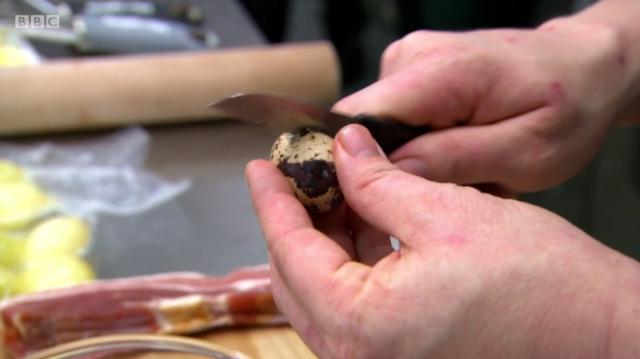
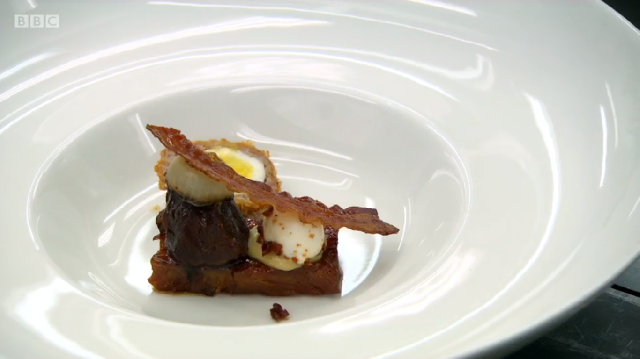
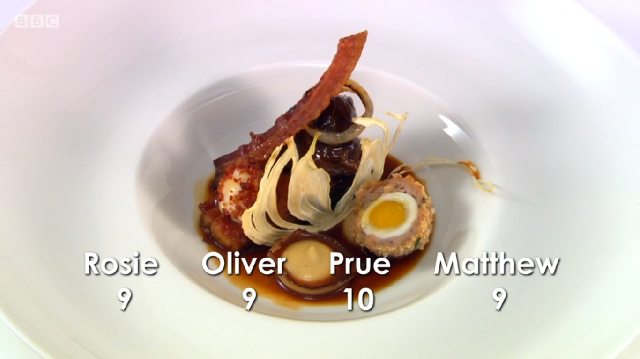
Phil Carmichael was to reinvent another British classic. A play on the Order of the British Empire, Phil’s ‘O.B.E’ was for onions, bacon and eggs. To make the ingredients more banquet-worthy, Phil cooked quails eggs three ways – poaching, frying and boiling. He made some into Scotch eggs, dipped some in maple syrup and rolled them in a bacon crumb. Others he wrapped in crispy smoked bacon.
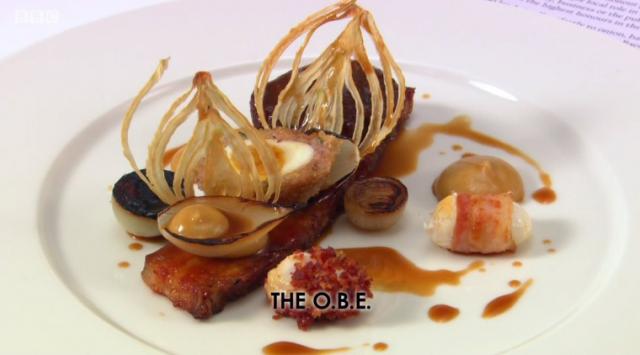
He braised pork cheeks in honey, cloves and madeira and made the onion into a smooth puree and a tuille. Judge Michael called it a “great reimagining”. He loved the different styles of egg and the flavour of the bacon but said it was more befitting of a Banquet starter than a main.
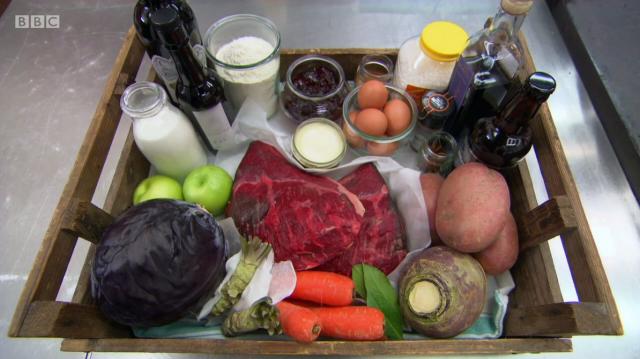
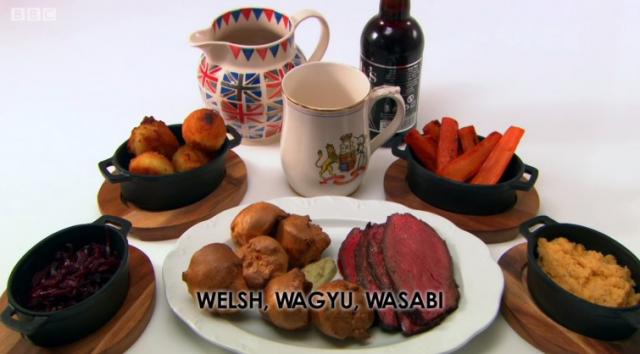
Looking to overtake Phil was Andrew Birch, who was serving a contemporary interpretation of a classic British roast beef dinner. Andrew chose to serve Welsh wagyu beef, cooking it sous vide so as to keep the tenderness of the meat. Instead of the traditional horseradish accompaniment, Andrew made a wasabi sauce. He wanted his main to showcase the diversity of the British produce available today.


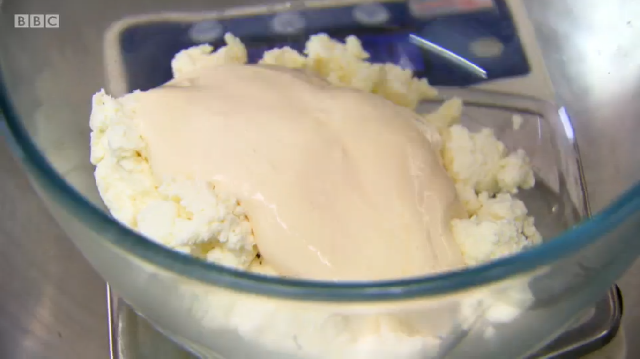
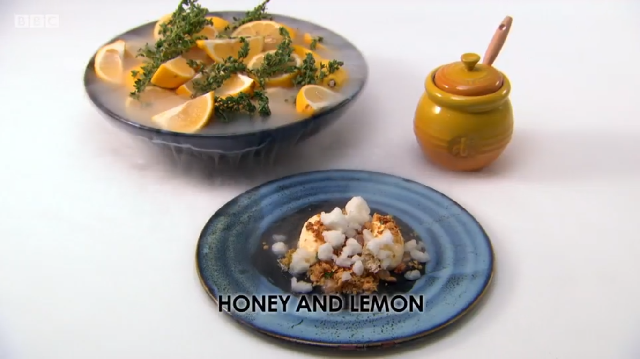
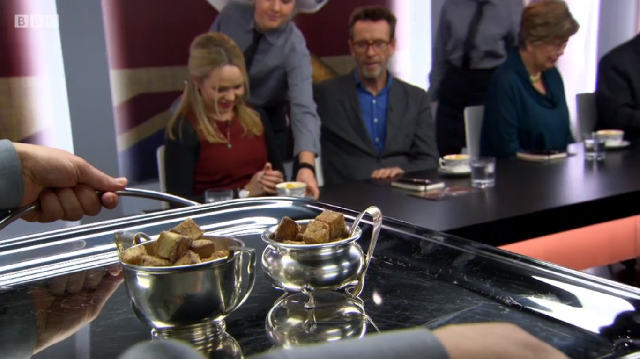
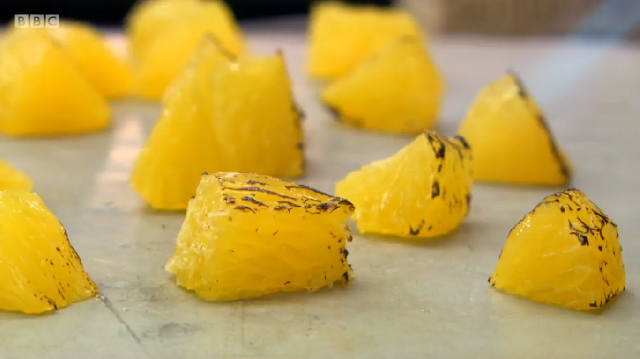 Phil’s dessert ‘A Cup of Tea for Ma'am’ focussed on a rumour that the Queen’s favourite tea is Earl Grey. Phil chose to make a panna cotta (with earl-grey-infused cream) topped with orange prepared three ways. On the side, Phil wanted to make white and brown sugar cubes. The brown ones were made from cocoa nib shortbread, rolled in cinnamon sugar.