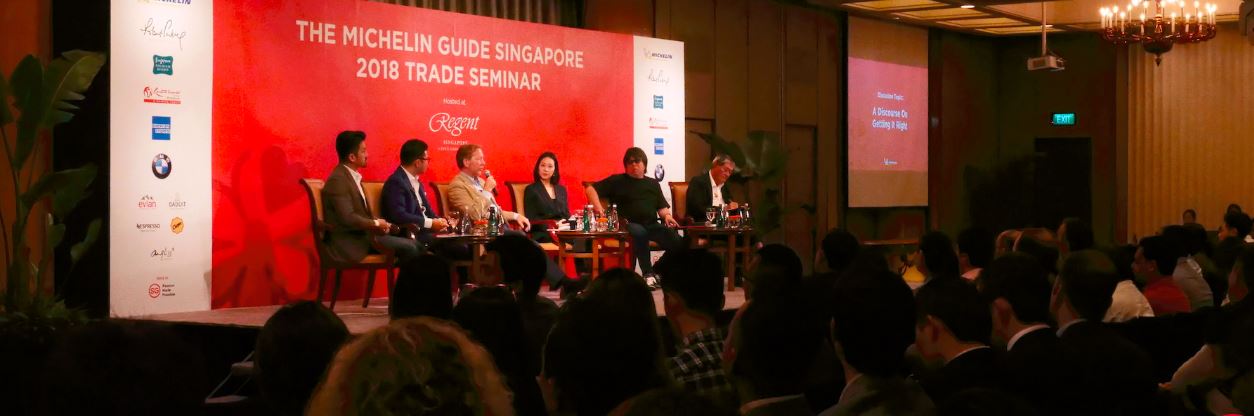
categories such as sweet, sour, bitter, spicy, salty and (in his case) umami whilst still considering the likes of texture.
He says: “You can come up with a practical dish by playing with the ingredients and moving colours and textures around.”
Alvin also emphasises the importance of embracing a practical approach when designing stand-out dishes, especially to ensure that these dishes are aligned with the restaurant’s identity. He added:“There has to be a balance in showcasing the ingredients, but one needs to be practical and ensure that business can remain sustainable. If you use too many luxury ingredients, you are only featuring luxury."
Does the cuisine reflect the personality of the chef?
There are lots of standout Michelin star chefs whose personality is reflected in both the restaurant and the cuisine it serves. This is the case of Alvin Leung who is renowned for his ‘demon chef’ moniker and whilst this is reflected in both of his Hong Kong and Shanghai restaurants, he does agree that there are boundaries that he needs to be mindful of.
He says:“I have to alter the personality of the dishes to cater to the customers whom I am cooking for.”
Does the restaurant provide value for money?
Regardless of whether this is a Michelin-starred gastropub or the very epitome of fine dining, the diners need to feel that they have had value for money, but what does this mean exactly?
Yeo interprets that this means that someone ‘comes out of a restaurant with a memorable experience’. He says: “Value is having a wow factor. It should include a total experience, from the attentiveness of the service staff and ambience to food.”
It’s all about making customers happy says Chef and restauranteur Beppe de Vito who believes that all eateries, regardless of their target audiences, should focus on making customers happy and treating them equally.
Is the food consistent?
Michael Ellis, drawing upon his experience as working as a commis chef reveals that restaurants can just have a ‘bad day’ and consistency can be compromised if key staff members have failed to show up for work or if suppliers have failed to deliver essential ingredients.
He reveals that inspectors visit an establishment more than once when they are looking at the other end of the scale – restaurants losing a Michelin star. He elaborates: “That’s why our inspectors visit a restaurant two or three times, with different inspectors visiting each time, before making a decision.”
The panel pondered if having fewer covers resulted in having a higher propensity to win a Michelin Star?
Michael believes that this is not necessarily true, citing that both the three-Michelin-starred Le Bernardin in New York City and the Paris-based one-Michelin-starred restaurant Le Jules Verne both undertake a high volume of covers.
We want to know what you think, please leave your comments here or head over to our Facebook, Twitter and Instagram and have your say!